These 6 ideas run from a single-session forearm band to a multi-sit sleeve, with dotwork and dense knotwork adding their own cost and healing curves.
The right choice depends on whether you want a small motif you can build around later or one piece that commits fully to a full sleeve of mythological figures.
Dotwork sits in the skin differently than clean lines, and white ink settles over months into a softer gray than the fresh photo suggests.
1. Celtic Tattoo Swirls and Geometric Patterns
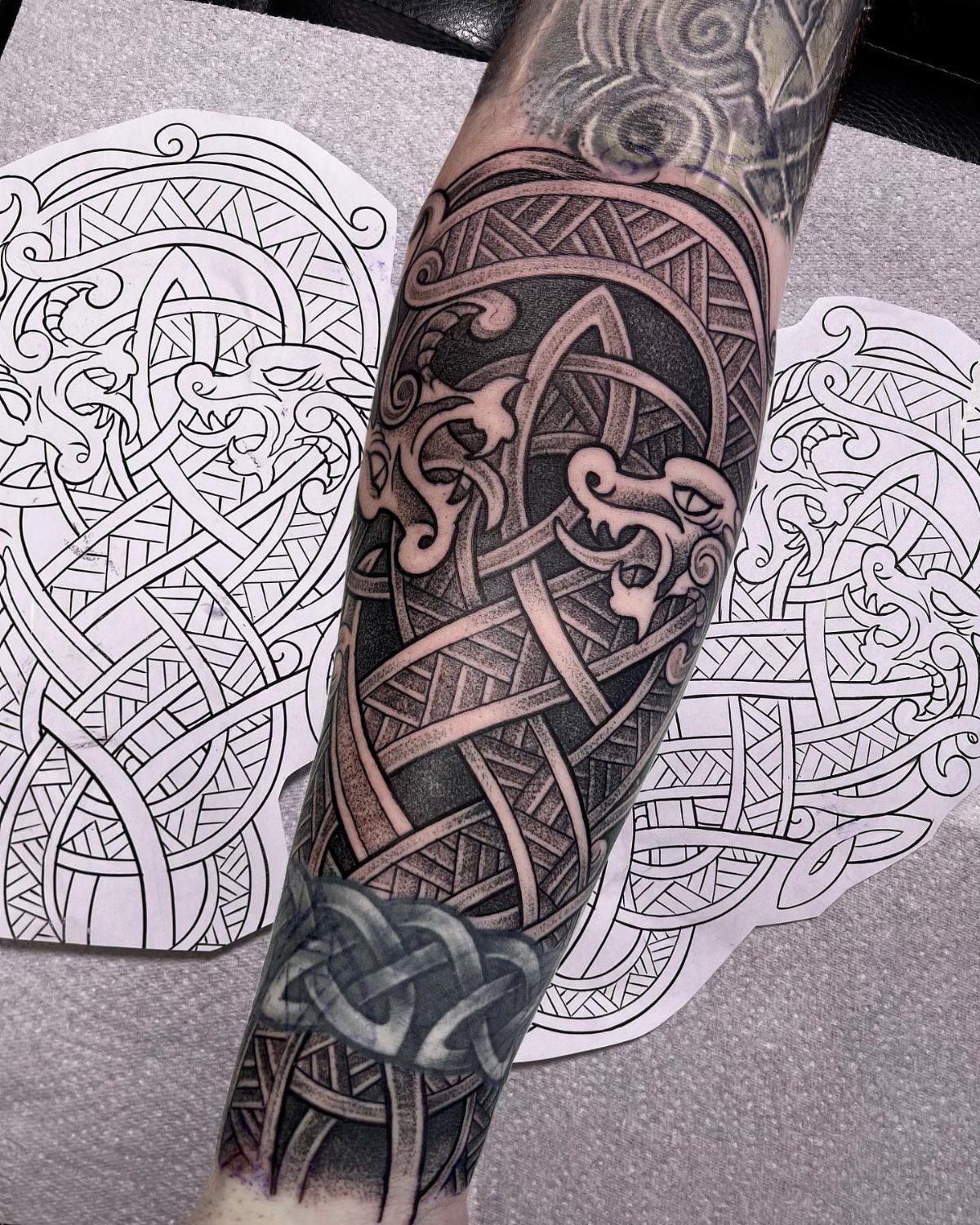
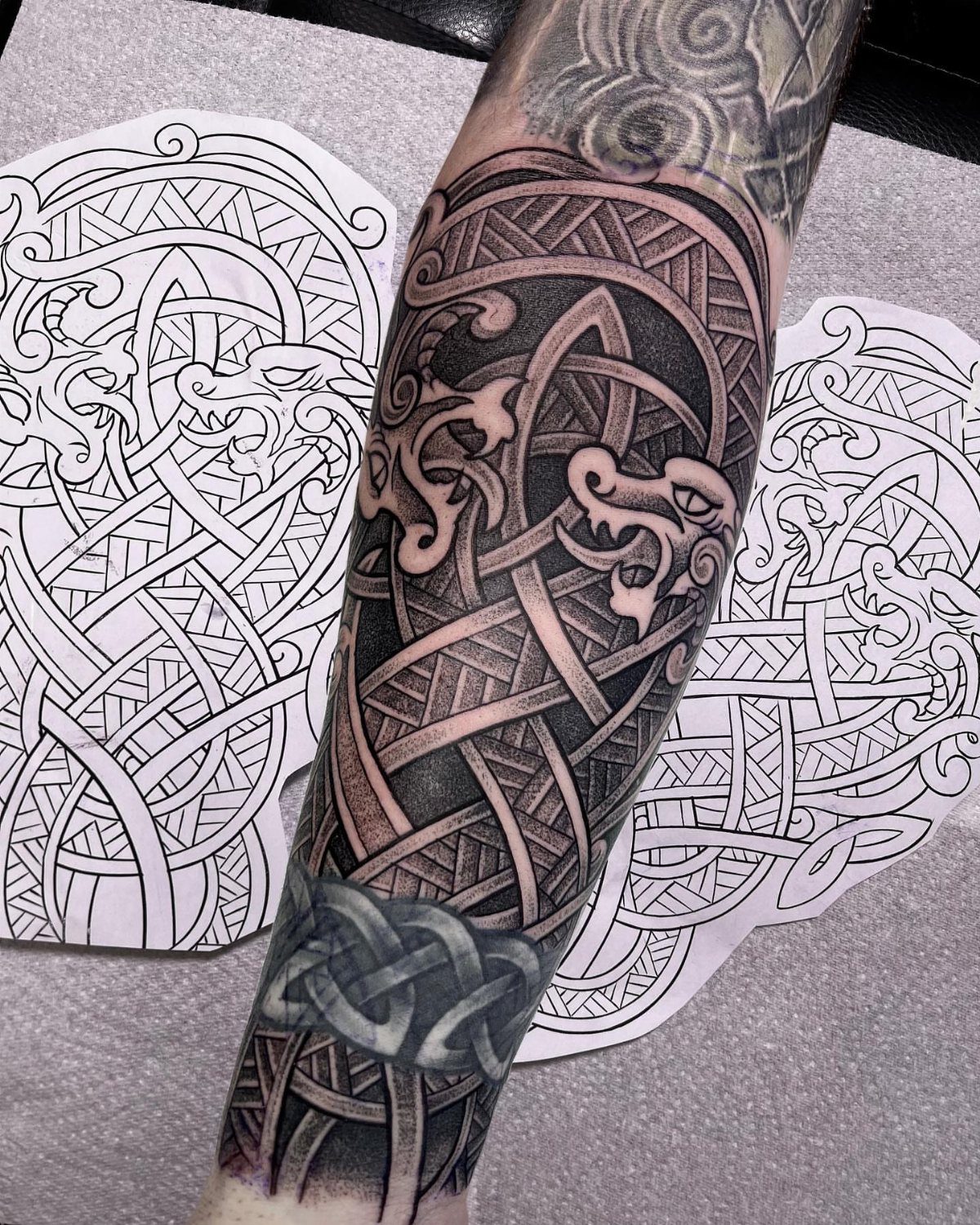
Celtic swirls and geometric patterns give you the bones of the style without committing to a full narrative scene.
The knotwork loops back on itself, animals twist into the gaps, and the whole thing reads as texture from a few feet away and rewards closer looking.
I like this approach for a first Celtic piece because it scales to your budget and your pain tolerance.
A forearm band or a shoulder cap heals fast enough to test how your skin holds the line weight before you commit to a full chest panel.
Ask the artist to show you the stencil reversed; knotwork looks wrong fast if the symmetry drifts, and the mirror image catches what the forward view hides.
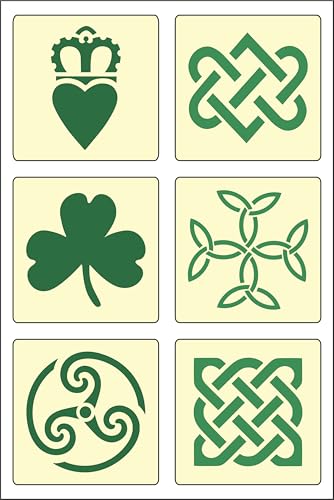
✅ Authentic Celtic Designs: Includes 6 unique Celtic stencil templates, each 2.5 inches, featuring intricate knotwork, spirals, and ancient symbols for beautiful Celtic artistry.

Package Contents: This set includes 9pcs distinct Celtic knot PET stencils, each measuring approximately 20x20cm/7.9x7.9 inch, along with one brush measuring approximately 16.9x0.5cm/6.65x0.2inch. Featuring a rich variety of unique patterns, these stencils cater to diverse creative needs.

Metal Journal stencils - Small border celtic knot, scandinavian, viking knotwork symbol, pentagram symbols, protection sigil magick, magic, witchery. Products and supplies for papercrafting, card making and mixed-media projects
2. Celtic Triskele Dotwork Tattoo
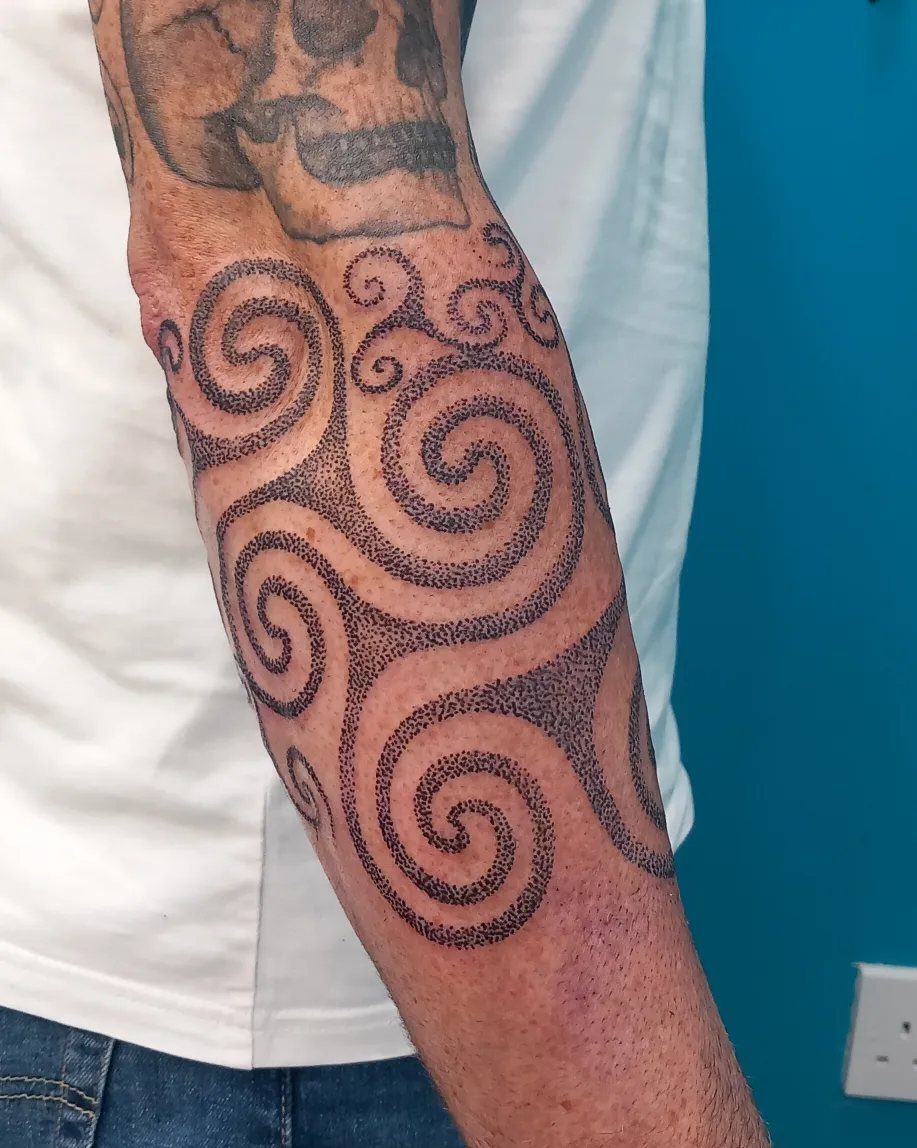
A triskele built from thousands of individual dots sits somewhere between hand-poked tradition and machine precision.
The triple spiral reads as movement even when it is sitting still, and the dotwork texture keeps it from looking like a clip-art Celtic sticker.
This technique demands an artist who has done dotwork before, not just one who says they can.
The dots must stay consistent in depth; too shallow and they fall out in healing, too deep and they blow out into grey smears.
Budget extra time; a palm-sized triskele in dotwork takes longer than line work alone. Check their healed photos, not just fresh work.

Celtic Patterns & Meanings: This set includes 9 different Celtic knot design stencils, each carefully crafted with intricate details. A special feature is the English word printed below each pattern, such as "Love", "Luck", and "Sun". These words help you understand the symbol's meaning and add a deeper cultural connection to your artwork

1 x 1 Inches Laser-cut synthetic reusable stencil. The stencil size represents the size of the design. There will be approximately 1' of excess material around the design for ease of use.

The dimensions shown are the overall stencil sheet size. The graphic fits inside the sheet and is slightly smaller than the overall sheet size
3. Celtic Knotwork Beast Tattoo
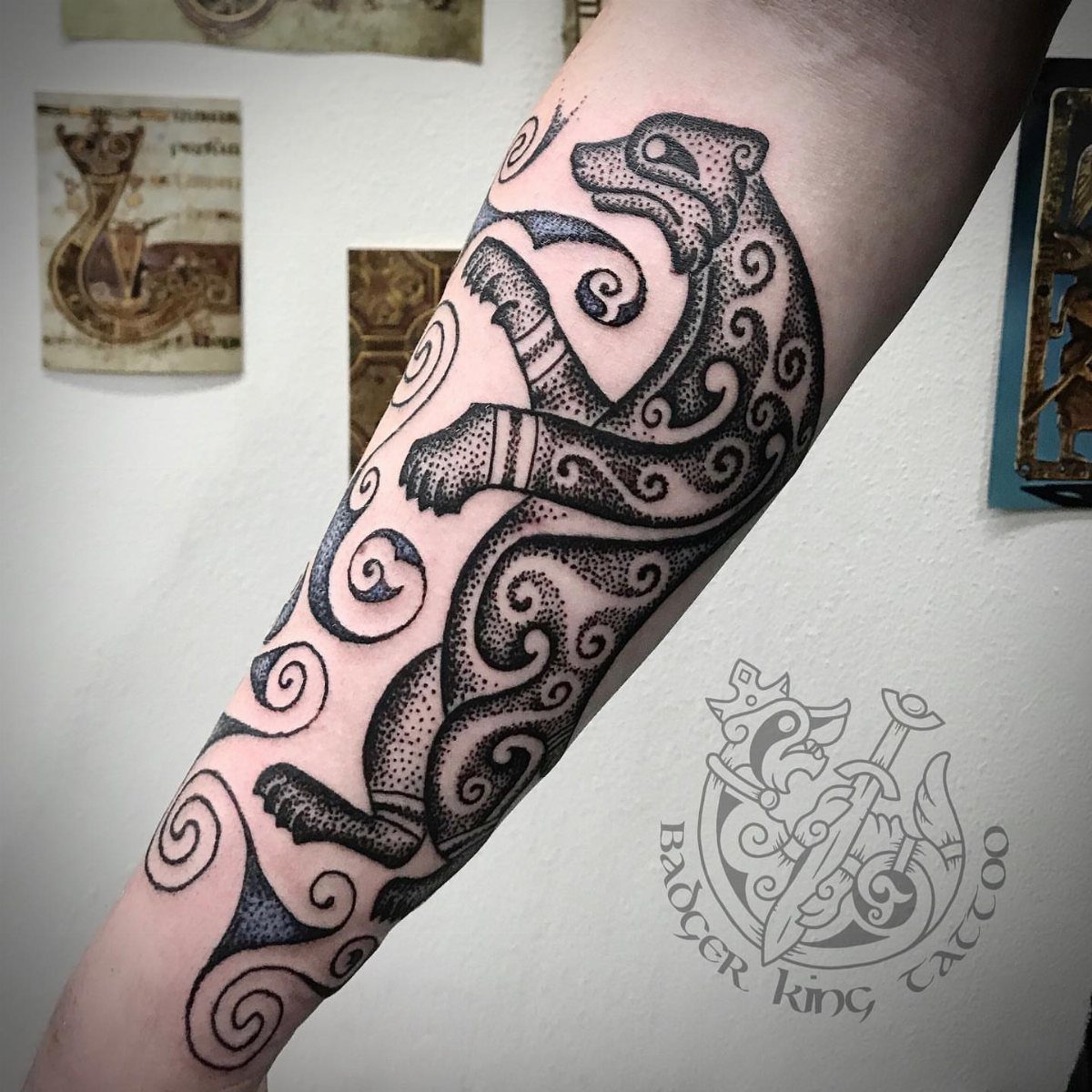
The beast here is not drawn and then decorated with knotwork; the animal is the knotwork, legs and tail and jawline all formed from interlaced strands that never break.
It takes a designer who understands how Celtic interlace actually works, not someone who lays a pattern over a silhouette.
I would ask to see the artist’s knotwork drawn freehand, not just stenciled from a reference.
A wolf, a stag, a salmon, each carries its own weight in Celtic story, so pick one that means something to you and let the artist build the knotwork around it.

Metal Journal stencil - Small border celtic knot, scandinavian, viking knotwork symbol, pentagram symbols, protection sigil magick, magic, witchery. Products and supplies for papercrafting, card making and mixed-media projects

【Celtic Knotwork Border Stencil】You will get 1 pieces PET painting stencil of floral pattern. There are 5 lines different knotwork lace patterns, you can use them for different rooms as wall decoration, show off your personalised taste.

PACKAGE: Get 20 sheets of 6X6 inch stencils with 20 unique Celtic patterns.
4. Celtic Sleeve with Mythological Figures
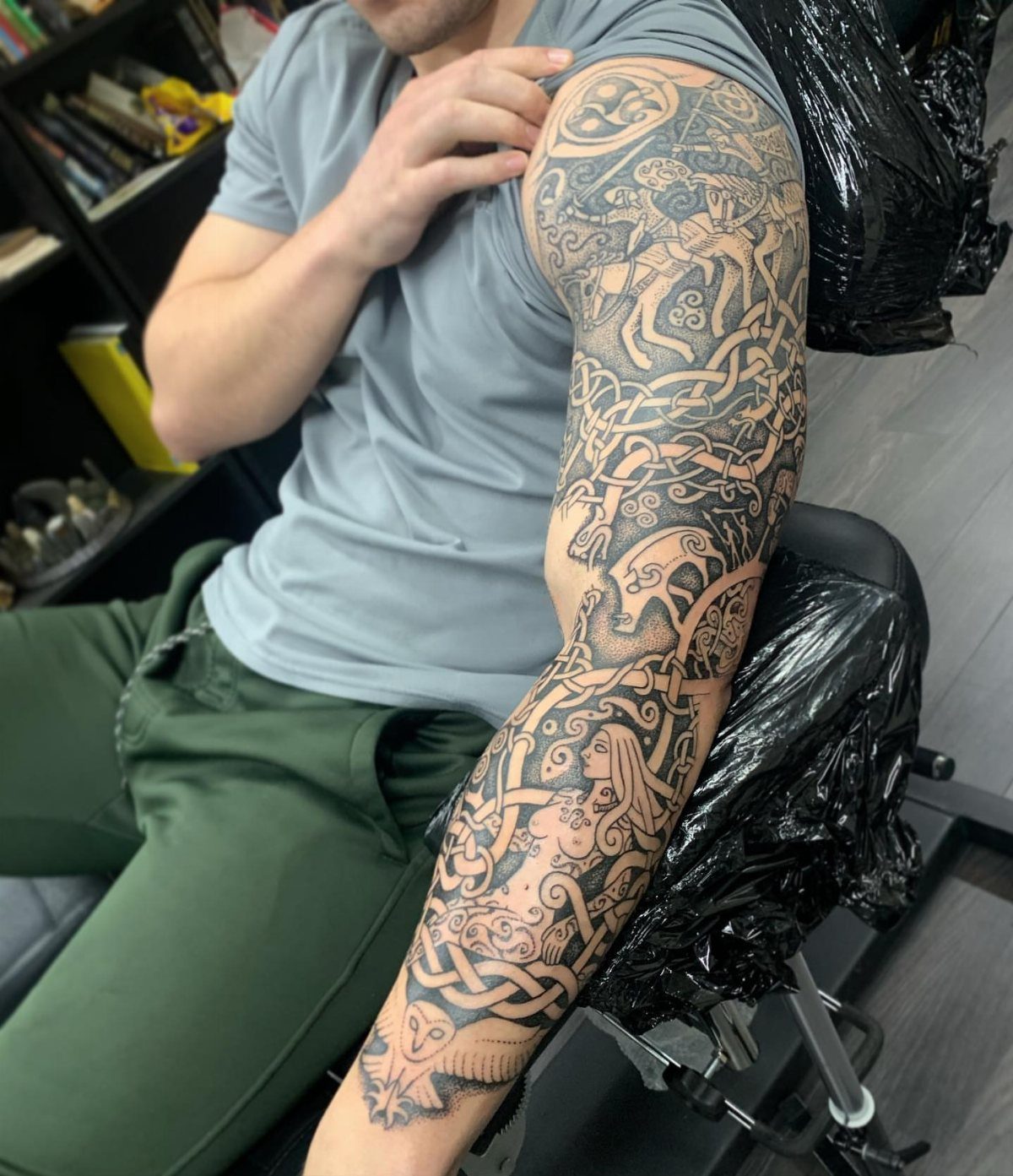
The knotwork runs behind the warrior on horseback, the woman figure, and the owl so the arm reads as one piece, not a collection of separate tattoos.
The chair matters; you will spend a lot of time in one. Bring a book, a charged phone, snacks you can eat one-handed.
The mythological figures here are specific enough that I would want the artist to explain who each is and why they are placed where they are; a sleeve this ambitious needs a story that holds up over time, not just cool images.

- Easy Application in Minutes Cut out the design, peel off the clear film and place it face down on clean, dry skin; keep it still, soak the backing with water, press for 30 to 40 seconds, then lift the paper gently from a corner.

1 Set = 12 Sheets Henna Tattoo Stencils, 6 Pairs Right and Left hands stencils. Pasting position: Hand, Finger,Forearm, etc. Suitable for Henna tattoo, Airbrush Painting, Glitter tattoo, and so on;

24PCS Unique Henna Stencil Pack – This complete henna tattoo kit accessory set includes 24 sheets of reusable mehndi stencils (6.89" x 3.34"). Featuring exclusive designs like long arm bands, moon motifs, vine flowers, and large floral templates, it is ideal for creating DIY temporary skin art on wrists, arms, back, and full body.
5. Pictish Tribal Body Art Flash
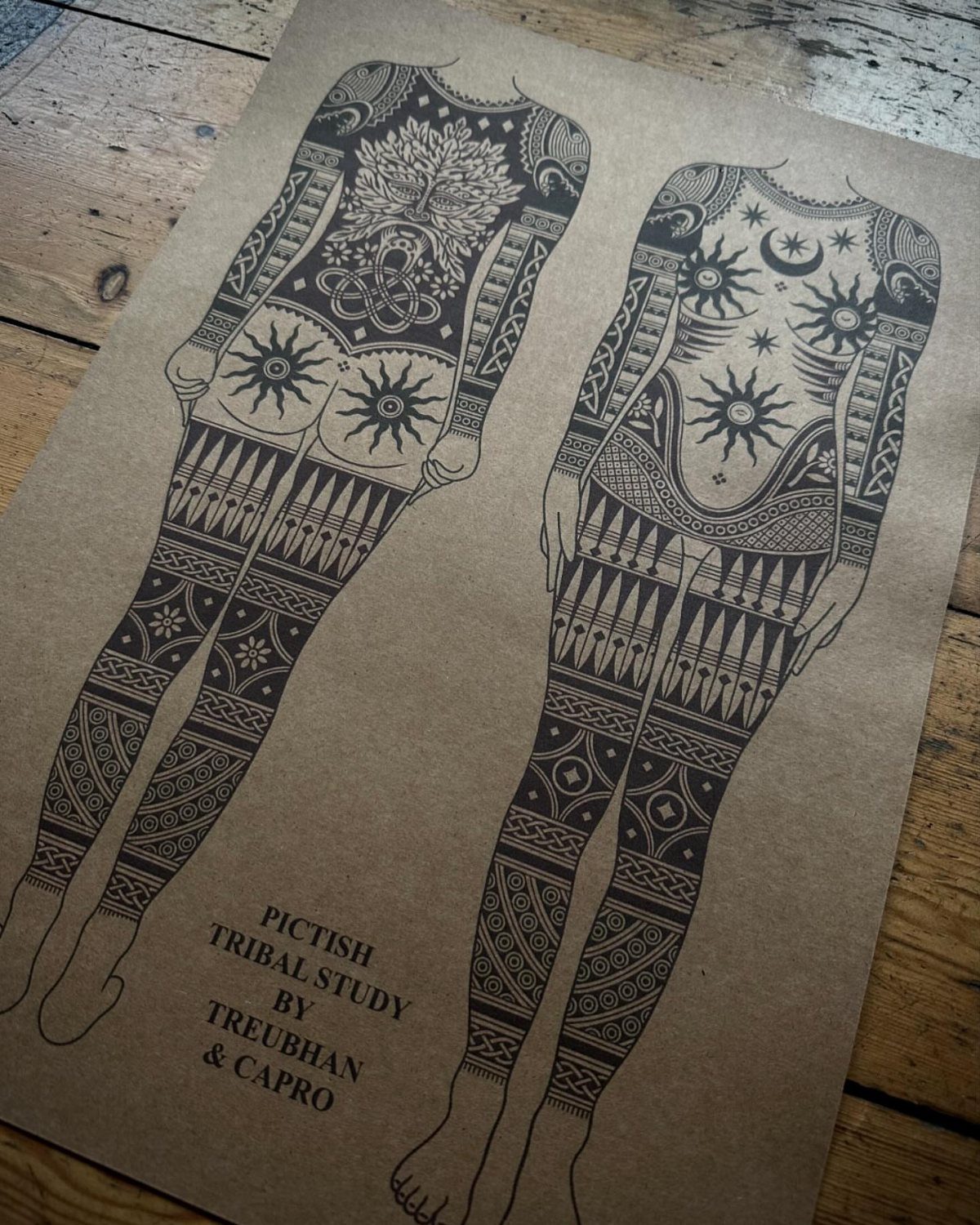
These Pictish studies show full-body patterning on female silhouettes, front and back, the kind of tattooing that reads as clothing or ritual marking rather than a single decorative piece.
The botanical motifs mix with the harder tribal geometry in a way that softens the overall effect.
This is reference material, not a design to copy outright.
The print credits "TREUBHAN & CAPRO" as the artists; their study work is worth following if you want to understand how Pictish symbols sat on a body rather than isolated on a flash sheet.
If you are considering something this extensive, talk to your artist about how the patterns flow with your own contours; what sits flat on paper pools and stretches on skin.

1Pc Celtic Knotwork Pattern Stencil: Can meet your different needs, well made and fun to creat craft projects for families and friends, offers endless possibilities for transforming your home decor

Viking Theme Designs: This set includes 12 different Viking-themed stencils measuring 20x20cm/7.9x7.9 inch. Features classic and bold patterns such as Viking shields, anchors, deer heads, claw marks, and other icons. Comes with a 16cm/6.3inch brush for various artistic projects

PACKAGE INCLUDES 20 sheets of 6X6 inch Celtic knot stencils. 16 individually designed patterns; 2 sizes for each Celtic pattern: about 5.5 inch and 2.5 inch.
6. Celtic Pagan Motifs Flash Sheet
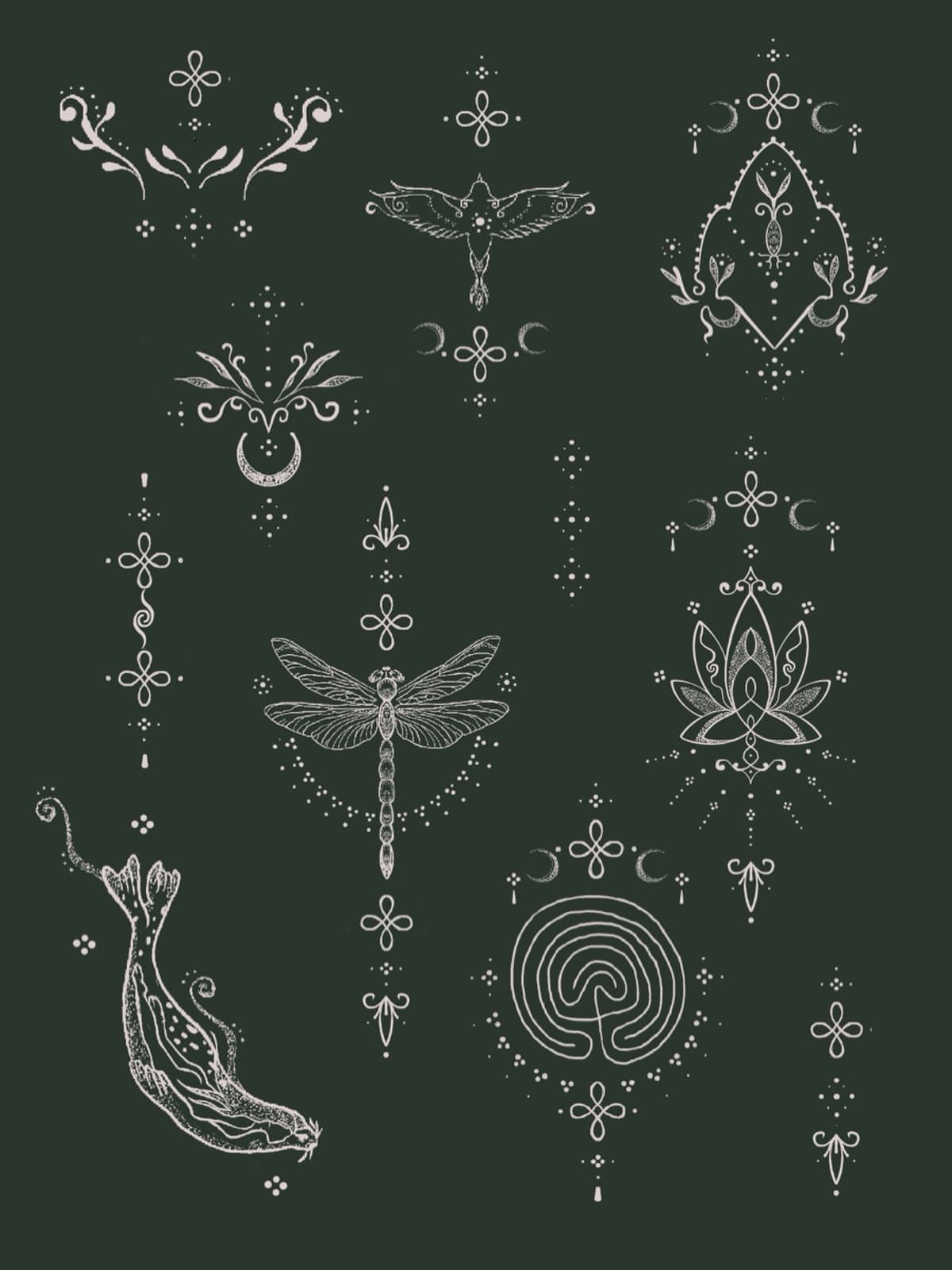
A flash sheet like this gathers options: dragonfly, sea creature, labyrinth, bird, lotus, each rendered in white line on dark green so the negative space does the work.
The white ink here is the point; it sits on the surface of darker skin or heals into a subtle scar-like tone on lighter skin, neither of which behaves like black.
I would ask the artist how their white ink heals on real skin, not how it looks fresh. White fades faster, blurs easier, and some artists refuse to do it at all.
The lotus and the labyrinth carry meaning in pagan practice, but the dragonfly and the whale read more as nature motifs; pick by what you want to carry, not by what looks prettiest on the sheet.


🔩 PREMIUM METAL BUILD - Made from gunmetal black stainless steel, this reusable stencil card offers a sturdier alternative to flimsy plastic sheets for detailed craft projects.

Traditional Celtic Knot Designs: Create intricate artwork with 9 interlace patterns inspired by traditional Celtic art. Features classic knotwork and symbolic motifs perfect for cultural crafts and decorative projects.
Celtic Tattoo Significance
The Dagda sits at the center of one approach to Celtic pagan ink that the list does not cover: deity work.
Jon from the Irish Pagan School carries the Dagda on his skin as a lived connection to the Tuatha Dé Danann, not as a decorative motif.
That distinction matters if you are choosing between a symbol that references a god and one that serves as an ongoing practice.
A deity tattoo done this way is less about the flash sheet and more about the relationship you are signaling.
The Dagda is a specific figure with specific associations: plenty, protection, the raw force of the land. If you go this route, know which god you are asking for and why, not just which symbol photographs well.
The white-line-on-green flash in the list touches on pagan practice through the lotus and the labyrinth, but deity work is its own category.
It asks more of the artist too; they are rendering a face or figure that carries narrative weight, not just knotwork that reads as texture.

Authentic Celtic Symbolism: Features a bold and historically inspired Triskele (Triskelion) design representing motion, balance, and spiritual growth from ancient Celtic and Viking traditions

❤[METAL STENCIL] - 1Pc 6.3x6.3 inch metal celtic knot template, designed with 12 styles patterns, about 0.5~3.6 inch, which is very practical.
Frequently Asked Questions
Did Celtic pagans have tattoos?
Evidence suggests the Celts likely practiced tattooing, though the historical record favors Roman descriptions over physical remains since skin does not survive centuries.
The Pictish tribes north of the Roman frontier took their name from a word meaning painted or marked people, which most scholars read as reference to body art.
Evidence suggests the Celts likely practiced tattooing, though what that art actually looked like comes from reconstruction, not direct observation.
What is the symbol of Celtic paganism?
No single symbol speaks for all of Celtic paganism. The triskele appears across many contexts, the knotwork loops carry their own logic, and specific animals like the stag, salmon, or wolf each hold distinct story weight.
The Dagda and other Tuatha Dé Danann figures serve as deity-level symbols for those doing ongoing practice rather than decorative reference. Pick by what you mean to carry, not by which reads as generically Celtic.