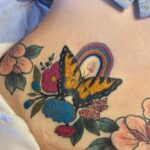
A flower stencil tattoo can run anywhere from a quick 2-hour session for something small to a full day if you’re going large with peonies or a sleeve-style composition of buds, leaves, and blooms.
What lands on your skin depends on how much time you can book, how your body handles the needle, and whether the design fits the placement you have in mind.
1. Blooming Peonies
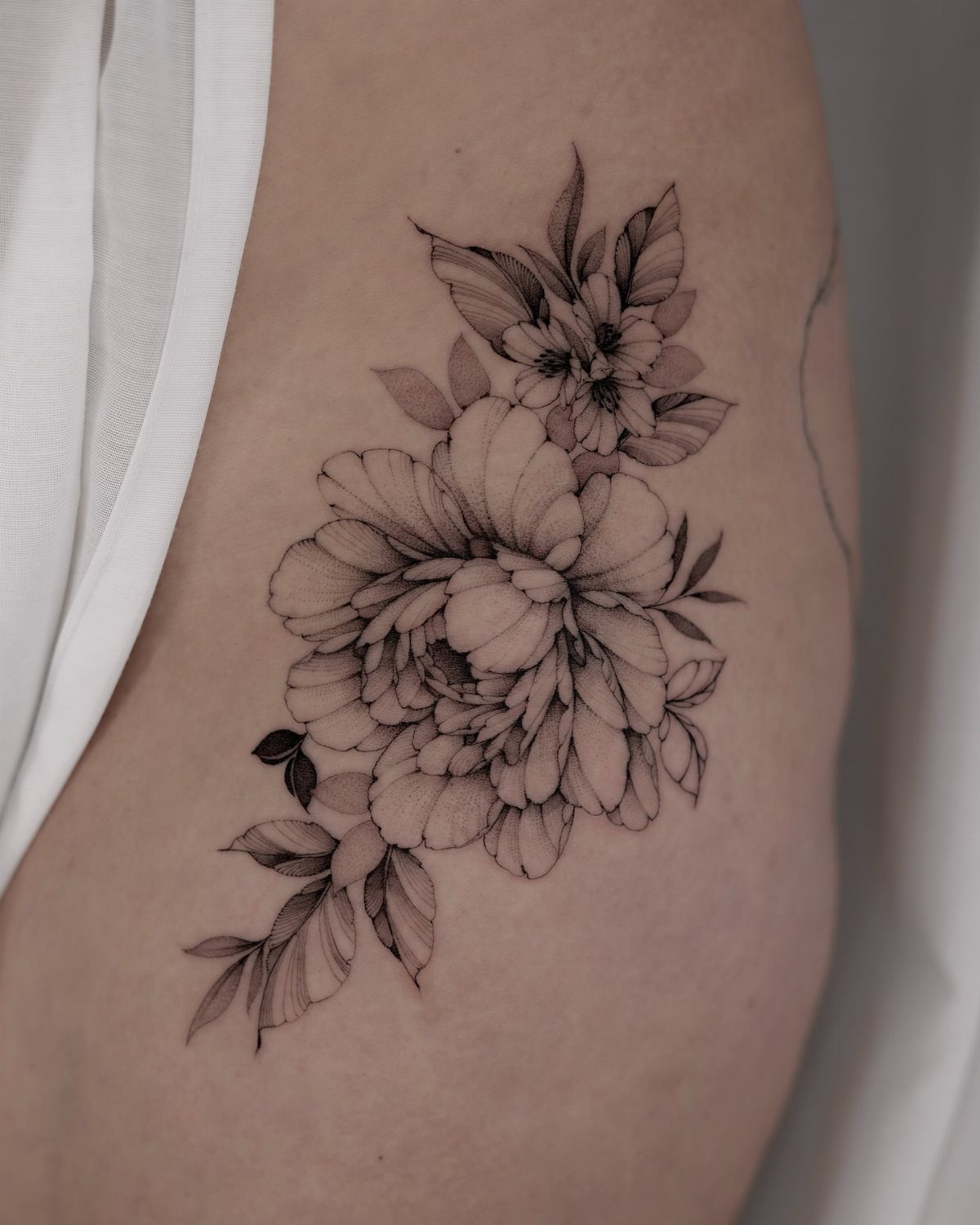
Peonies carry enough visual weight to anchor a hip or thigh piece without needing color to read well from a distance.
The layered petals in black ink let the artist build depth through line weight alone, thicker outlines on the outer blooms and hair-thin strokes for the stamen details.
A vertical climbing composition works with the body’s natural lines rather than fighting them.
I would ask the artist to place the largest bloom where the muscle curves most, usually the high point of the hip or the outer thigh, and let the smaller flowers trail downward.
This suits someone who wants one statement piece rather than a scattered collection. The full arrangement runs long enough that the hip placement starts to wear on you, and that spot hurts more than you’d expect from the padding.

UNIQUE DESIGN: You will receive 8 styles of peony flower wall stencil in 2 size: 11.8x11.8", 11.7x8.3" , each style has different patterns, you can choose different molds according to your own decoration style, and decorate your own room by yourself.

LARGE: Sheet size 6"X 8"

Layered Peony Flower Pattern: You can draw blooming or budding peonies and leaf patterns based on the layered pattern. Novel, unique and original pattern, ingenious and interesting design. Perfect for friends who love peonies, also suitable for florists, gardens, vases, balconies, room decorations.
2. Hibiscus Flowers

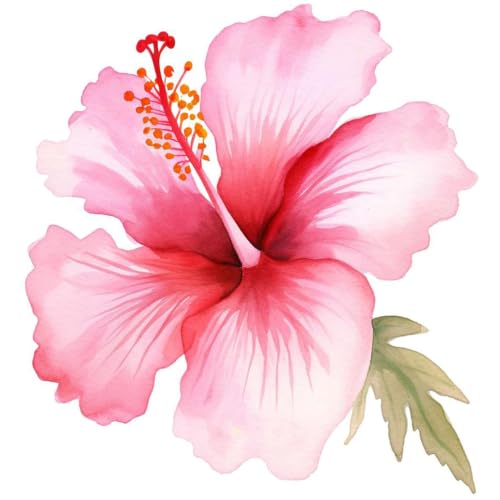
Red hibiscus against green leaves demands a color budget and a touch-up plan, though the design reads as tropical from across a room once it’s settled in.
The diagonal vine shape wraps the upper arm well, moving from shoulder toward elbow without looking like a band.
Three blooms give the artist enough material to vary the openness: one tight bud, one mid-bloom, one fully open with the stamen column visible.
The butterfly is a separate option; I would skip it unless the person wearing it has a specific reason, since the flowers alone carry the weight.
Color this saturated needs a skilled hand with saturation technique, not just a shop that happens to do color. The full piece takes serious chair time, and budget for a refresh when the red mutes.

Package Including: Pack of 10 Sheets temporary tattoo stencils. All the designs are shown in the pictures. Only has tattoo template, no tattoo ink

Temporary Tattoos could be used for men women adults neck arm chest.

Package Includes:11pcs flower stencils for painting,great for your garden fence,wood signs,room wall and fabrics decorating.
3. Lotus Flowers
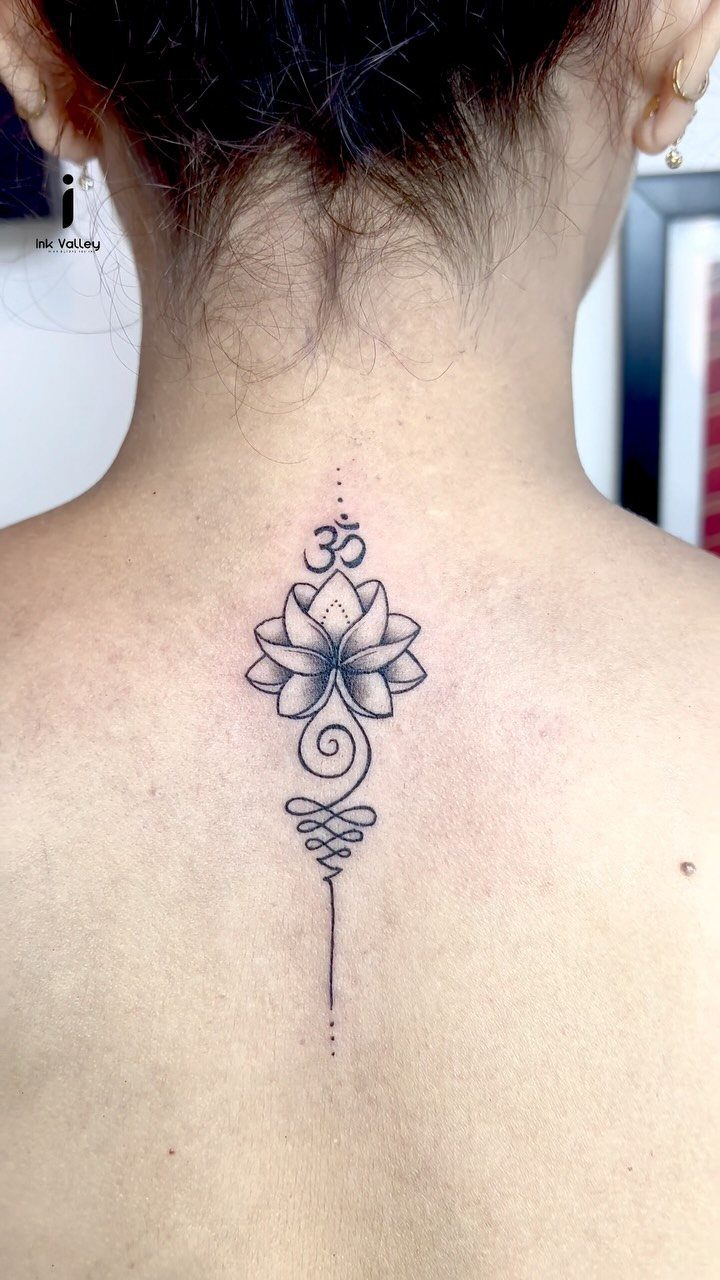
The lotus holds its shape through symmetry, which makes it forgiving for placement on the back of the neck where the skin shifts less than you’d think.
The unalome and Om elements are add-ons; the pure lotus stencil works alone if the symbolism matters less than the form.
Layered pointed petals read clearly even at smaller sizes, though versions scaled up with long suit larger placements.
I prefer the centered, contained version for the neck or upper back, where the skin stays relatively stable and the design won’t distort with movement.
Black ink line art here ages better than fine-line alternatives in the same placement. The symmetrical layout also means the stencil transfers cleanly; ask the artist to check alignment against your spine before the first needle hits.

🐙12 Sheets Unique Crescent Lotus Temporary Tattoos:🐠 There Are 12 Sheets Geometric Arrow Lotus Crescent Temporary Tattoos For Women Adults Men Including Various Popular Designs Black Chic Small Crescent Lotus Jewelry Pendant Chains Tattoos For Finger, Tattoos For Hands, Tattoos For Neck.

🌊【14 SHEETS Lotus Chain Temporary Tattoos For Women Adults】GOROMON Unique Design Waterproof Realistic Lotus Tattoos Including 14 Sheets Geometric Flower Lotus Crescent Moon Pendant Arrow Fake Jewelry Chains Tattoos For Hands And Tattoos For Neck Tattoo Sticker.

▶ Henna Tattoo Kit: 16 sheets tattoo stencils. airbrush tattoo stencils suitable for tattoo lovers. Experience the effects of tattooing without the pain of tattooing.
4. Lilies
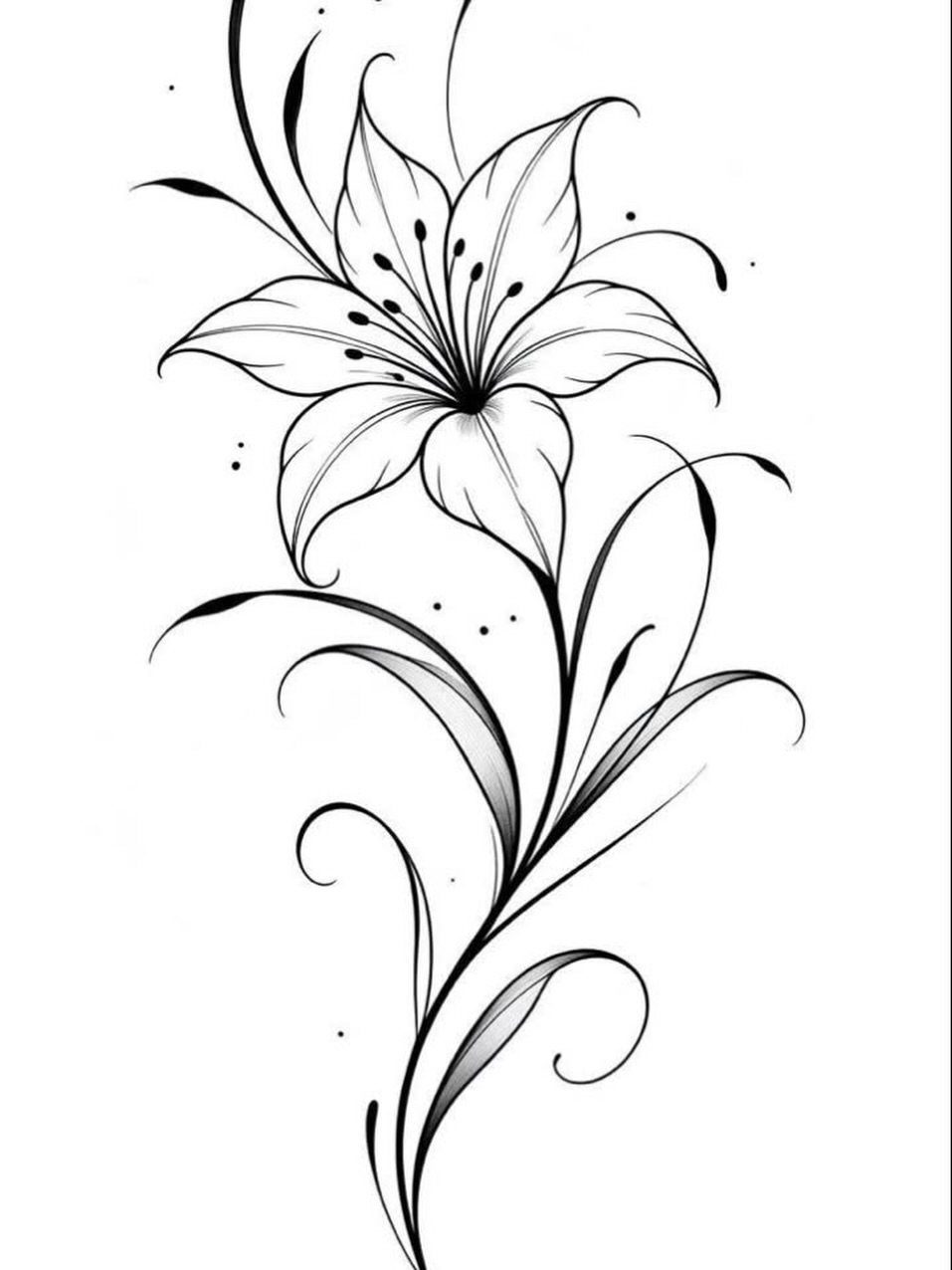
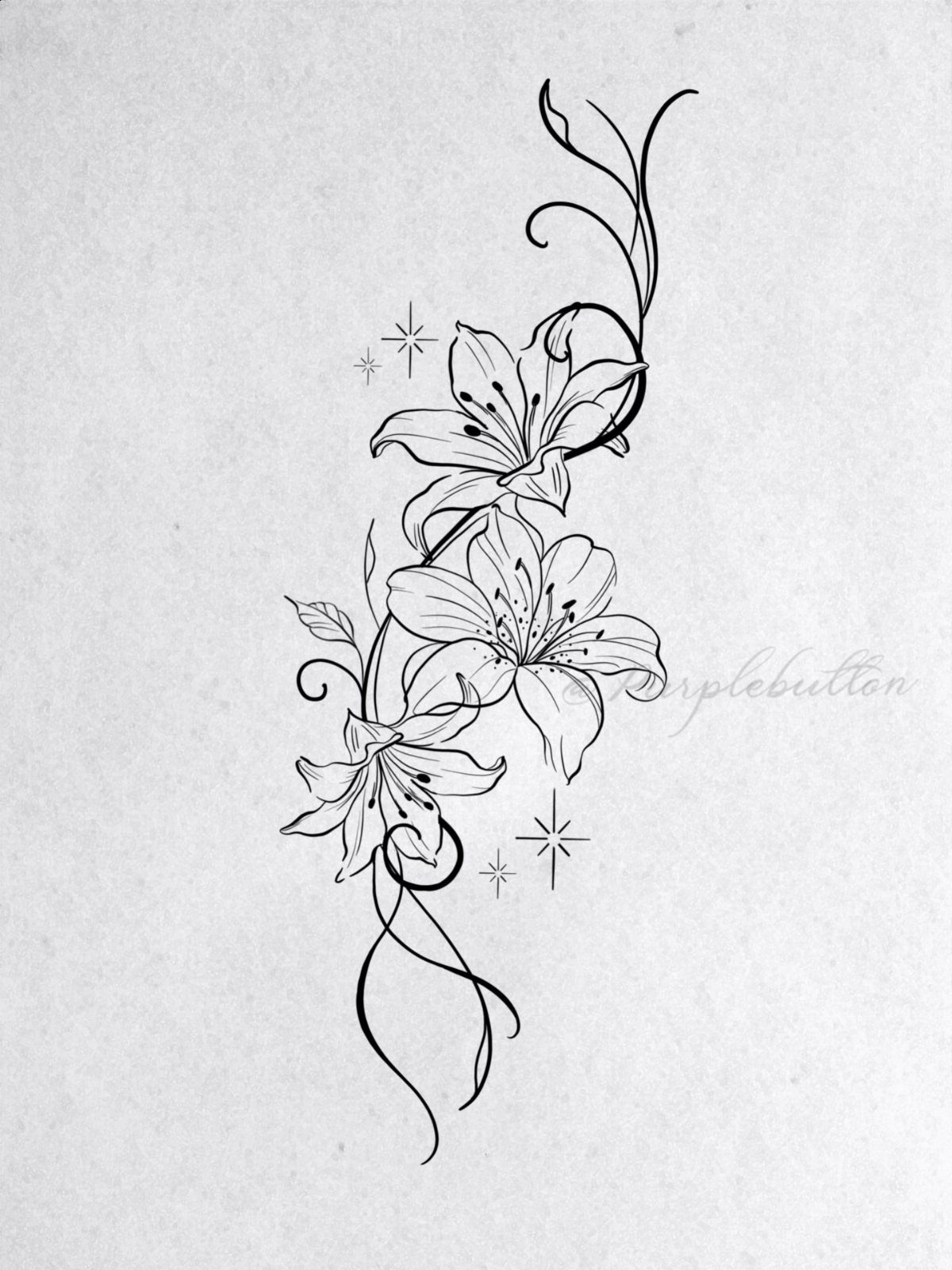
Lilies bring a longer stem line than most floral choices, which makes them natural for wrapping around an elbow or trailing along a forearm.
The flowing curves visible in the drawing style transfer well to skin that moves, since the eye follows the line without catching on a single fixed point.
A single lily with clean, open petals is the balance I’d aim for: enough detail to feel finished, not so much that the stencil clutters at actual size.
Lily-and-hibiscus mixes exist, but I would keep the lily alone if the stem flow is the reason you chose it.
This suits someone who wants vertical movement without the density of a full sleeve composition. Elbow placement stings on the inner bend and heals tricky; plan for careful moisturizing and no gym gripping until the skin settles.

🌊【9 SHEETS Vine Leaf Temporary Tattoos For Women Adults】GOROMON Unique Design Waterproof Realistic Tattoos Including 9 Sheets Floral Vine Leaf Flowers Plants Leaves Tattoos For Hands And Tattoos For Fingers Tattoo Sticker Design.

★【59 Sheets! Variety Temporary Tattoos For Women】--Contain More Than 500 Exquisite Designs COKTAK Brand Variety Waterproof Temporary Tattoos For Kids Boys Girls Teens Fashion Hot Popular Designs Tattoo Stickers in One Package.【Size】:12 Sheets Large Arm Temporary Tattoos For Adults Women 7.4"x3.5" inch 19x9CM Tattoo Kit and 47 Sheets Small Temporary Tattoos Stickers For Kids 10.5x6CM 4.1x2.3inch Skull Skeleton Moon Sea Weave Bat Constellation Dragon Scorpion Gangster.

⚡Realistic Black Floral Fake Tattoos for Women Girls -- Super stylish design temporary tattoos, set includes variety of elements(line,flower,leaves..) that you can use for different locations on your wrist, leg, arms, chest, etc. Easy to share it with your family and friends.
5. Simple Flower Stencils
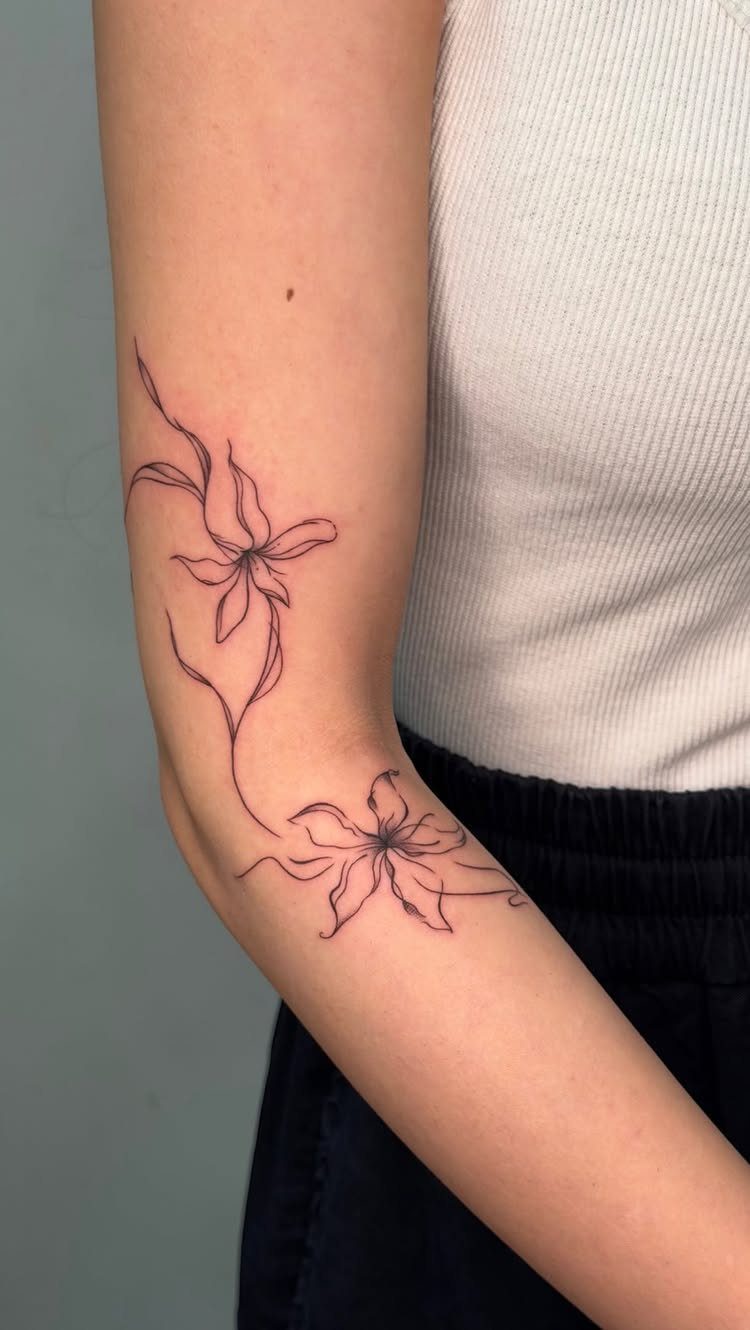
Minimalist line work around the elbow proves that a simple stencil can hold its own against heavier pieces nearby. 2 lilies connected by vines keeps the design open, letting the negative space do as much work as the ink.
The key decision is line weight: too thin and the elbow’s constant movement blurs it within a year, too thick and you lose the delicate quality that makes this choice distinctive.
I would ask for a medium-fine line with a single pass, no shading, and accept that crispness matters more than longevity here.
This fits a smaller budget and a shorter session, usually under 2 hours. It also works as a first tattoo for someone testing how they feel about visible placement, since the design reads as intentional rather than accidental at a glance.

142+ Nature-Inspired Tattoos Stencil Designs in 12 Sheets: This temporay tattoo template set features over 142 unique, delicate designs centered on enchanting botanical and natural elements. Discover a vast collection of flowers (daisies, roses, sunflowers, lavender), intricate leaves, winding stems, complete bouquets, elegant wreaths, crowns, bees, and butterflies. Perfect for creating floral temporary tattoos, henna-inspired patterns, and nature-themed body art.
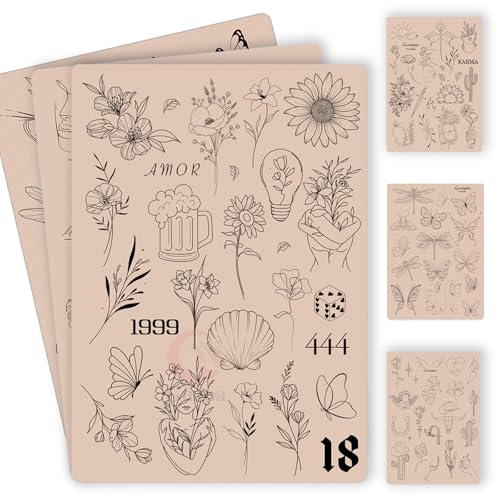
100+ Pre-Printed Designs – Features a wide variety of fine line and tiny tattoo stencils to enhance detailing skills.

Premium Quality 1.5mm Silicone Material – Crafted from premium 1.5mm thick silicone, this tattoo skin offers a true-to-life feel with excellent durability and a smooth surface for effortless needle movement during practice.
6. Large Blooming Flowers, Buds, and Leaves
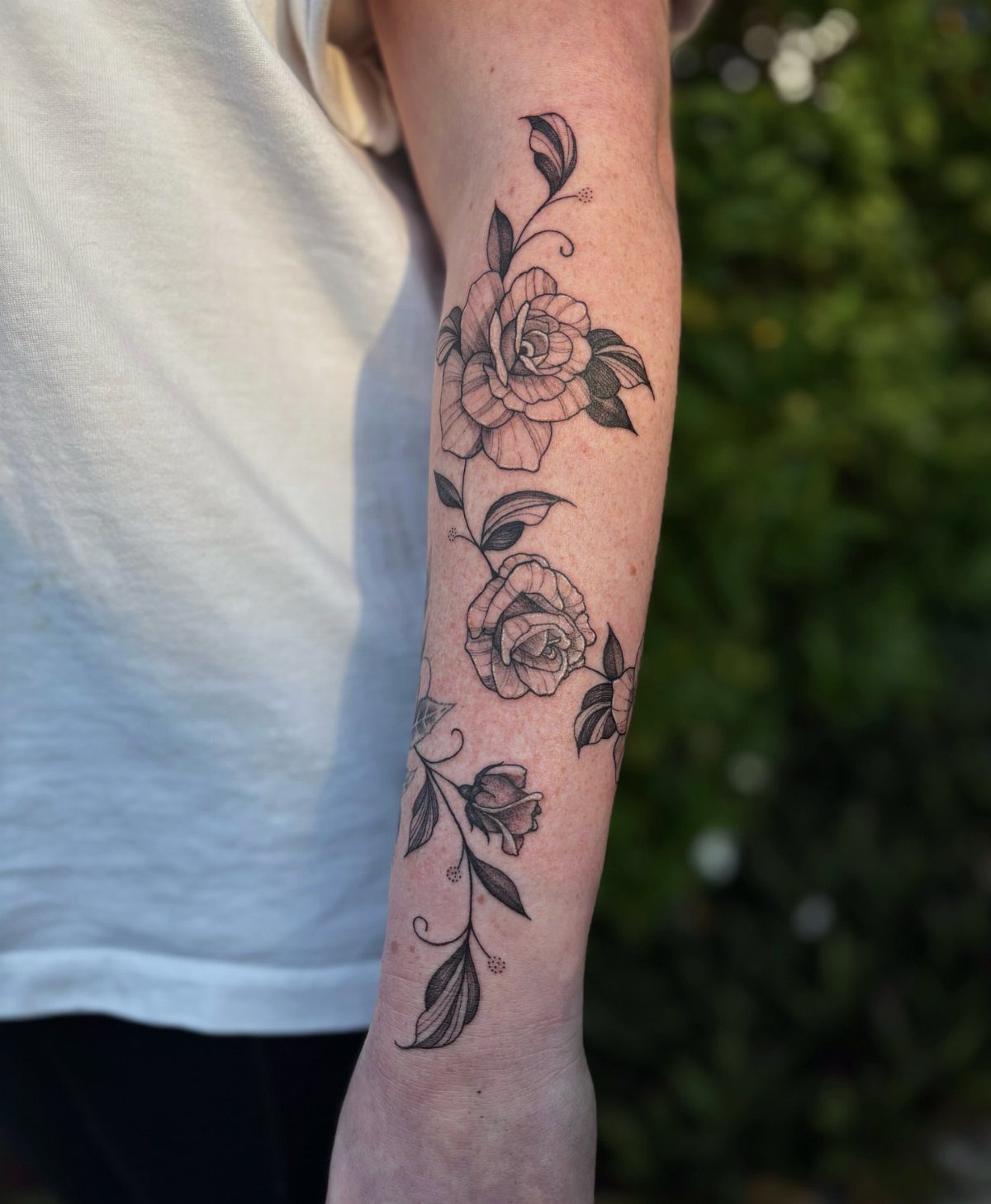
A forearm piece with roses, buds, and leaves running elbow to wrist gives the most flexibility for future additions of any option here.
The vertical flow follows the arm’s natural line, and the mix of open blooms and closed buds creates rhythm without demanding symmetry.
Poppies work in similar arrangement, but roses carry more cultural weight if you want recognition without explanation.
I would place the largest open rose slightly above mid-forearm, where the muscle is fullest, and let buds cluster toward the wrist where the bone nears the surface.
This size needs a full day or 2 shorter sessions. Black and grey heals faster than color and ages more predictably on hands and forearms, which take more sun and abrasion than most people plan for.

TRUSTED FAMILY-OWNED BUSINESS: We are a USA trademarked brand dedicated to providing high quality stencils and our promise of satisfaction. If you are not satisfied for any reason, we will refund your order. Thank you for considering our stencils.

Package Includes:4pcs large flower stencils for wood fencewith the stem and leaf stencil,perfect for painting on wood fence and garden gate.

Easy Application: Made of durable 3-layer PVC material, these henna tattoo stencils are flexible, waterproof and easy to apply. The self-adhesive design helps keep patterns in place for clean and precise temporary tattoo designs. Does not includ ink
7. Flower and Butterfly Compositions
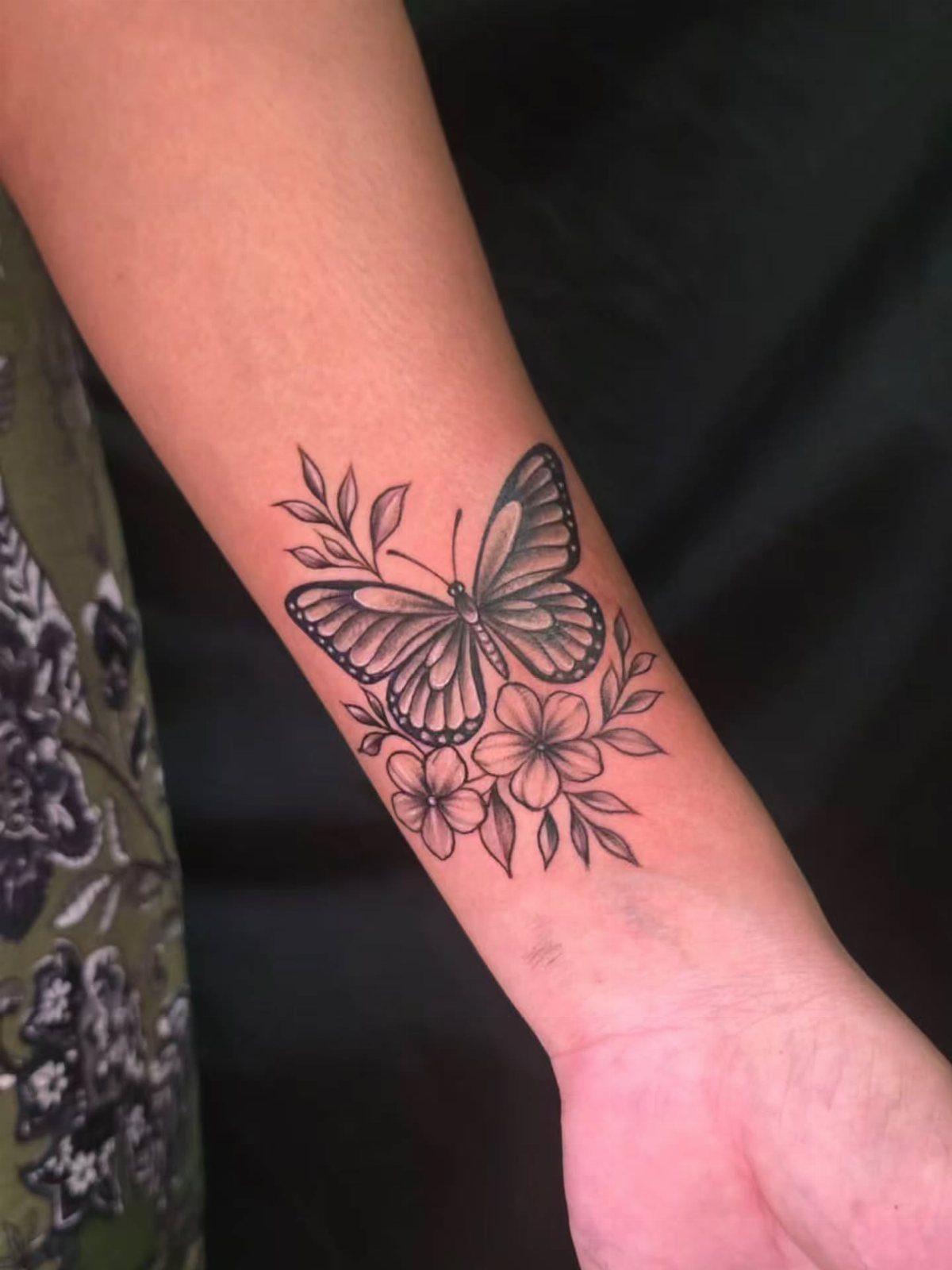
A butterfly perched on lilies turns a floral piece into something that reads as transformation rather than decoration. The vertical flow suits the forearm or calf, where the composition can run long without breaking across a joint.
Black and grey line work keeps the focus on the pattern in the butterfly’s wings and the petal shapes rather than fighting for attention with color.
A butterfly set just left or right of center keeps the eye moving through the whole piece instead of parking in one place.
This combination carries more personal meaning than flowers alone, which makes it harder to explain if you later feel differently about the symbolism. The linework needs steady hands; wing patterns blur fast if the artist rushes.
Dopetattoo Waterproof High-Quality Easy-Use Long-Lasting Temporary Tattoos.You can take it to the beach, swimming pool, bath and any other water activities. Without excessive friction. It will last 3-5 days.

Elegant Floral Designs & Versatile Applications: Create beautiful art with 9 delicate hibiscus and floral patterns. These stencils are perfect for painting on canvas, journaling, fabric printing, embroidery tracing, and even decorating cakes, cookies, or coffee. Their versatility makes them ideal for various DIY projects and crafts.
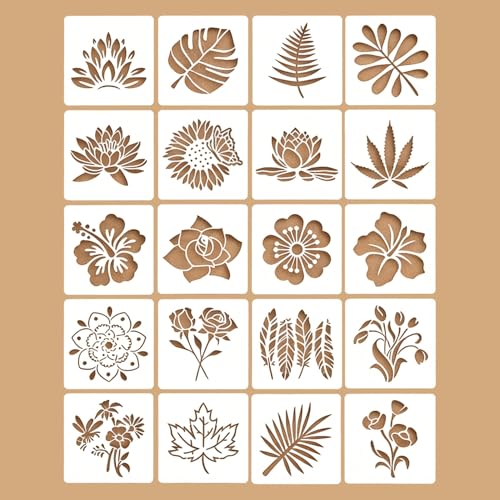
【Flower Stencils Set Includes】: You will receive 20 pieces Flower stencils totally,crafts each one has different patterns,each measuring 3×3 inch, providing you with a generous quantity to meet the needs of your DIY arts.
Tattoo Placement Ideas
Thigh placement carries the weight of a large floral piece without the bone proximity that makes ribs or ankles sting.
The outer thigh in particular offers flat, stable skin that ages predictably; the inner thigh rubs more and fades faster than most people expect.
The shoulder cap gives hibiscus and lily compositions a natural frame. The muscle curve there holds the diagonal flow the design needs, and the skin sees less sun than the forearm if you work outdoors.
A vertical cluster from shoulder toward the deltoid reads clearly in sleeveless shirts without committing to a full sleeve.
Neck placement works too, though collars and hairlines intrude more than you’d think during the design phase.

Double Sided Tattoo Practice Skin: easy wipe, 2 sides designed fine line tattoo practice skins feature over 20 different stencil designs.

【 575+ Fun Assorted Tattoo Stencils 】-The ChurlChurl tattoo stencils collection includes 575 high quality stencils with multiple themes. enjoy cute trendy tattoo stencil designs like butterflies, words, flowers, symbols, totem, Egypt style patterns and more.

【Spiritual Lotus & Moon Designs】This semi-permanent tattoo set features minimalist fine-line designs inspired by lotus flowers, crescent moons, flowing vines, and subtle star accents. Symbolizing renewal, inner balance, and feminine energy, these delicate elements blend Eastern spirituality with modern aesthetics. Perfect for minimalist lovers, yoga and meditation enthusiasts, and those drawn to spiritual, calming, and quiet strength with effortless style.
Color and Style Variations
Sun exposure and daily abrasion hit those spots harder than protected areas, and red inks in particular mute toward brown within a few years without touch-ups.
White ink on black backgrounds reverses the usual contrast and reads as graphic rather than botanical.
The effect works for stylized petals but loses the soft gradation that makes flowers recognizable; I’d consider this only for a secondary piece, not a first floral tattoo.
Fine-line single-needle work gives the delicate quality that makes simple stencils distinctive, though the elbow’s constant movement blurs anything too thin within a year.

Suitable quantity and right size: Package contains 12 sheets of temporary tattoos in unique and beautiful designs. Size: 22 x 4 cm / 8.66 x 1.57 inches for each sheet.

✿【Exquisite Flower & Vine Tattoo】: These temporary tattoos feature delicate winding vines, blooming flowers and tiny leaf elements with natural and soft outlines. Adopting gradient color printing technology, the patterns are layered and vivid, presenting a romantic, elegant and minimalist aesthetic style. Perfect for women and girls to modify collarbone, wrist, arm and back, creating a gentle and charming feminine look.

PACKAGE CONTENTS: 10 sheets of elegant floral and butterfly temporary tattoo designs featuring delicate vines, blooms, and nature-inspired patterns
Tattoo Stencil Creation
A clean grid of lilies, roses, and peonies arranged for practice lets you compare how each flower type reduces to line art before committing to skin.
The grid format keeps proportions consistent; transfer each to stencil paper once you’ve settled on scale.
Simplification matters more than detail preservation.
Petal count drops, interior lines merge, and the stamen reduces to a suggestive shape rather than botanical accuracy. What reads clearly at drawing size often clutters at tattoo scale; test by shrinking the image to actual size on screen.
Alignment checks against body landmarks before the first needle hits. For symmetrical pieces like the lotus, the artist should verify center against the spine or sternum; even a quarter-inch shift reads as off-balance once the design is permanent.

24PCS Unique Henna Stencil Pack – This complete henna tattoo kit accessory set includes 24 sheets of reusable mehndi stencils (6.89" x 3.34"). Featuring exclusive designs like long arm bands, moon motifs, vine flowers, and large floral templates, it is ideal for creating DIY temporary skin art on wrists, arms, back, and full body.
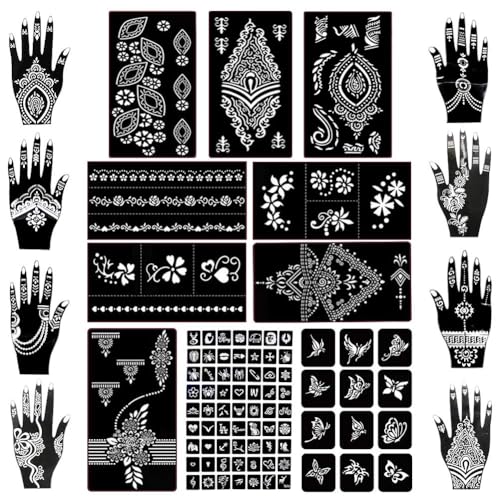
97 HENNA TATTOO DESIGNS IN 18 SHEETS:Includes 8 hand stencils, 8 rectangle flower pattern sheets, and 2 small pattern sheets. Features butterflies, flowers, roses, mandalas, paisley, and traditional Indian/Arabian mehndi designs. Perfect for creating stunning body art for weddings, festivals, and summer celebrations.

Package Includes: You will receive 20 sheets reusable tattoo stencils, enough quantity to meet your daily requirements. The mehndi stencils are suitable for airbrush painting, glitter tattoo, and so on.
Frequently Asked Questions
What is the prettiest flower to get tattooed?
Roses, peonies, and lotus flowers are the most reliable choices for a tattoo that stays readable over time.
How long will a tattoo stencil stay on?
A tattoo stencil typically lasts a few hours to a day on the skin, depending on your skin type and how much you sweat before the session starts.
The artist will let it dry before beginning, and any smudging during transfer is reason to stop and reapply.
Can I convert any image into a tattoo stencil?
Many images can be simplified into stencils, though not every source image suits the process.