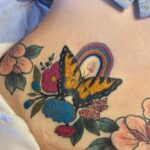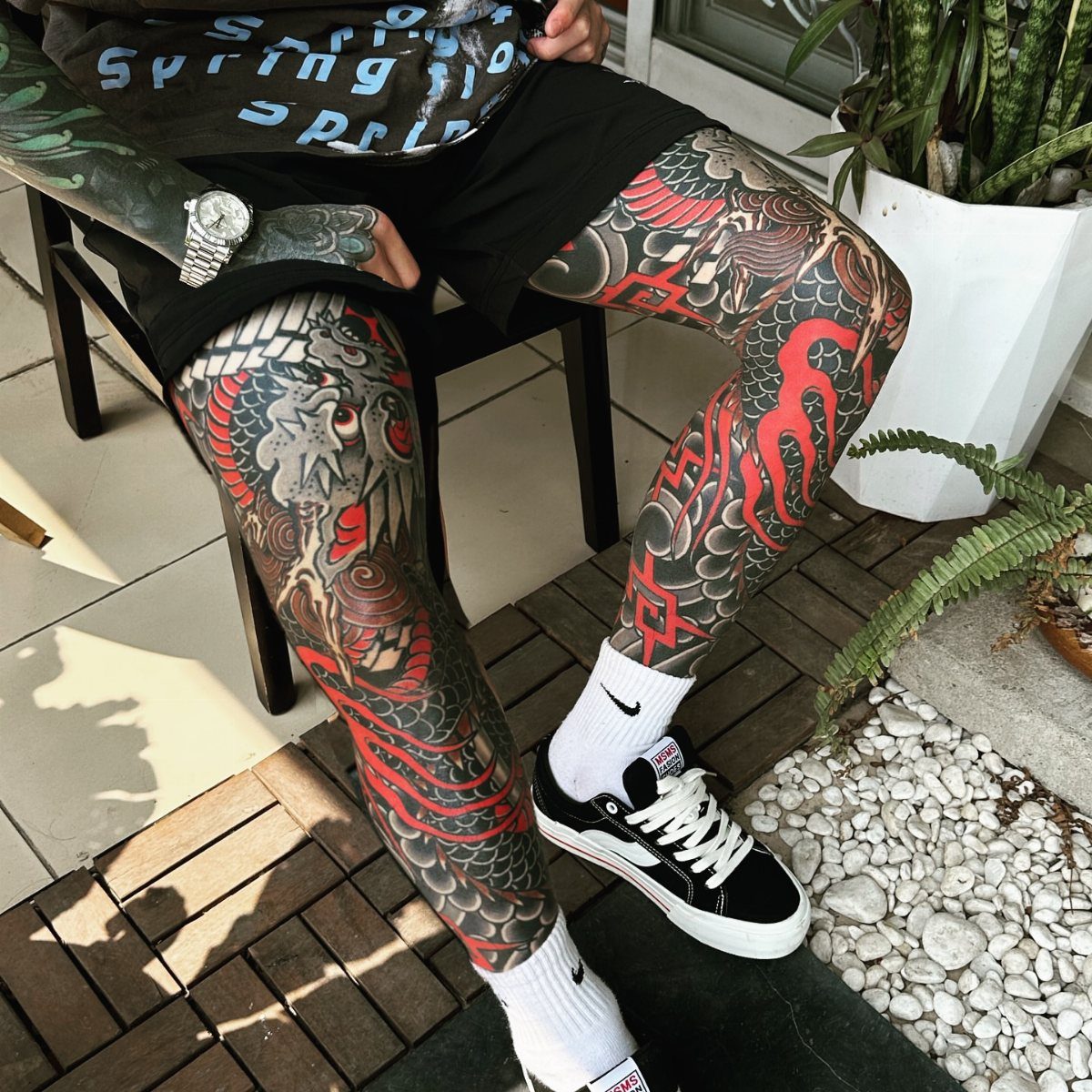
A Japanese tattoo style can run from a single fox mask behind your ear to a full body suit built across years of sessions, so the deciding factor is how much skin and time you are actually willing to commit.
The seventeen directions below range from half-day pieces to multi-year projects, each with its own placement logic and color rules.
1. Japanese Dragon Tattoos
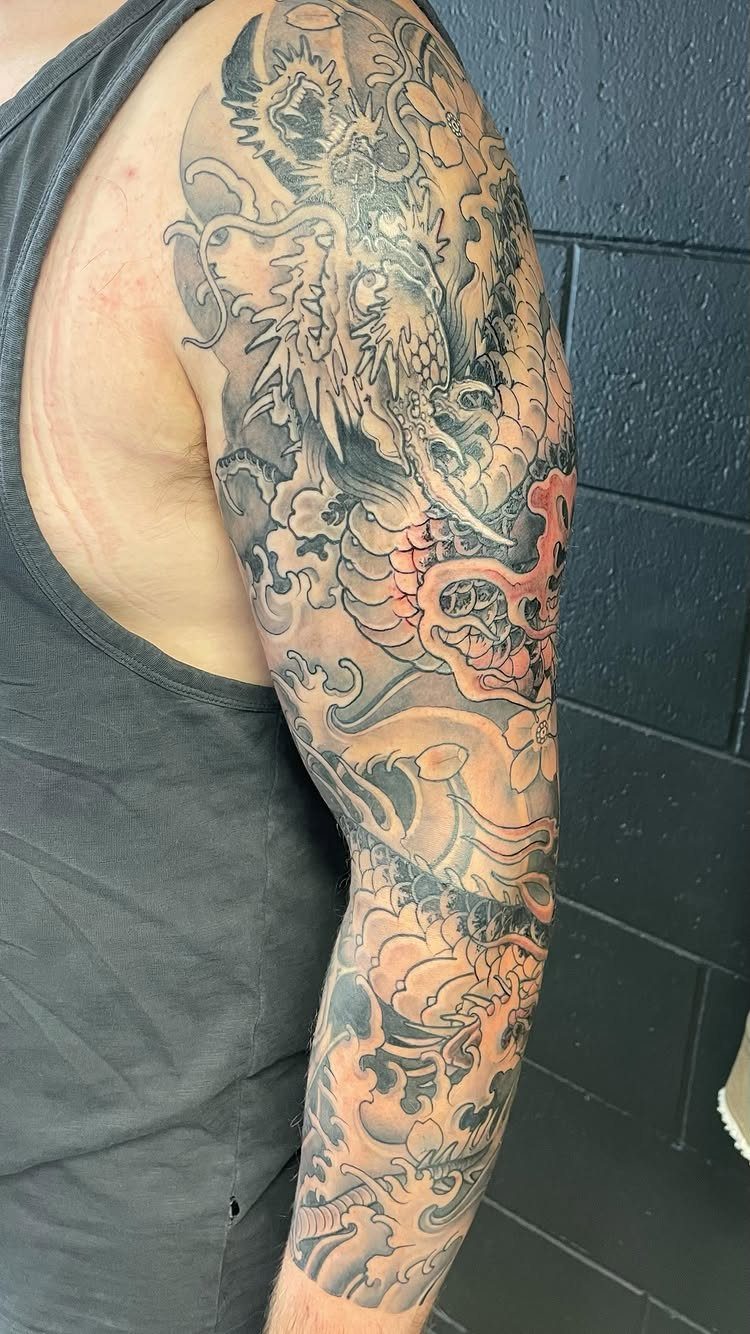
The Japanese dragon coils through clouds and waves with a body that never looks straight-on; its head turns sideways, its claws grip mist, its scales run in rows of tiny circles that take hours to line out.
I like this style for arm work because the dragon’s long body fills a sleeve naturally, head at the shoulder and tail curling toward the wrist.
Black and grey ink carries the form, with red saved for the dragon’s tongue or accent scales against a dark background.
The clouds around it need that soft grey wash to read as distance; too dark and the dragon flattens into the background instead of swimming through it.
A full sleeve runs multiple sessions, so budget accordingly.

🐟Chinese Style: the art template stencil set features various Chinese Style pattern design Fu Zodiac Great Wall Panda Fish Taiji etc , easy to bring you chinese element atmosphere, ideal for drawing tracing, house embellishment, making a pretty addition to your home.

6 Japanese Style Design Sheets – Traditional dragon, koi fish, phoenix, and samurai artwork gives you an authentic full-arm sleeve look in one easy application.

2. Koi Fish Tattoos
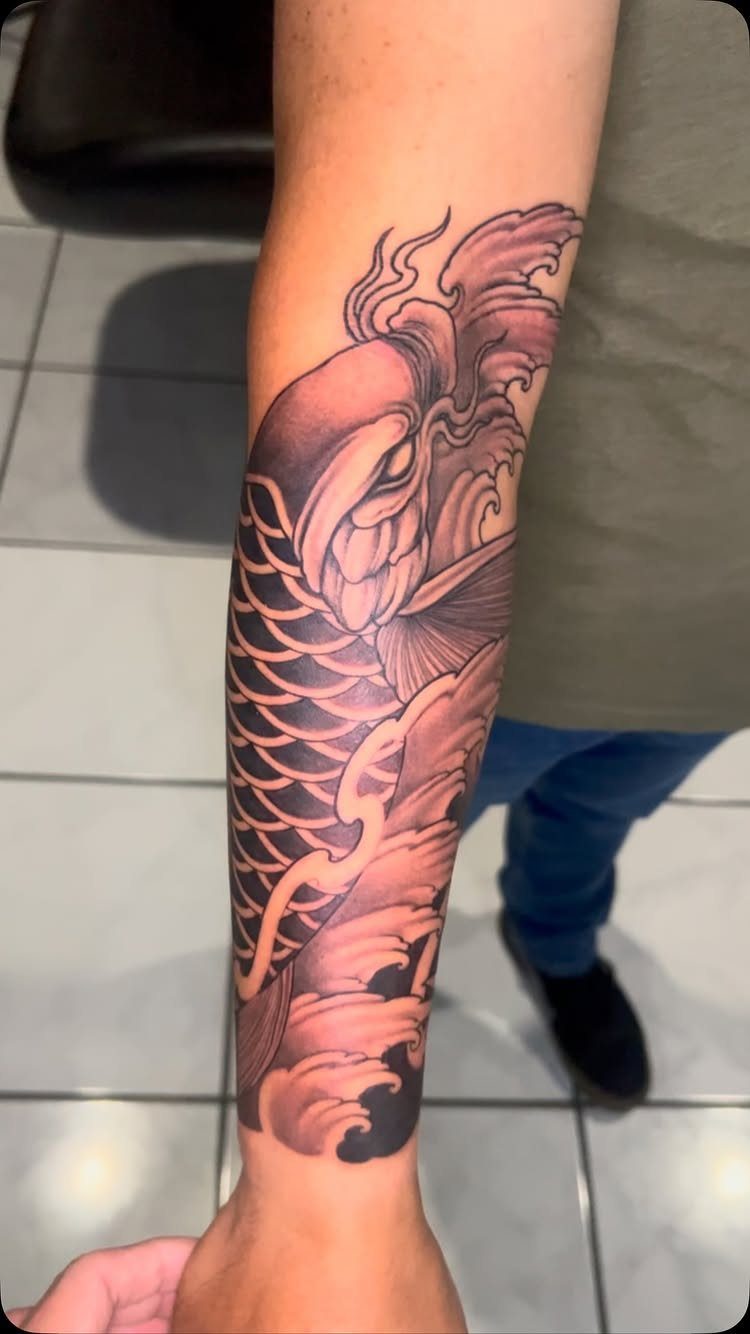
A koi fish swims upstream in Japanese tattoo work, its body bent against current that shows in the water lines around it. The fish earns its color by fighting.
Black and grey versions hold up better over decades, though I have seen orange and red koi done well when the artist builds the color in layers rather than saturating at once.
The waves need the same curl direction throughout, or the composition breaks apart when you move your arm.
Maple leaves pair with koi in some sleeves I have tracked on Pinterest, adding a seasonal marker that turns the fish’s journey into autumn specifically. Simpler versions work with just fish, water, and white highlights that suggest spray.
Plan for a half sleeve at minimum; the koi’s body is too long to compress into a small space without losing the curve that makes it alive.

Warm Tips: The tattoo transfer paper need to work with transfer medias.You will need to purchase the stencil ointment separately. Apply the design made on the master paper. Please pay attention to press the back side of the pattern to the skin for at least 3 seconds

【Develops Fully in 48H】Your tattoo will initially appear silver before naturally darkening to a rich finish within 48 hours. For optimal results, avoid contact with bare skin (particularly the face) and cover the area with clothing during sleep to prevent transfer.

Precision Transfer Performance - It’s professional-grade tattoo stencil paper delivers vibrant, high-definition transfers even for intricate designs. The carbon layer ensures sharp outlines without smudging or fading, ensuring crisp lines that stay true to your original artwork.
3. Cherry Blossom Tattoos
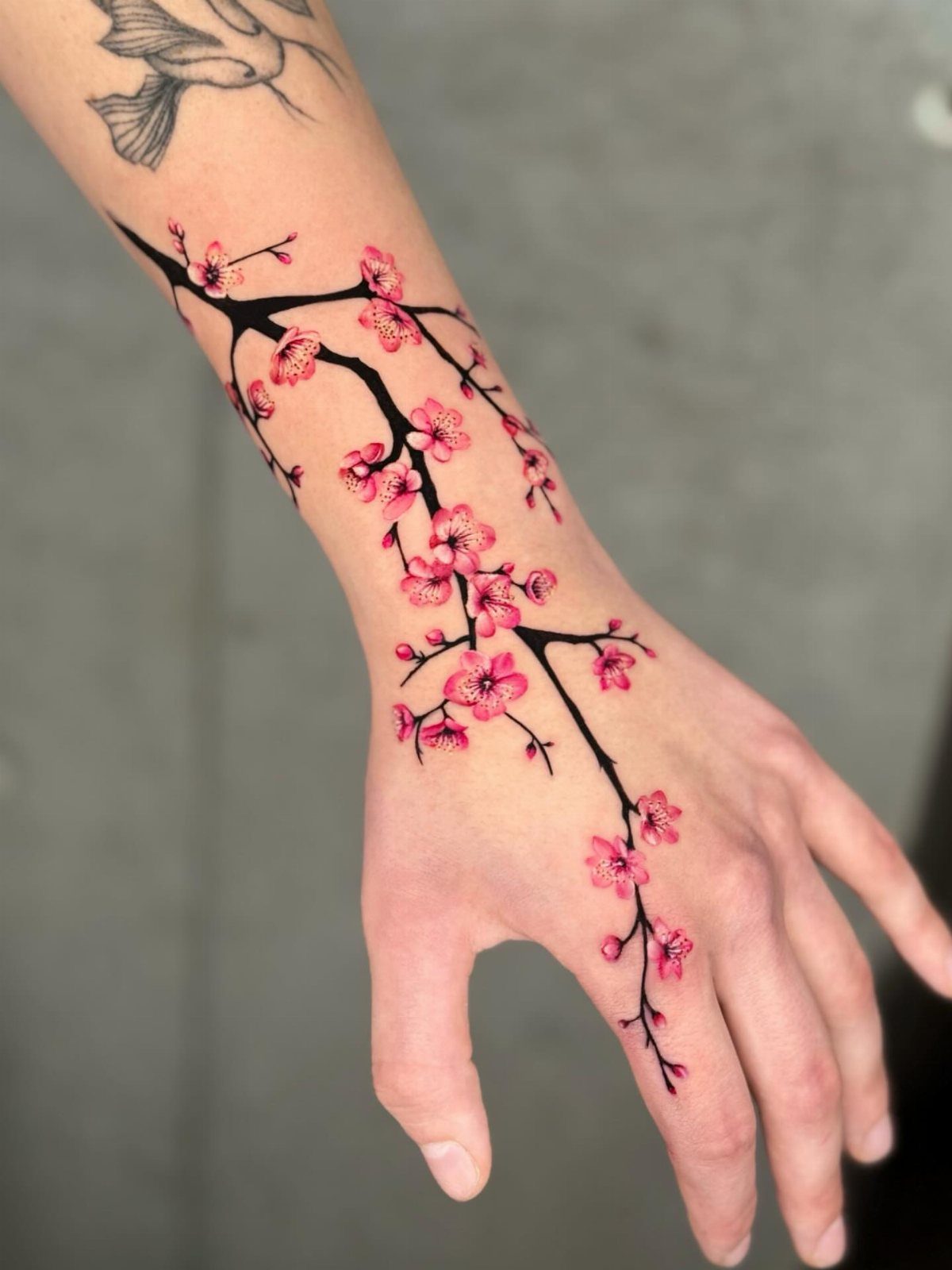
Cherry blossoms scatter across skin in a way no other flower does in Japanese work; they do not sit still for a portrait but blow through a scene, petals detached and falling.
That motion fits the meaning, which is about how brief the beautiful part is.
Running a branch from forearm to hand hurts more than upper arm skin, and that area sees enough sun that you’ll need to stay on top of sunscreen to keep the color from dropping out fast.
Pink here is a choice, not a requirement; some of the strongest blossom work I have saved uses only black ink, letting the skin itself carry the light value.
Cloud or wind patterns behind the branch keep it from reading as a floating sticker. If you are adding a mask or figure nearby, let the blossoms overlap slightly into that space rather than keeping clean borders between subjects.

Decoration Sets: :You will receive 4 painting stencil templates with different cherry blossom patterns, the patterns are vivid and beautiful. Dimensions are 11.7x8.3 inch/29.7x21cm.

Contains THREE - 3.5″ x 7″ laser cut mylar stencil, oval in shape. 🇺🇸MADE IN USA

Design Variety: This cherry blossom stencil set includes 12 reusable PET templates in 2 sizes (8.3x11.7inch/21x29.7cm and 5.5x7.9 inch/14x20cm) and 6 unique designs. You will receive versions of beautifully blooming cherry blossom branches and some designs feature delicate accents, such as scattered petals or butterflies. The package includes a 6.3 inch/16cm stencil brush for painting
4. Samurai Tattoos
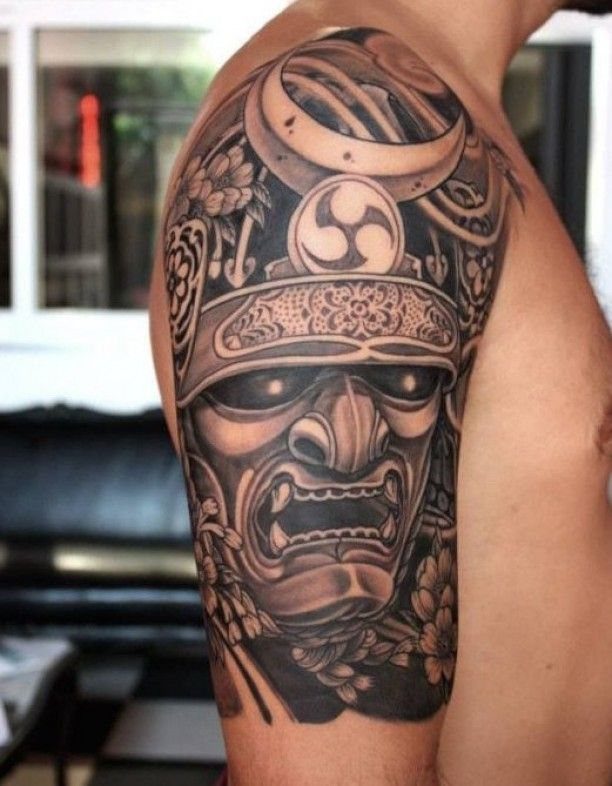
Samurai helmet tattoos draw the eye to the face guard’s angles, the horn-like crests, and the neck armor that frames the whole piece like a portrait frame.
Carrying cherry blossoms around the helmet softens the war symbol into something more personal; that contrast is where the design lives.
Black and grey ink dominates this subject, which helps the metal read as metal and the fabric read as fabric through value alone.
A good artist builds the helmet’s depth in 3 layers: the dark interior of the face opening, the mid-grey plates, and the near-white highlights on crest edges.
Lotus or maple leaves can swap in for the cherry blossoms if you want a different season or meaning; peonies add wealth connotation that layers onto the honor the helmet already carries.
The photo’s shoulder placement uses the helmet’s natural triangle to cap the arm’s curve, a smart fit that smaller or rounder subjects struggle to achieve.

TATTOO AFTERCARE ESSENTIAL: Hustle Butter is the original tattoo aftercare balm for new and older tattoos. With over 10 years in the market, we are a pioneer of the tattoo aftercare category.

COMPLETE AFTERCARE KIT FOR NEW & EXISTING TATTOOS: This Tattoo Aftercare Kit brings together 3 essentials, Antimicrobial Soap, Tattoo Balm, and Tattoo Lotion, to help cleanse, protect, and moisturize fresh ink. Useful after tattoo sessions and throughout healing, it supports vibrant color and skin comfort for dedicated ink enthusiasts and artists

🌿 VIBRANT COLOR & DEEP MOISTURE - Crafted with nutrient-rich a&d ointment, our balm deeply hydrates freshly inked skin. It supports your natural moisture barrier, keeping body art and microblading looking bold and beautifully vibrant.
5. Hannya Mask Tattoos
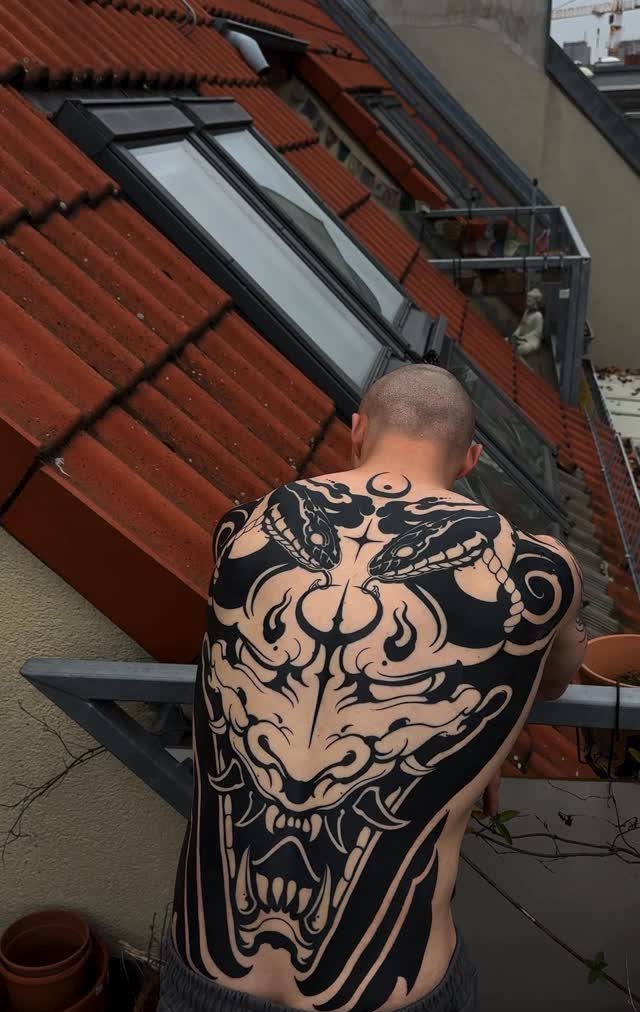
The Hannya mask shows a woman’s face mid-change, horns already split and teeth lengthened, the moment before full demon form. That in-between state is what makes it tattoo-worthy; a full demon would be less interesting.
Black ink across the back lets the mask’s white eyes and teeth jump forward without any color needed. Snakes coil through this version, their scales giving the artist a textural break from the mask’s smooth planes.
The mask alone carries enough weight that placement matters more than added imagery; a smaller scale keeps the aggression readable without turning into something you have to explain at work.
The Hannya reads as angry from straight on, sorrowful from an angle; that shift is built into the mask’s carved geometry, not an accident of viewing.
An arm placement needs the mask smaller, which loses that face-sized impact unless you simplify the surrounding detail. Back or chest is where this subject lives best.

Looks Real and Seamless -- 92% nylon and 8% spandex,stretchable fabric material,These arm tattoo sleeves is easy slip on and off,you can feel comfortable and soft whenever you wear it. Reasonable price with great quality.

【Practice Tattoo Arm using scenes】Beginners tattoo operation of the real experience, Tattoo artist tattoo skills practice, Tattoo store tattoo pattern effect works to show customers

【Practice Tattoo Arm using scenes】Beginners tattoo operation of the real experience, Tattoo artist tattoo skills practice, Tattoo store tattoo pattern effect works to show customers
6. Peony Flower Tattoos
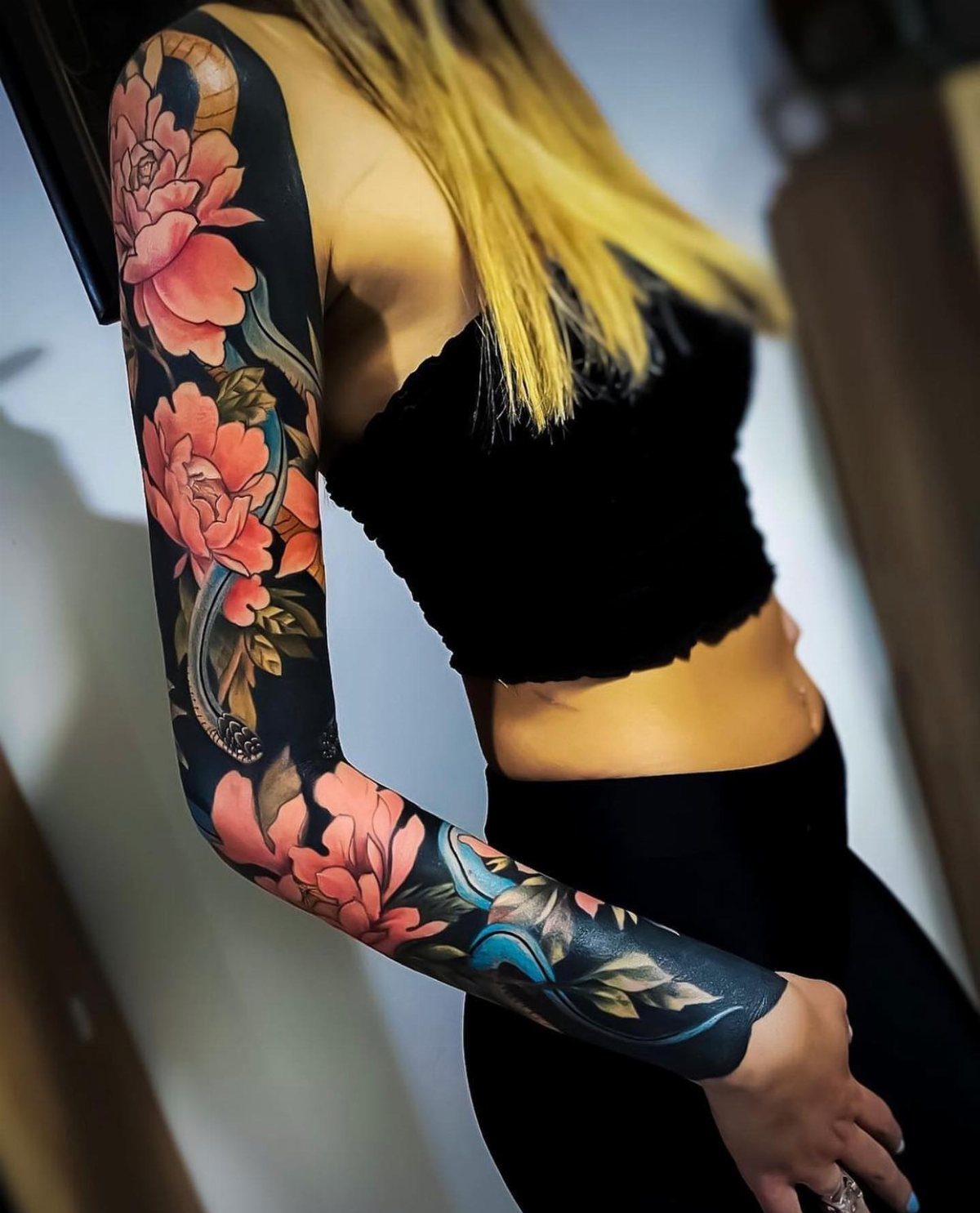
Peonies carry weight in Japanese tattoo work that Western flower choices rarely manage; they are not decorative filler but a main subject with their own meaning of risk and reward, the bloom so heavy the stem bends.
Pink flowers can read as tough when the layout and weight are right. Solid black background pushes the peonies forward like stage lighting, and the snake threading through adds narrative tension that plain bouquets lack.
Pink petals with green leaves read softer than the traditional red; the snake threading through gives the piece movement without fighting the flower for attention.
Pairing peonies with a dragon or koi is traditional, but the snake version here feels more specific, less default.
The leaves need more sessions than the flowers, their complicated edges slowing the work. Budget for that, or accept simpler leaf shapes that read as stylized rather than failed realism.

Package Comes with: you will receive 1 piece reusable painting stencil, which is A4 size 8.3 x 11.7 inches / 21 x 29.7 cm

🐳[8 Sheets Black Dragon Tattoos in One Package!] - Original Brand of TASROI 3D imperial loong Tribal Dragon Temporary Tattoos For Women Men and Adults. Tattoos Temporary Contains 8 Large Sheets Water Transfer Animals Dragon Floral Flower Rose Moon Serpent Totem Armband Etc.

Chinese Dragon Design: Features a detailed and intricate Chinese dragon motif, perfect for Asian-inspired, fantasy, and mythical projects.
7. Tiger Tattoos
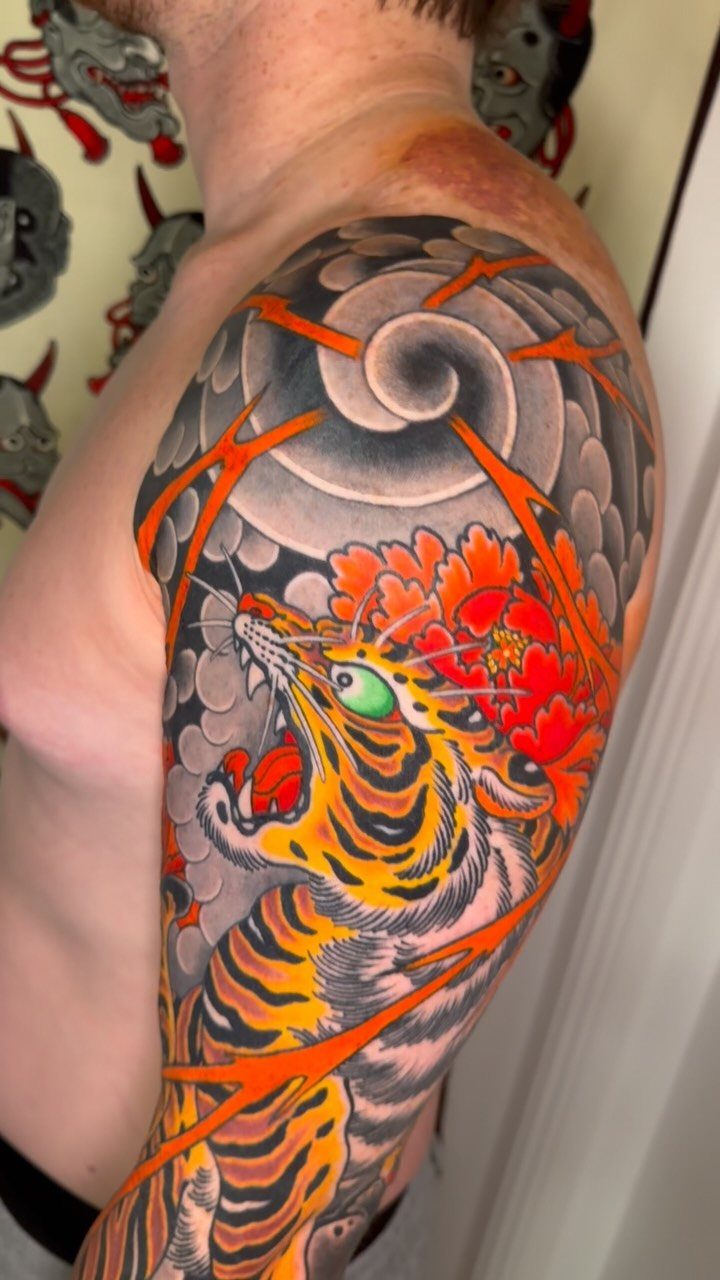
A Japanese tiger tattoo carries its stripes in long brushstrokes that read as fur direction, not prison bars; the animal turns its head to roar, never facing front, because a flat tiger looks stuffed.
Orange against grey clouds and lightning needs a sleeve or large shoulder cap to breathe.
Black and grey versions age cleaner if you work outdoors or swim often; the orange here demands touch-ups every few years to stay this loud.
Peonies around the tiger’s feet ground it in Japanese convention, though cherry blossoms work if you want the piece lighter. Rocks and wind bars fill background space that would otherwise read as empty.
The claws need red or stay black; either way, they should extend, not curl decorative. This subject suits someone who wants visible power without the dragon’s length requirement.

Precision Transfers & Long Lasting: Tattoo stencil paper delivers vibrant, high-definition transfers even for intricate designs. Creates crisp, dark lines that transfer cleanly to skin (clearly on different skin tones) which are easy to follow during tattooing. The carbon layer made from high-quality dyes ensures sharp outlines without smudging or fading and maintains crisp lines visibility throughout long tattoo sessions, so you can focus on creating art instead of re-drawing lines
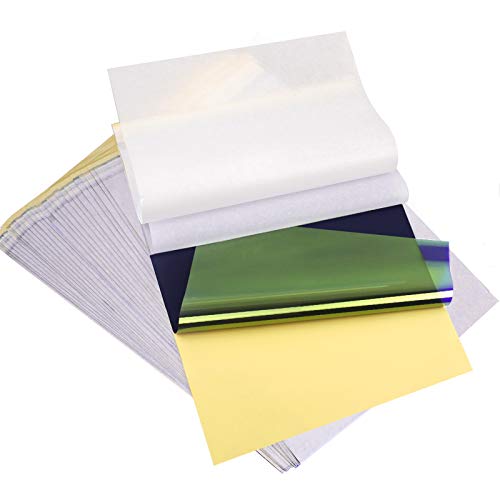
ADVANCED MATERIAL: Tattoo transfer paper is made with the high quality dyes and stencil paper. Transfer marks are very clear, clean and smooth. Tattoo transfer paper kit come with 35 sheets. Great for tattooing, trace and transfer images onto the body.<br>

Koi Pattern--Preferred koi pattern model, with fine tailoring and craftsmanship, making our painting stencils distinct in patterns and delicate in line.
8. Wave Pattern Tattoos
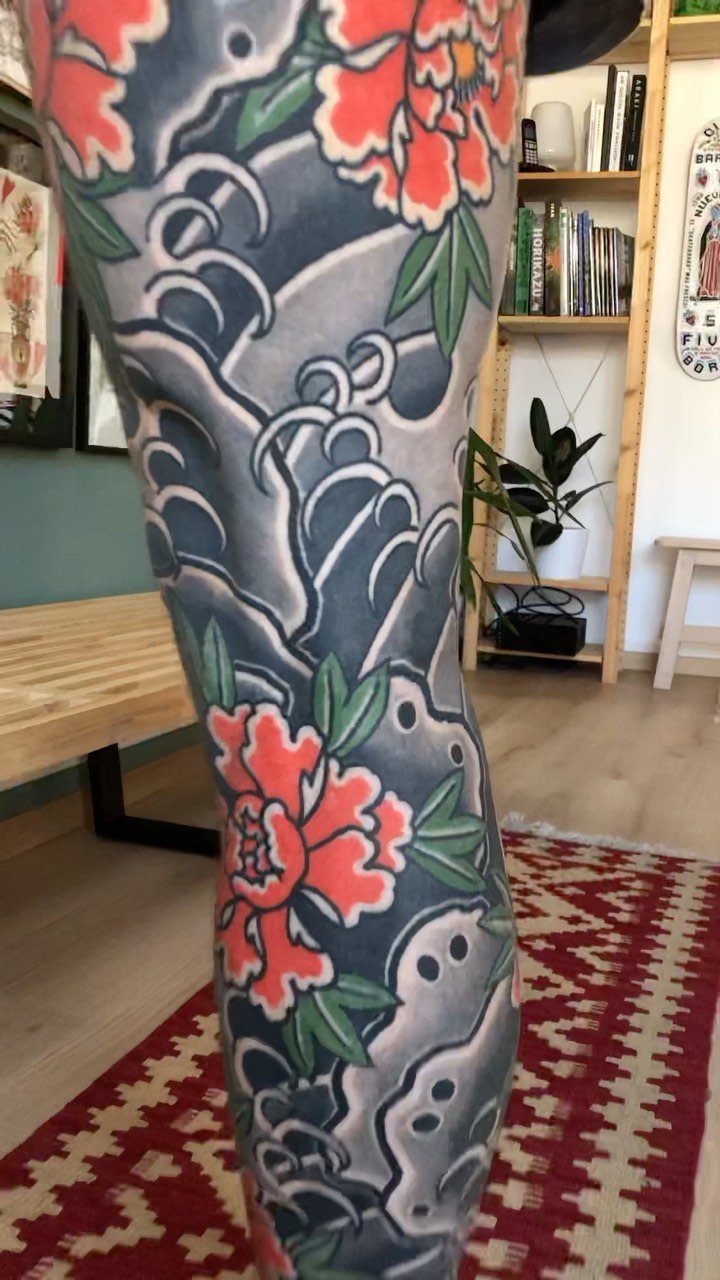
Water in Japanese tattoo work moves in repeating claw shapes, foam drawn as individual circles with hollow centers, never filled white.
Waves running ankle to knee with rocks breaking the current and red peonies caught in the spray make a full leg sleeve.
Black and grey ink carries the water; color lives in the flowers or creatures swimming through.
Wind bars, those diagonal streaks behind waves, add speed but crowd smaller pieces. For a forearm or calf, I would drop the wind and let the wave curls alone carry motion.
The foam heals lighter than the water beneath it; plan for a second pass once swelling settles, or the contrast flattens.
Snake, mask, or dragon can thread through these waves, turning background into scene. A wave sleeve without a main subject reads as incomplete, filler without a reason.

Package Comes with: you will receive 1 piece reusable painting stencil, which is A4 size 8.3 x 11.7 inches / 21 x 29.7 cm

Package Contents: The package includes 12 Spring Cherry Blossom Stencils in two sizes (6 large stencils measuring 8.27x11.69 inches/21x29.7 cm and 6 small stencils measuring 5.51x7.87 inches/14x20 cm), along with a 6.3 inch/16 cm paintbrush. The entire set features an elegant cherry blossom, butterfly, and floral theme. It evokes a fresh and gentle spring atmosphere and is suitable for hand-painting living room walls, spring-themed journals, and DIY wedding decorations.

Package Includes: 4 pieces of cherry blossoms theme stencil, the size is approx. 11.8×11.8 inches/ 30 x 30 cm, which are proper presents for DIY lovers, enjoy happy painting time with friends and family members.
9. Torii Gate Tattoos
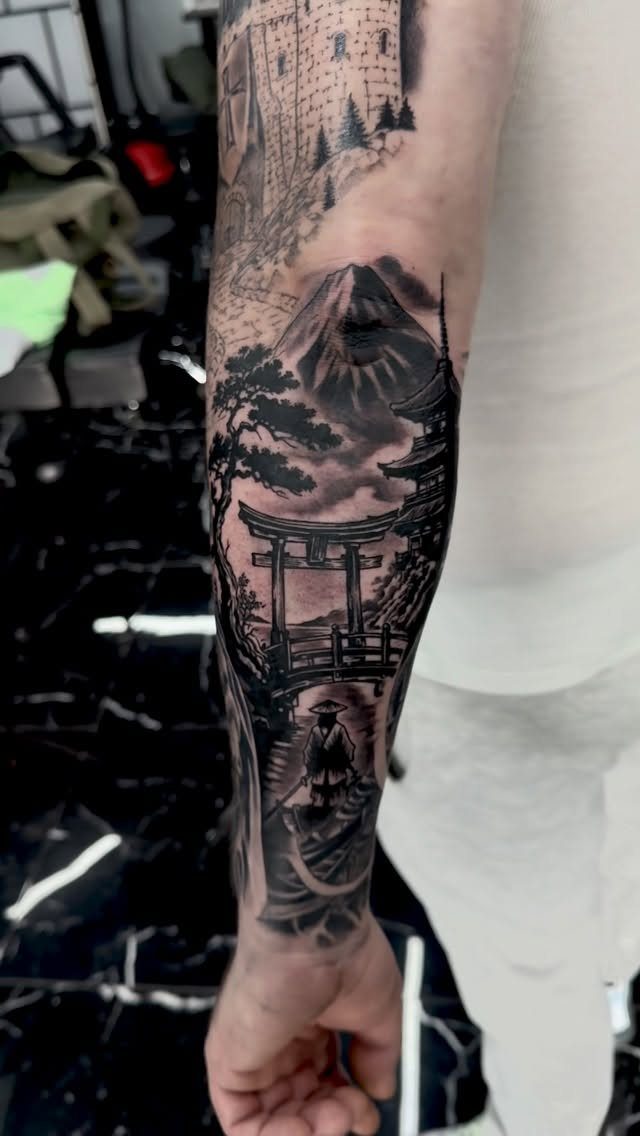
A torii gate tattoo marks a threshold: the red posts in life, rendered here in black and grey with a figure crossing toward pagoda and mountain.
A bridge gives the scene depth, the gate in front, destination behind, the viewer placed at the starting side.
A bridge leading toward the gate keeps the meaning tied to spiritual passage rather than travel; the figure walking it makes the scale feel walkable rather than monumental.
The figure’s size matters: too large and the gate shrinks to toy proportions, too small and the crossing reads as anonymous. I would ask the artist to place the figure mid-bridge, committed but not arrived.
Black and grey suits this subject’s stone and wood textures; color risks the gate reading as plastic or carnival. Vertical calligraphy beside the scene adds textural break but needs a translator’s check; wrong characters become permanent joke.

CLEAN INGREDIENTS FOR NEW TATTOOS - Our Soothing Gel skips the skin-suffocators and instead focuses on lightweight botanical oils like Sweet Almond and Argan which are naturally rich in fatty acids antioxidants to help nourish and offset environmental stressors that can further aggravate your ink.

FRAGRANCE FREE TATTOO AFTERCARE FOR SENSITIVE SKIN - The same #1 artist recommended Hustle Butter formula, now with no added fragrance, dyes, or parabens. The unscented tattoo lotion of choice for sensitive or easily irritated skin.

Nourishes Healing Ink for Vibrant Color: Tattoo Goo supports healing tattoos & maintains vibrancy on healed ink with a lightweight formula rich in olive oil, lavender oil, cocoa butter, and beeswax. It absorbs quickly, moisturizes deeply, and helps reduce dryness, itch and tightness so your tattoo looks and feels comfortable through everyday routines
10. Fox Mask Tattoos
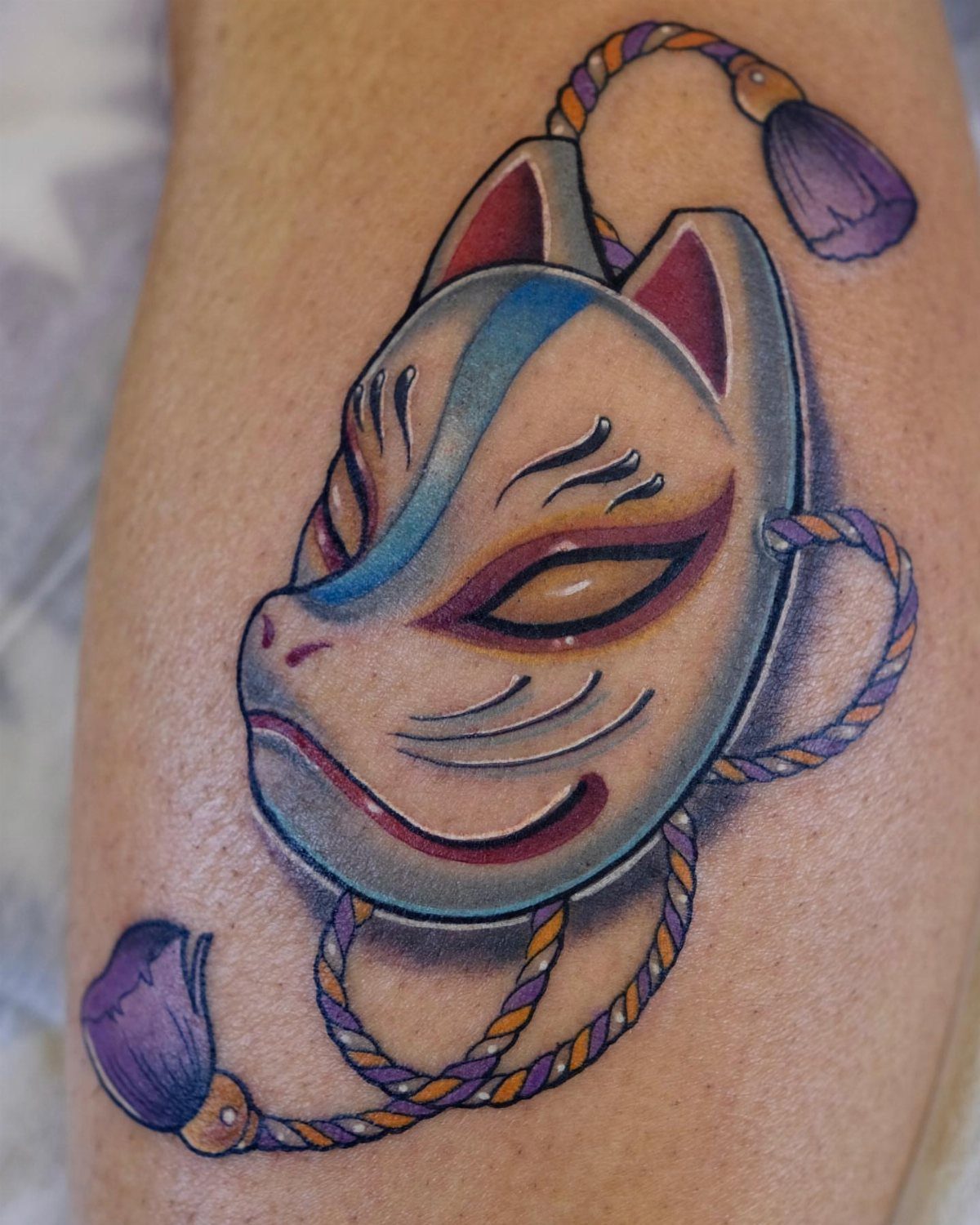
Braided rope in purple and yellow pushes a kitsune mask toward the neo-Japanese end of the spectrum rather than strict tradition.
The mask’s white base with red markings is the classic form; adding blue and teal peonies shifts it further into contemporary color play.
A fox mask suits smaller placements than demon masks; the face is gentler, less dependent on scale for impact.
Behind the ear or on a forearm end works, where a Hannya would need chest or back to breathe. The ropes and tassels give the artist line work to vary against the mask’s flat planes.
Color here is the point; a black and grey fox mask loses the trickster energy that makes the subject worth choosing. Metallic or bright ink limits apply, so ask which yellows and purples your artist trusts to heal true.

Protect Your Skin: Cooling shawl sun sleeves which like a second skin is designed to prevent 99% UVA/UVB rays. So you can comfortably play any sport in it especially in summer

American Made Quality - Proudly made in the USA with premium craftsmanship delivering high-quality protection and durability. Suntan full arm sleeves in MediuMLarge size for reliable coverage.

💪SUPER REALISTIC TATTOO PRACTICE ARM: 1:1 scale reproduction of a human arm, 63cm/24.8inch, yellow skin and white skin available.Pound of flesh tattoo skin.TATTOO SUPPLIES
11. Snake Tattoos
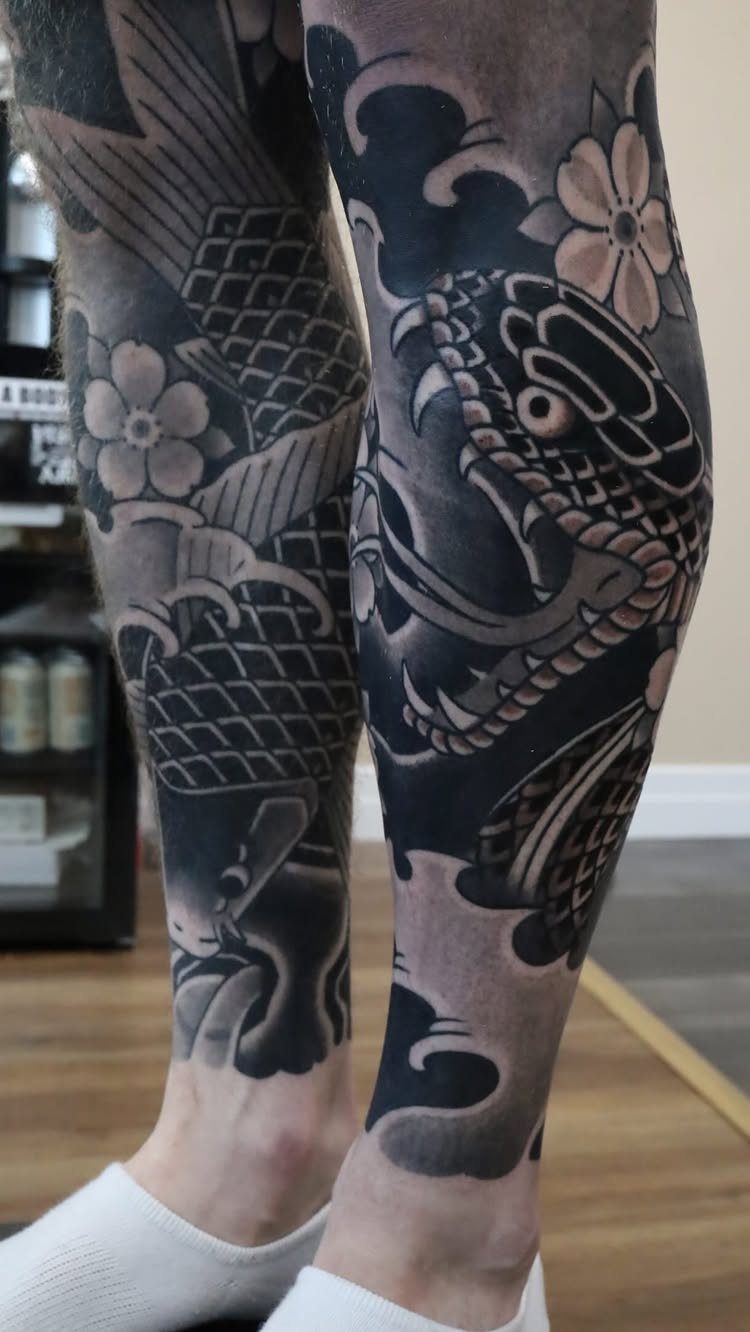
Snakes in Japanese tattoo work coil rather than stretch straight, their scales drawn as rows of half-circles that catch light differently from every angle.
A snake through cherry blossoms on the leg works when the reptile’s body is thick enough to read at distance, not thread-thin and lost.
Black and grey ink with red accents carries longer than full color; the snake’s belly can stay light through negative space rather than white ink that yellows. Peonies or maple leaves replace cherry blossoms if you want weight over delicacy.
The snake’s head turns back toward its tail in traditional composition, eating its own story.
A snake facing outward, hood flared, reads as cobra and wrong school; check the reference with your artist before lining starts. This subject layers meaning onto other pieces rather than standing alone well.
12. Crane Tattoos
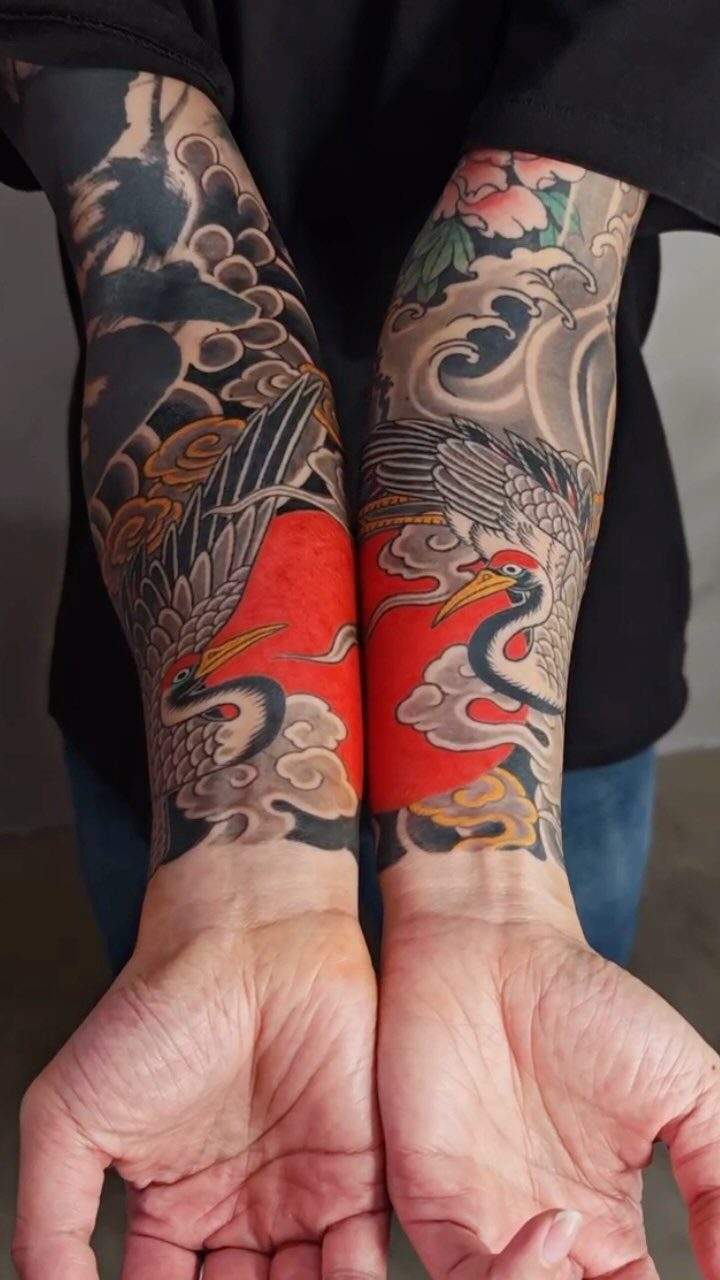
Cranes in Japanese work fly with necks extended, wings spread to their full fingered span, never perched and compact.
Paired forearms mirroring cranes across both arms only works if you plan to display them together; single-arm crane pieces need the bird larger, more central.
Black and grey feather detail builds through line weight: heavy outlines for wing bones, hair-thin strokes for the soft underlayers.
A red sun behind the crane, as visible here, sets the bird in flight toward morning; a white sun reads as moon and shifts the meaning to night travel.
Cranes pair with waves or clouds, rarely with flowers alone; the bird needs air or water to move through.
The longevity meaning suits this piece for someone marking survival or recovery, the crane’s thousand-mile flight standing in for endurance. 2 cranes mate for life; a pair on separate arms carries that weight only if the relationship does.
13. Oni Mask Tattoos
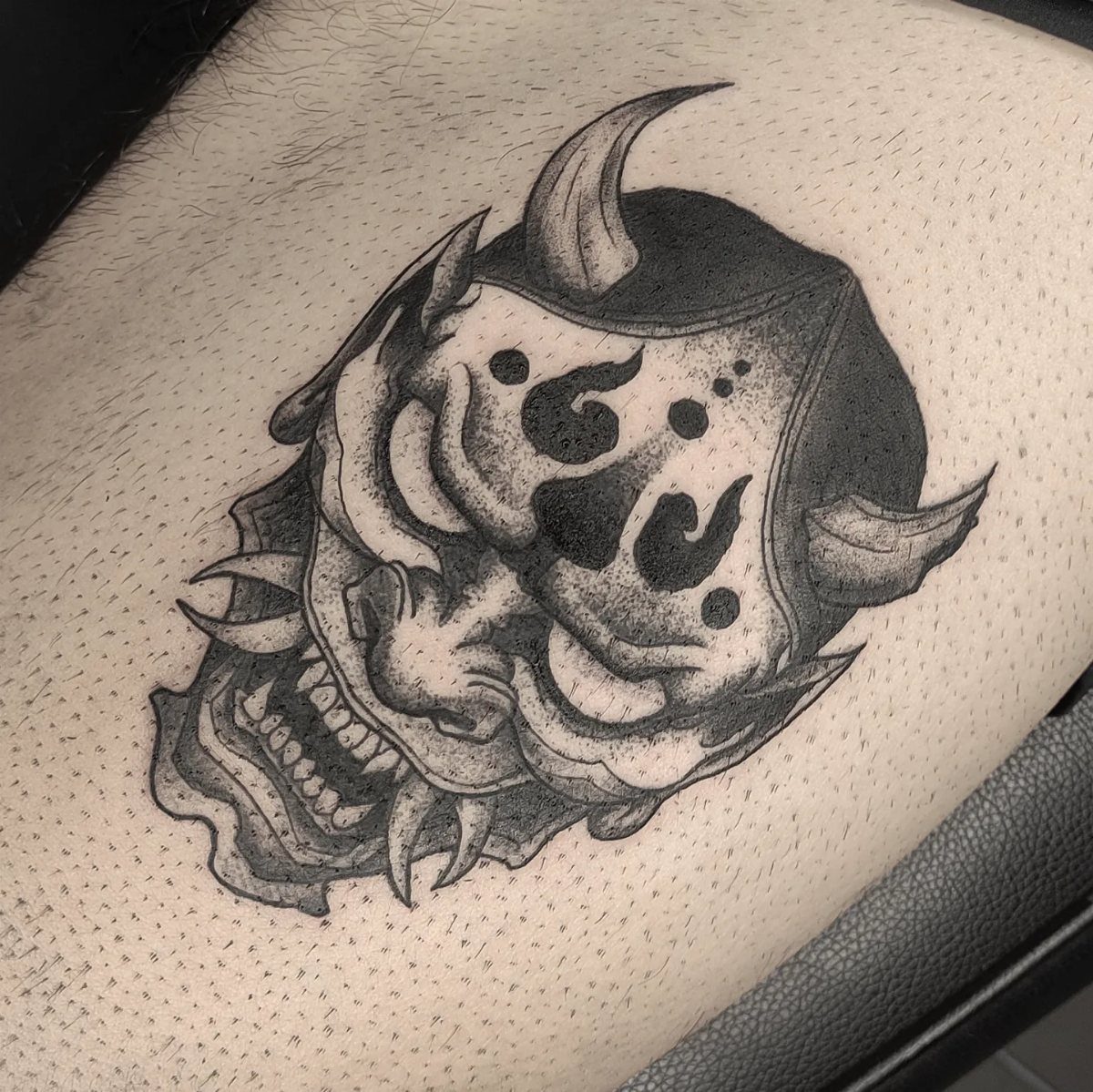
Oni masks carry heavier horns and wilder hair than the Hannya’s controlled rage; the demon is fully formed here, not mid-transformation.
Black and grey ink suits the stone-carved weight, though color versions in red, orange, and blue shift the mask toward festival energy rather than threat.
Floral elements around the edges soften the face enough for daily wear; peonies or cherry blossoms both work, the choice being weight versus airiness.
The horns need space to spread; forearm placements force a smaller mask that loses the brow’s overhang and the jaw’s breadth. Chest or outer thigh carries the scale better.
Wind bars behind the mask add motion without crowding the face itself. A second figure crossing swords with the oni turns the piece into narrative; alone, the mask reads as guardian or warning depending on the viewer.
14. Traditional Japanese Tattoos Covering Large Body Areas
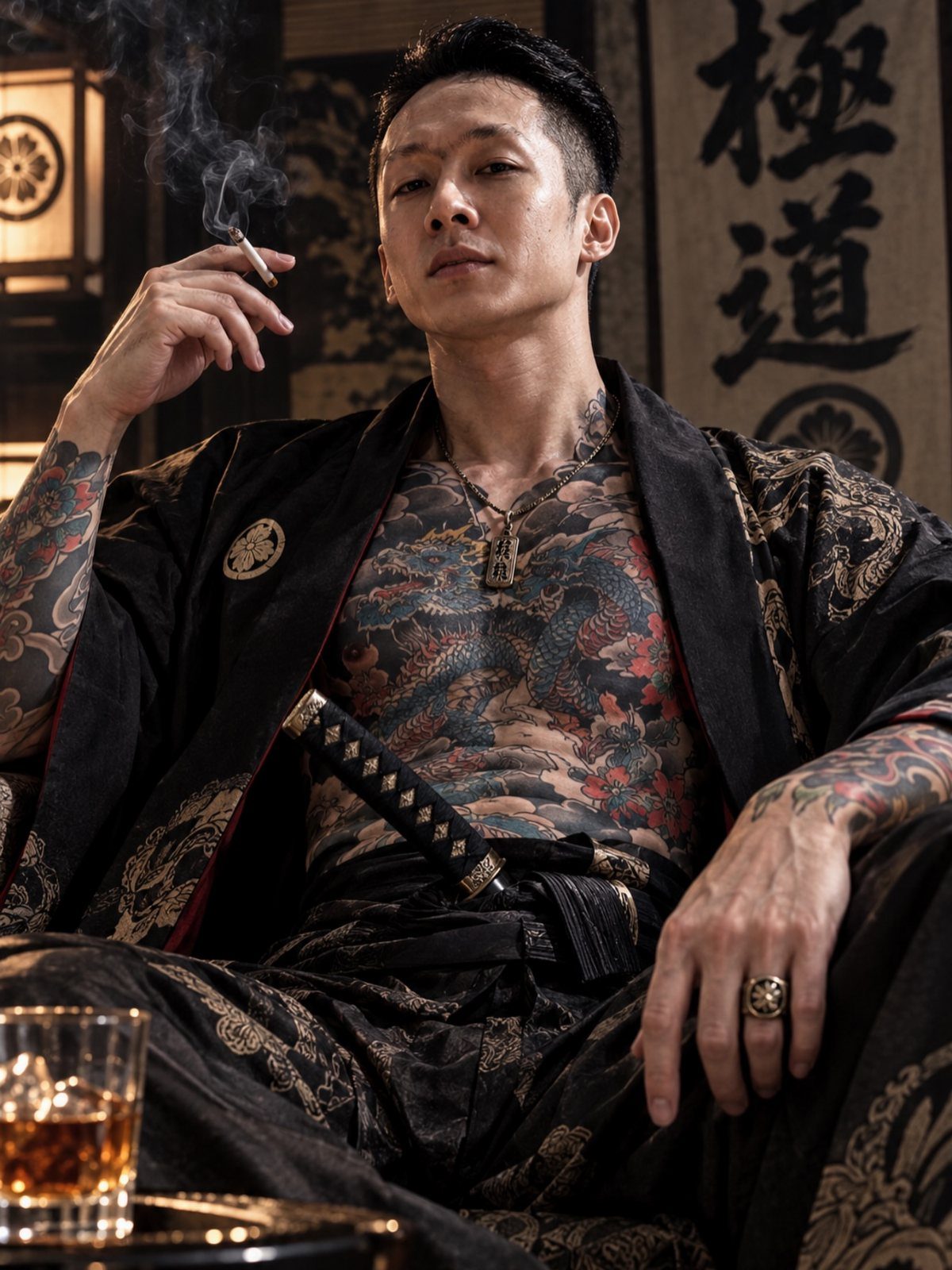
Traditional Japanese work that covers the chest and both arms, what tattooers call a body suit, commits more years and money than any other direction in the craft.
A full traditional Japanese tattoo reads as one continuous skin story, built across sessions that stretch over months or years until the body suit is complete.
Black and grey ink with floral motifs, clouds, and waves forms the structure; color dragons or maple leaves layer on top in later passes.
This much visible ink shapes job choices, gym habits, and family events for decades; the robe is not hiding anything by accident.
Start with the back panel or chest plate, the areas that read as single canvases. Arms connect later, and the gaps between major sections fill last.
A full suit demands an artist who has done them before; the flow between chest and arm, the way a dragon’s tail continues across the shoulder rather than ending, is not a skill every shop holds.
Cultural Significance of Tattoos
Japanese tattoo motifs lock meaning to image in a way Western iconography rarely does.
Samurai helmets carry honor as their primary load, not war glamour, which is why cherry blossoms soften them rather than swords crossing. Tigers hold power without the dragon’s supernatural length requirement, their stripes reading as earned pattern rather than given.
Color itself carries weight. Red marks energy, danger, or luck depending on placement; the dragon’s tongue reads differently than a peony petal in the same ink.
Black grounds the composition, grey builds distance, and the reserved use of brighter tones directs the eye where the artist intends. A mask’s white eyes jump forward because everything around them stays dark.
This is not a language you pick up from a flash sheet.
Tattoo Placement
Large Japanese work needs skin that stays relatively flat and stable. Thighs carry scale well and hide under work clothes easier than arms, a practical consideration if your job still cares.
Sleeves demand planning for how the design meets at the elbow and wrist. The knee and elbow are the hardest skin to hold detail; most artists simplify there deliberately rather than fight the anatomy.
Vertical placements, ankle to knee or hip to ribs, let waves and snakes run their natural curves. Horizontal bands across the chest or lower back fight the body’s lines and age poorly as skin shifts.
Color Usage in Tattoos
Traditional Japanese palettes build on black, grey, and red as foundation, adding orange, blue, yellow, or green where the subject calls for it.
Neo-Japanese work pushes further into purple, teal, and brighter yellow, especially around fox masks and festival masks where the energy should read as contemporary rather than classical.
Traditional Japanese work fills the negative space with dark background so the subject reads forward, not because the background is left empty.
Frequently Asked Questions
What is the Japanese tattoo style called?
The Japanese tattoo style is called Irezumi. The word covers the tradition of building large, symbolic images in black, grey, and restrained color, where dragons, koi, and flowers carry fixed meanings rather than personal choice alone.
Western shops often borrow the visual vocabulary without the structural rules, so asking whether an artist works in true Irezumi or neo-Japanese style matters before you book.
What style are Yakuza tattoos?
Yakuza tattoos follow the Irezumi tradition, built as large, bold body suits in black, grey, and red with heavy symbolic loading.
The same motifs appear, dragons and tigers and waves, but the scale and coverage distinguish the style, chest and arms forming one continuous story.
The tradition has moved beyond its criminal association in modern practice, though full body suits still demand years of sessions and serious budget.
What is a kaizen tattoo?
A kaizen tattoo centers on the Japanese word for continuous improvement, usually rendered in kanji or paired with imagery like climbing paths or unfolding fans.
The design suits someone who sees their body art as a marker of ongoing change rather than a fixed statement.