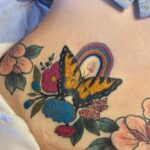
New tribal tattoo work runs from a single-session lower back piece to a six-session full sleeve, and the deciding factor is how much of your body you are willing to commit at once.
Flame-like patterns and geometric designs both rank high on Pinterest saves right now, and the flat muscle plane of a shoulder cap or upper arm lets the geometry sit clean in a way the knee or ribs never will.
1. Flame-like Patterns
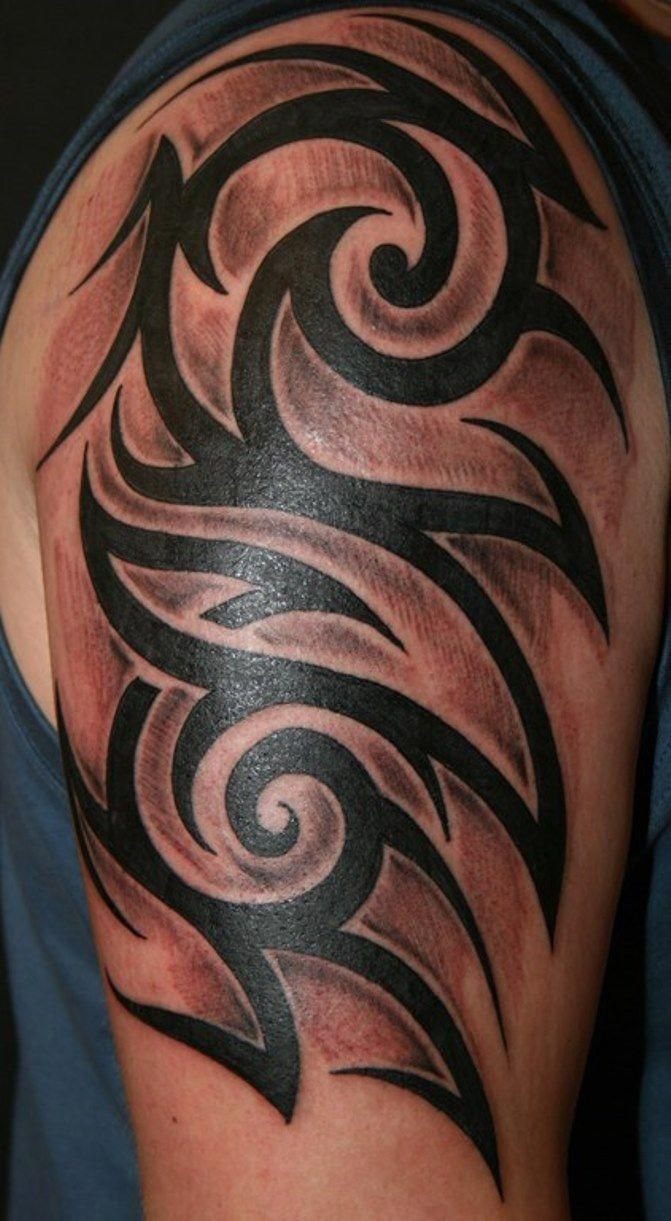
Flame-like patterns carry the energy of actual fire without the literal image of burning logs.
The sharp, pointed shapes work best when they follow the muscle lines of an arm or shoulder, swirling outward from a central point so the skin looks like it is in motion.
I have seen these cover a full sleeve from shoulder to wrist, but a smaller patch on the upper arm still reads as flame if the lines stay bold and the edges stay sharp.
The black ink needs to be solid; gray wash kills the heat.
A weekend session can finish a medium piece. Chair time for dense blackwork adds up fast; call shops for their hourly rate before you book.

Poseidon cartridge adopt a one-time joint design hygienic standard The material is stainless steel and easy to color,and has better ink flow

Package: 50pcs mixed tattoo cartridge needles, includes 10pcs each of 1203RL, 1205RL, 1207RL, 1209RL, 1211RL.
2. Geometric Patterns
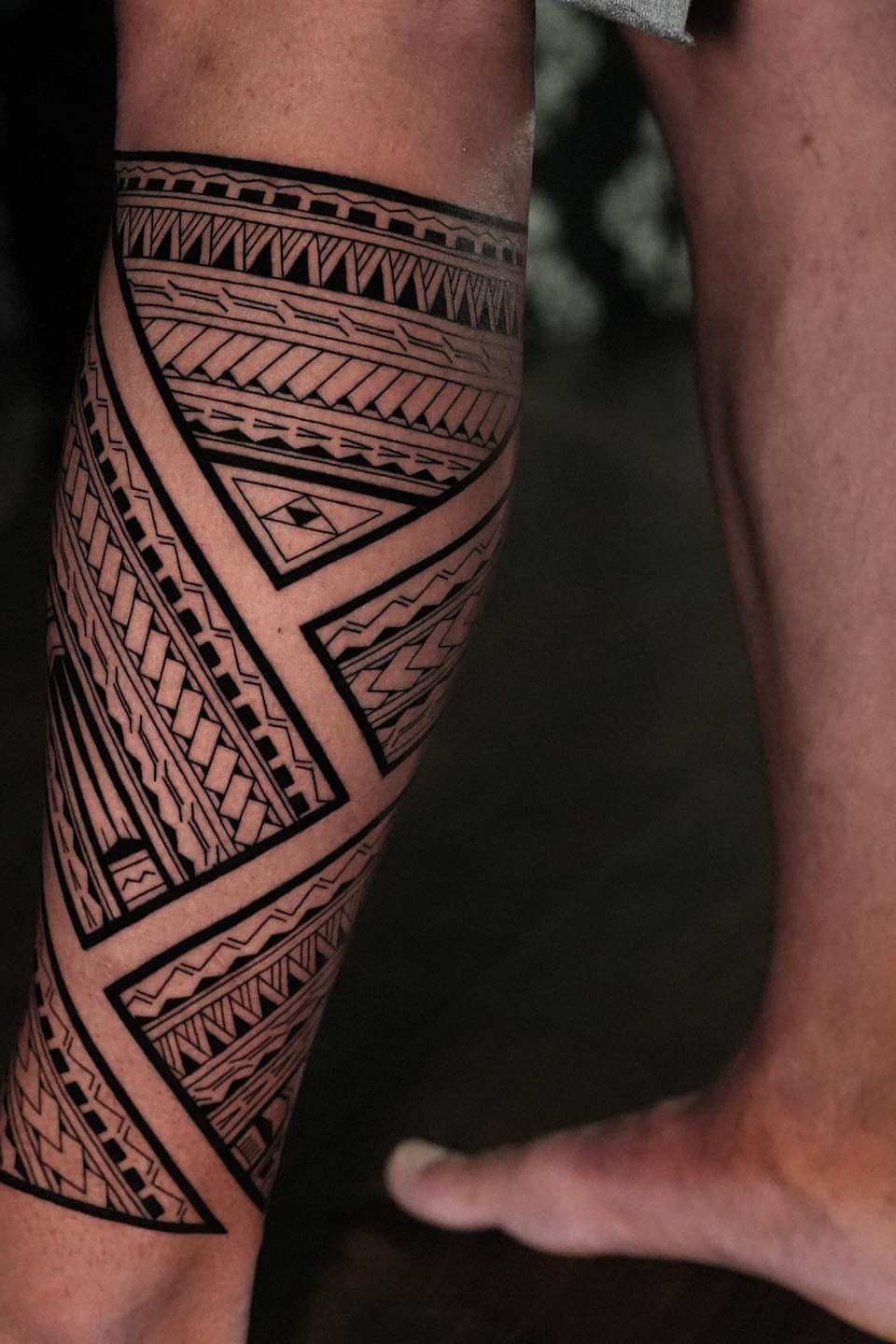
Geometric tribal builds its impact from repetition: triangles nested inside triangles, spirals that never quite close, wave lines stacked in bands. Wrapping a pattern around the calf turns the body into a cylinder of ink.
These designs scale well. A full sleeve demands precision across every inch, but a single band around the forearm or a panel on the shin can stand alone if the geometry stays tight.
Triangles point the eye; spirals slow it down. Mix both and the eye keeps moving.
The lines must be drawn on first and approved before the needle starts. Fixing a crooked spiral is expensive.

Precision Laser Cut

Stencil Material: mylar plastic

Flame Stencil: You will receive 12 pieces of painting stencils which have small beautiful daily theme patterns. There are different kinds of flame patterns on the stencils. Our templates are suitable for you to make decoration by yourself.
3. Cyber Tribal Tattoos

Cyber tribal is what happens when old-school blackwork meets circuit board anxiety. The texture in these pieces is the point: jagged lines that look like they could slice, spikes that seem to grow rather than end.
The forearm-to-hand placement matters because the design breaks at the wrist joint and resumes on the hand like a sleeve glitching. That gap is intentional; it lets the skin bend without distorting the pattern.
I would not try this on a first tattoo. The density of black means multiple sessions, and the skin needs to heal between passes or the spikes blur into each other.
Ask to see healed photos from your artist. Fresh cyber tribal looks sharper than it stays.

Spirals Stencil: You will receive a creative hollow out floral theme template with 1PC plastic paint brush. This spiral pattern stencil features an eye-catching swirl motif that the endless spirals and connections create a mesmerising design that can be repeated infinitely, allowing you to explore intricate patterns and textures.

Abstract Sphere Features: Each of the four stencils features a single abstract sphere with a dazzling look. The designs offer different artistic styles of the same subject. To use, simply place a stencil on your surface and apply acrylic paint, spray paint, or chalk paste. When you lift the stencil, you will get a clean, detailed abstract sphere shape.

Geometric Pattern Aesthetic Design: The geometric pattern inspired by mandala has intricate lines but strictly follows the principle of symmetry. The inside of the pattern is composed of a large number of fine lines and shapes, from simple circles, polygons to complex curves interwoven, and different levels of geometric elements nested each other, presenting a visual effect with a great sense of order and mystery, which can instantly catch people's eyes.
4. Symmetrical Back Tattoos
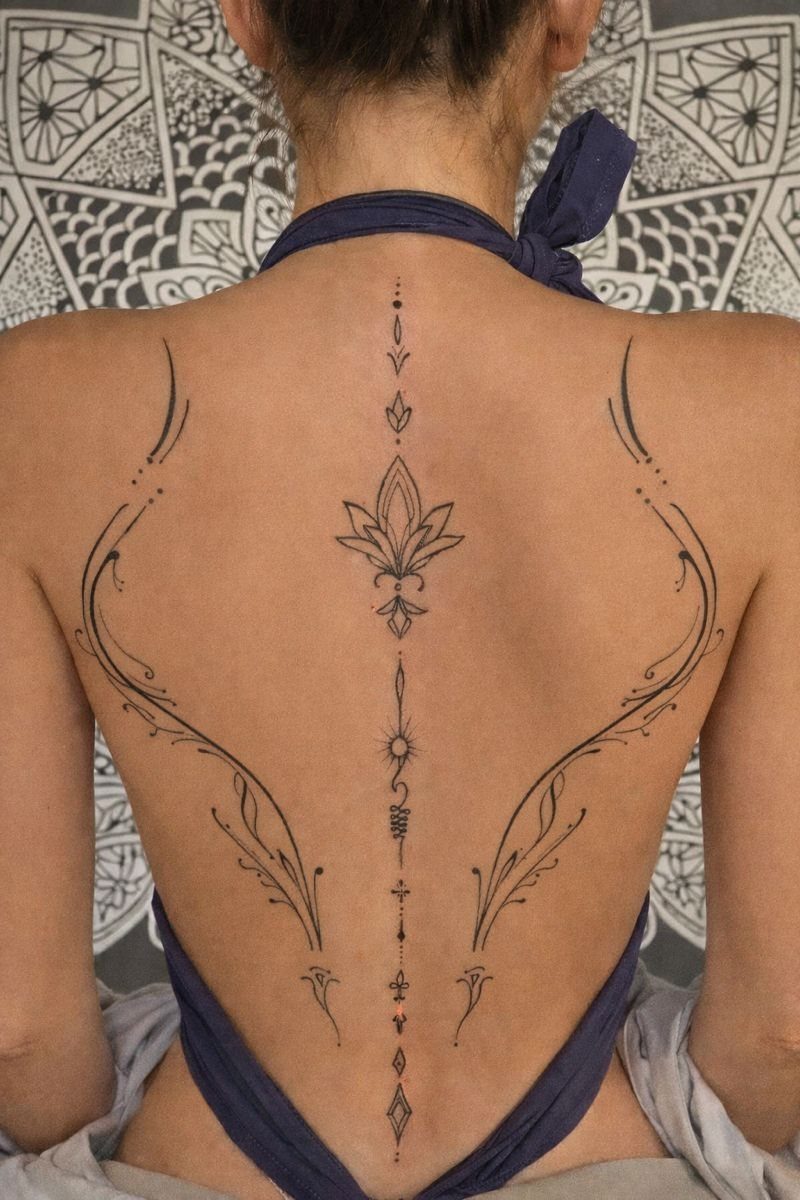
Symmetrical back pieces use the spine as a centerline and mirror everything left to right. The effect is architectural: the body becomes a frame for the design rather than the design conforming to the body.
Dragon heads or sword hilts work here because they have natural bilateral structure. A single sword down the spine reads as strength; 2 dragon heads facing outward from the shoulder blades read as guard dogs.
The back holds flat skin that ages better than joints, so fine lines stay readable longer than they would on a hand or neck.
This is not a one-session project. Plan for multiple sittings and a budget that matches the real estate.

Innovative Skin-Sync Technology: We don't just sit on the skin; we interact with it. By reacting organically with naturally occurring proteins in your skin's outermost layer (stratum corneum), our plant-based formula magically transforms from a transparent guide into a rich, ultra-realistic navy-black. It looks exactly like a healed, permanent tattoo—without the needles or depth.

Innovative Skin-Sync Technology: We don't just sit on the skin; we interact with it. By reacting organically with naturally occurring proteins in your skin's outermost layer (stratum corneum), our plant-based formula magically transforms from a transparent guide into a rich, ultra-realistic navy-black. It looks exactly like a healed, permanent tattoo—without the needles or depth.

Innovative Skin-Sync Technology: We don't just sit on the skin; we interact with it. By reacting organically with naturally occurring proteins in your skin's outermost layer (stratum corneum), our plant-based formula magically transforms from a transparent guide into a rich, ultra-realistic navy-black. It looks exactly like a healed, permanent tattoo—without the needles or depth.
5. Organic Shapes
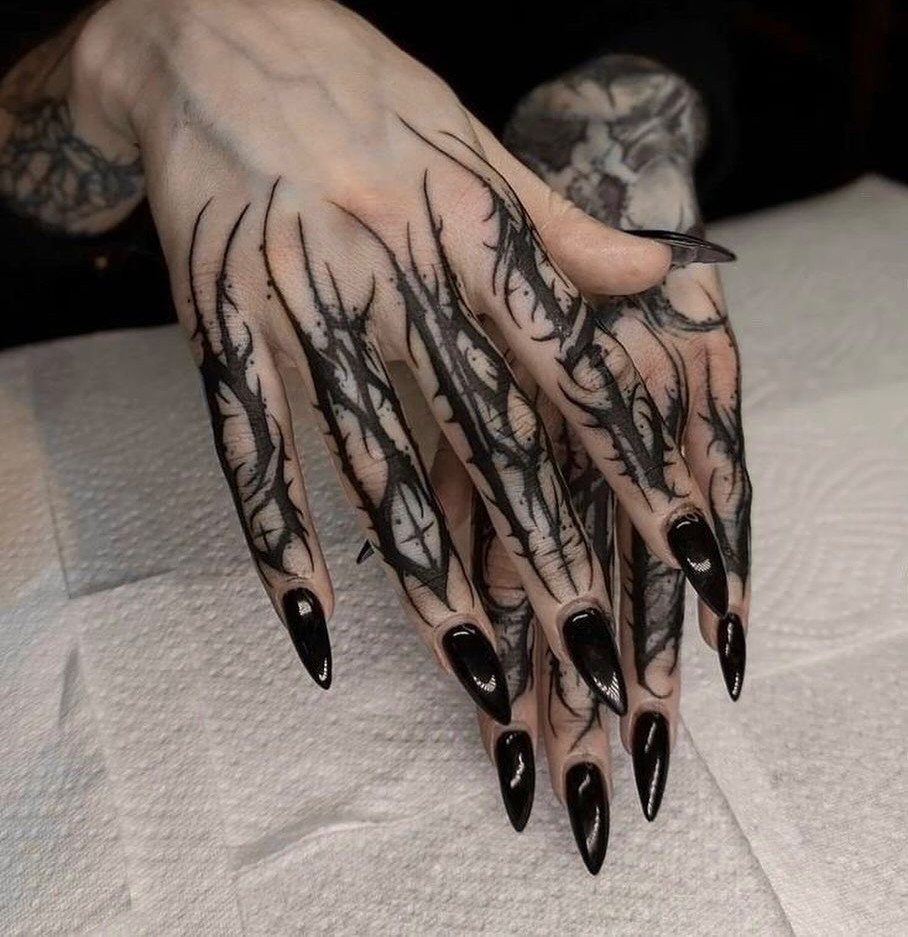
Organic neo-tribal abandons the hard edge for shapes that look grown rather than drawn: thorned vines, bone structures, tendrils that taper to needle points. Hands take ink poorly and heal unevenly, but the tattoo moves when the hand moves.
Wrapping these shapes around a limb works better than flat placement.
The curve of an arm or torso gives the thorns somewhere to travel. Heavy black shading at the base of each shape, tapering to a single line at the tip, creates the depth that makes flat ink look three-dimensional.
A full wrap on a forearm runs long enough that you will want to break it into sessions. Fingers add time because the skin is thin and the artist works slowly.

24PCS Unique Henna Stencil Pack – This complete henna tattoo kit accessory set includes 24 sheets of reusable mehndi stencils (6.89" x 3.34"). Featuring exclusive designs like long arm bands, moon motifs, vine flowers, and large floral templates, it is ideal for creating DIY temporary skin art on wrists, arms, back, and full body.

Clean, Flawless Transfers: Your artwork will look so clean once transferred to the skin with the Stencil Stuff gel! Gentle on the skin, Stencil Stuff transfer solution helps you achieve clear and sharp tattoo stencil transfers every time!

Product Kits: You will receive 12 A4 sheets featuring 142 unique henna tattoo stencils patterns including butterflies, flowers, words, symbols, totems and egyptian designs. Our versatile temporary tattoos adult with stencils collection offers something for every taste with its wide variety of artistic models.
6. Dragon Motifs
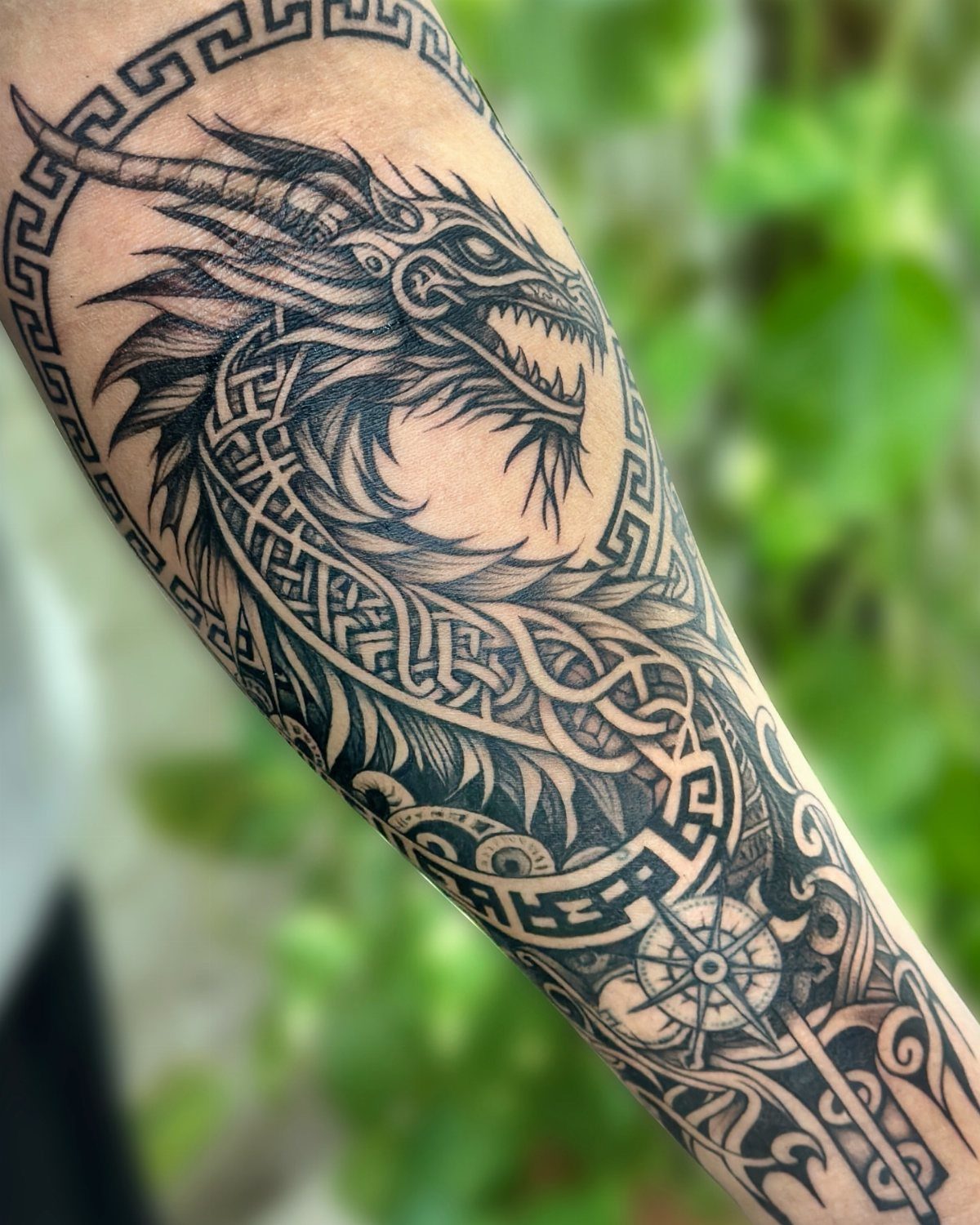
Dragon motifs in tribal work merge 2 traditions: the Celtic knot and the Asian serpent.
The result is a creature built from interlocking geometry rather than scales and claws. The dragon’s body becomes the pattern; you read the animal second, after the shapes register.
Standalone dragon heads work on shoulders or upper arms where the curve of muscle suggests the curve of neck.
Integrated into a sword blade, the dragon becomes the guard or the pommel, its mouth open around the crosspiece. The knotwork must stay consistent; a single broken line collapses the whole illusion.
This style suits someone who wants the symbolism without the cartoon color palette of traditional dragon art.

Magnum Needles for Strong Color Packing: Hyperink M magnum cartridges are designed for solid color packing, large-area fills, and bold shading work. The magnum grouping helps artists cover more surface area than round needles, making it a practical choice for traditional, neo traditional, blackwork and color sections.

Cartridge Needles Sizes: 20 pcs tattoo cartridge needles include 3RL 5RL 5RM 7RM, each size has 5pcs. Those tattoo needles can be used for lining and shading, which can assist you with the entire tattoo work

【Ultra Dark Triple Black】-Formulated with high-concentration pigments, UINK TBK delivers an unparalleled deep, solid black. Perfect for bold outlines, heavy shading, and rich tribal blackwork.
7. Butterfly Tribal Tattoos

Butterfly tribal keeps the insect’s symmetry while replacing delicate wings with sharp black points and tapering lines. The lower back placement sits just above the waistband, visible when you want it, hidden for work.
Soft color glow at the edges, pink or pale blue, works if you want something less stark than pure black.
Stars or small hearts near the wing tips are common additions if you want to soften the aggression. The shape reads as feminine without going floral, which matters if you want symbolism but not the usual garden imagery.
A piece this size usually finishes in one session, which keeps the cost down. The skin on the lower back holds ink well and heals flat.

15 sheets transfer paper

Classic Flame Design – High-quality stencil featuring a stylized flame pattern, perfect for biker art, hot rods, motorcycles, or custom furniture.

Spirit Tattoo Classic Thermal Transfer Paper, 8.5” X11” (100 Sheets): Established since 1946, the original and trusted choice of tattoo artists globally, offering reliability and consistency in tattoo stencil creation.
8. Tribal Chest Tattoos

Chest tribal spreads horizontally across the pectorals, using the sternum as a center point or running edge to edge like a band.
Symmetrical flame spikes pointing toward the collarbone draw the eye upward.
A single color, black or deep blue, keeps the design readable from a distance; blue fades faster than black but holds its tone for years if you keep it out of sun.
The collarbone itself hurts more than the pectoral muscle below it, so expect the upper edge to sting.
Plan for 2 sessions minimum if the pattern reaches toward the shoulders. The artist needs you flat on your back, which gets uncomfortable.

66 Unique Geometric Patterns Design: the package contains 66 pieces of geometric stencils for painting on wood, plenty in quantity, rich in style, various different matching shapes give you unlimited possibilities to create various DIY art projects for your daily use and replacement needs, you can also share with your friends and family

SOLID MATERIAL: Our geometric drawing templates are made of sturdy plastic, which is solid, lightweight, non-toxic, odorless and harmless. It is not easy to bent or split. The smooth surface makes it pleasant to touch and the clear green color can also protect your eyes

Geometric Stencil: You will receive a painting template with a daily theme, measuring 8.3x11.7 inch/21x29.7 cm; This template takes rectangle, circle, triangle and trapezoid as its main elements, and uses repetition, splicing and symmetry to give people a visual impact, which is messy but highlights artistry.
9. Tribal Leg Tattoos

Leg tribal wraps the calf and crosses the knee, turning the whole limb into a single flowing piece.
The knee itself is the challenge: skin there stretches and compresses with every step, so the design must bend with it or distort.
Ink running from shin to thigh means sitting through the kneecap, which most artists break into its own appointment.
Curvilinear lines handle that joint better than geometric blocks; the eye follows the curve around rather than noticing where the skin folds. Thighs take ink easily and heal fast; shins hurt more and scab heavier.
A full wrap this size needs multiple sessions, and the knee will get its own appointment. Walking after a knee session is stiff enough that I would book on a Friday if your job is on your feet.

MADE IN THE USA SINCE 1990: For over 30 years Dynamic Color has produced professional tattoo ink in the United States, an established American brand artists built their work on long before most imported labels existed.

MADE IN THE USA SINCE 1990: For over 30 years Dynamic Color has produced professional tattoo ink in the United States, an established American brand artists built their work on long before most imported labels existed.

Cyberpunk Circuit Board Design: This semi-permanent temporary tattoos pack holds one large dual microchip circuit board piece plus one small circuit line pattern with precise geometric line details. Microchip circuits symbolize technological innovation, logical thinking and futuristic vision; sleek circuit lines represent precision, efficiency and digital age aesthetic. Ideal for tech enthusiasts and anyone seeking unique futuristic statement body art.
10. Tribal Arm Tattoos

Arm tribal runs shoulder to wrist as a continuous sleeve, the classic placement that started the modern revival.
The muscle structure guides the design: deltoid curves invite spirals, the flat forearm takes bands or panels, and the wrist becomes a natural stopping point.
Full coverage this dense means multiple sessions, probably four to six for solid blackwork.
Plastic wrap on fresh ink comes off after a few hours; follow your artist’s aftercare or the scabbing ruins the edges. Swirling organic patterns move with the arm better than rigid geometry, which can look crooked when the muscle flexes.
Sleeves are expensive and permanent. Start with a shoulder cap if you are unsure; extending downward is always possible.

Warm Tips: The tattoo transfer paper need to work with transfer medias.You will need to purchase the stencil ointment separately. Apply the design made on the master paper. Please pay attention to press the back side of the pattern to the skin for at least 3 seconds

Package Includes: You will receive 20 sheets reusable tattoo stencils, enough quantity to meet your daily requirements. The mehndi stencils are suitable for airbrush painting, glitter tattoo, and so on.

REUSABLD VARIETY OF OPTIONS - This set of temporary tattoo stencil includes 123 different patterns for adult,male. Scorpion tiger dragon cow eagle skeleton Tribal Symbols geometric design etc patterns in 20 pages A4 size, Almost unlimited creative combinations and options to meet your every need.
11. Koi Fish Designs
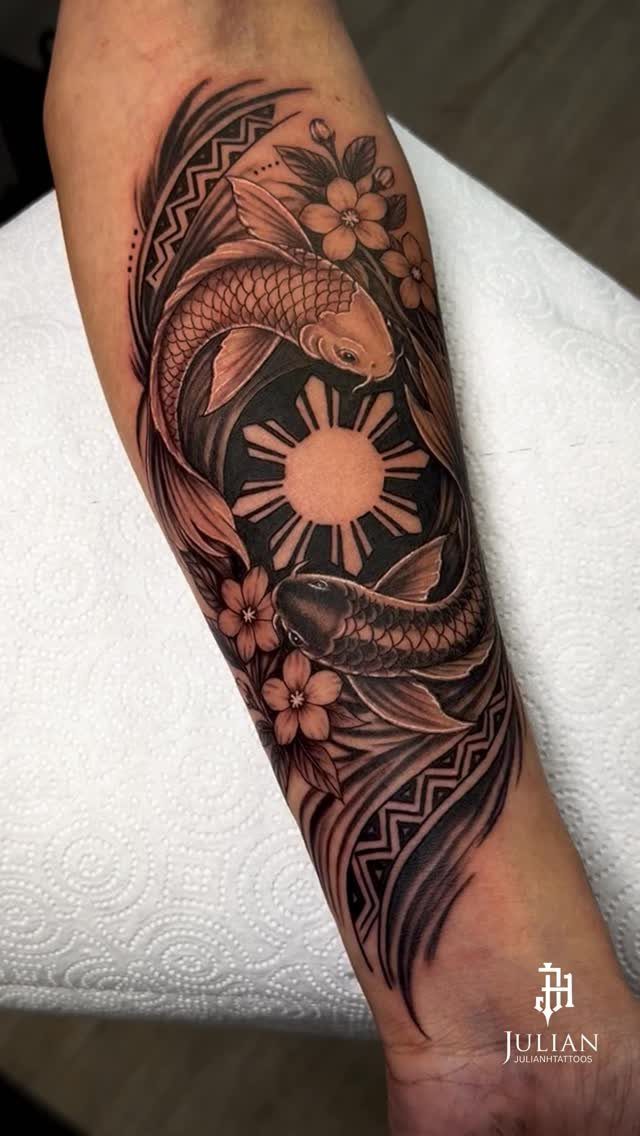
Koi tribal pairs the fish with water waves and cherry blossoms, mixing animal symbolism with pure pattern. The fish circle a central sun or moon, their bodies built from bold black lines rather than natural scales.
A forearm placement keeps it visible without committing to a full sleeve.
The floral accents add detail that breaks up heavy black areas, and the negative space of the sun keeps the design from going too dark. Two fish read as balance or partnership; one fish alone moves upward, against the current.
The curved flow suits the forearm’s cylinder shape. Plan on two or three sessions for this density, with the second pass deepening blacks after the first layer heals.
Tribal Tattoo Trends
Shop portfolios now run sharper edges alongside the old smooth curves; cyber tribal styles with their flame-like patterns and geometric designs are pushing the look in new directions.
Flame-like patterns and geometric designs are running parallel, not competing.
The Pinterest traffic I track shows symmetrical black ink with star-shaped cutouts ranking high on saves, which tells me people want the bold read of tribal without the cultural weight of specific island motifs.
Shoulder caps and upper arms carry most of this new work; the flat muscle plane lets the geometry sit clean.
What separates current work from earlier revivals is the density.
Modern pieces leave more skin showing. The negative space is intentional, not a gap to fill later.
Tattoo Placement
The abdomen and ribs are placements the list skips, and they deserve mention because the skin behaves differently than limbs or back.
Rib ink sits over bone with thin tissue between; the needle vibration travels, and the artist works slower, which adds to chair time.
A design wrapping from stomach around to the lower back needs you on your side part of the session, then flat on your back, then side again. Most artists charge by the hour, so position changes cost money.
A piece sitting just above the belt line heals cleaner if you can keep the area dry and let it breathe.
The shoulder blades move with every arm motion, so large symmetrical pieces there need you conscious of your posture during healing or the ink settles unevenly.
Neck-to-shoulder flow is popular on Pinterest for good reason. The transition from vertical neck to horizontal shoulder gives the design a natural path, and the collarbone creates a visual anchor whether the pattern respects it or crosses it.
Tattoo Meanings
Tribal meaning sits in a complicated place. The original Polynesian and Maori systems assigned specific patterns to family, rank, and achievement; copying those without lineage is widely considered disrespectful.
What most shops in the US now label "tribal" is a visual language borrowed from that tradition, stripped of its original reading.
The symbolism that remains is personal, not inherited. A symmetrical back piece with dragon heads facing outward reads as protection because the viewer brings that association, not because the pattern demands it.
Koi carry clearer meaning because the symbolism traveled with the image: perseverance against current, transformation through struggle. Two fish circling a sun or moon lean into balance or partnership, but that reading is your choice, not the design’s requirement.
If you want cultural significance rather than personal association, research the specific tradition you are drawing from. Most artists will respect a request to avoid patterns tied to status or genealogy they cannot verify you hold.
Frequently Asked Questions
What is the new tribal tattoo called?
Cyber tribal is the style that has been showing up most often in shop portfolios and Pinterest saves.
It mixes old-school blackwork density with jagged, circuit-board textures and flame-like edges that look almost mechanical. The name stuck because the patterns read like a sleeve glitching across the body rather than flowing in one continuous motion.
What is the newest tattoo trend?
Sharp-edged symmetrical black ink with intentional negative space is ranking high on saves right now, especially on shoulder caps and upper arms where the flat muscle lets geometry sit clean.
Flame-like patterns and geometric designs are running parallel rather than replacing each other; modern pieces leave more skin showing than earlier revivals, and that gap is planned, not waiting to be filled.