Arm tattoos on this list run from a single fine-line vine you can book for a few hundred to full sleeves of Japanese blackwork or American traditional that stretch across years and thousands.
The deciding factor is whether you want a single fine-line piece, a full sleeve you build over time, or something in between like a forearm quote or geometric band.
1. Fine Line
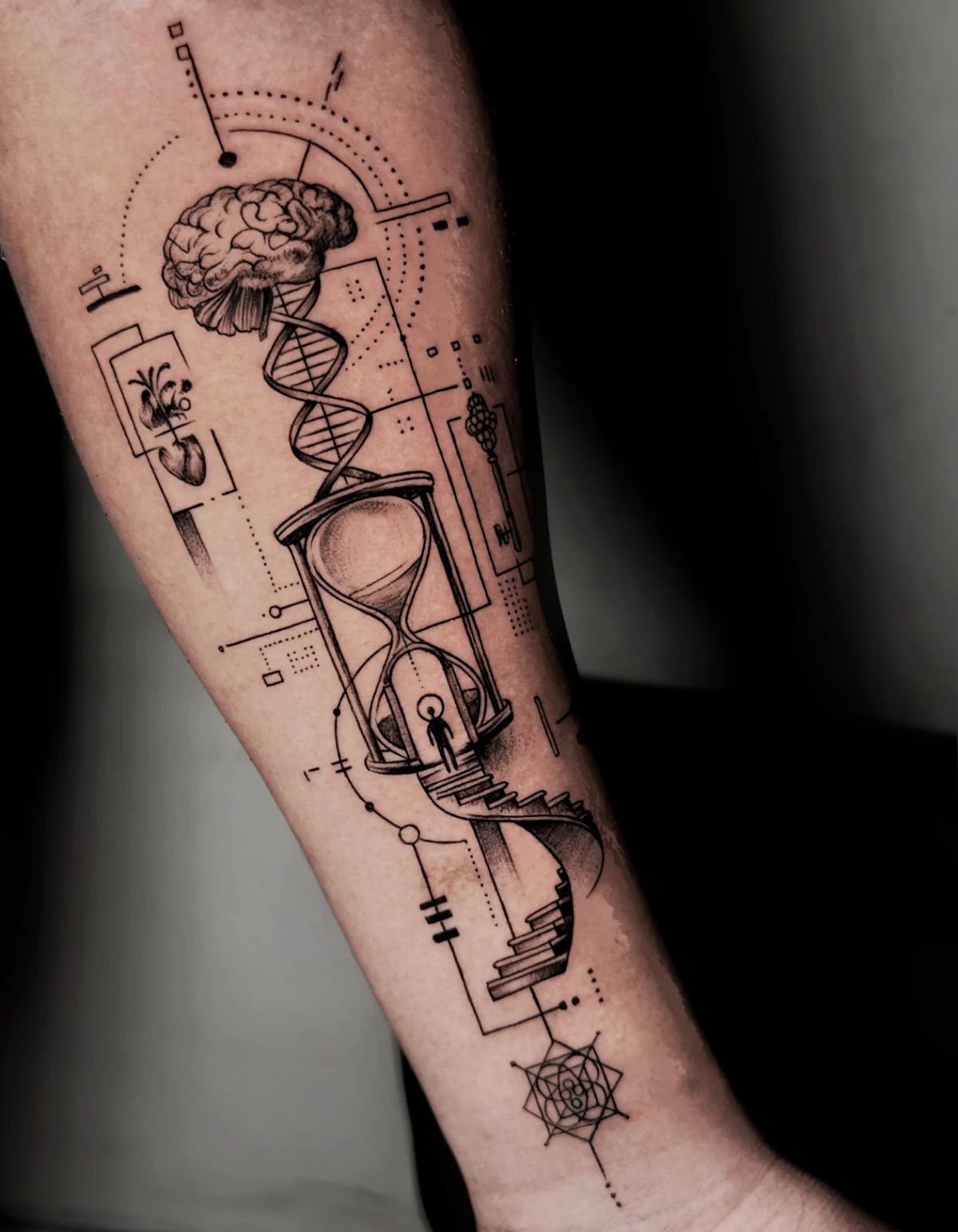
Thin needles pull softer ink than the standard setup, which is why a brain tied to a DNA helix and an hourglass can read as illustration rather than stamp.
Shaun Sepr at Holey Skin in Bristol sees this style pull in people who do not already have a sleeve; the lines sit quiet enough that the commitment feels smaller.
Nature themes run through most of what gets booked, old botanical plates especially, and the research takes some digging past the first page of results.
Placement on the outer forearm keeps the work flat and visible; the inner side hurts more and fades faster from bending and rubbing against the body.
Hydrate the night before, show up rested, and expect the artist to need steady skin for the detail to hold.
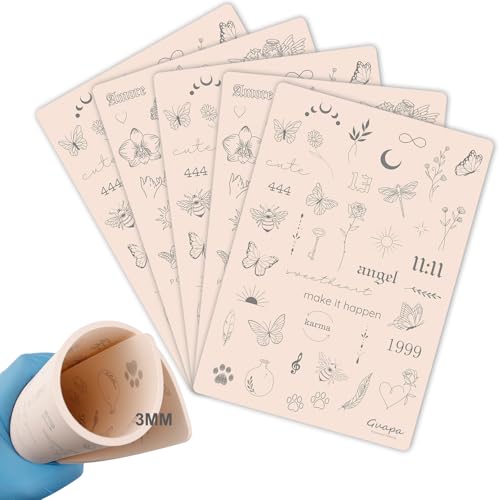
3MM Tiny Tattoo Practice skin Made from high-quality materials, it is closely mimic the texture and feel of real human skin. This gives you a realistic experience, allowing you to refine your skills before working on actual clients
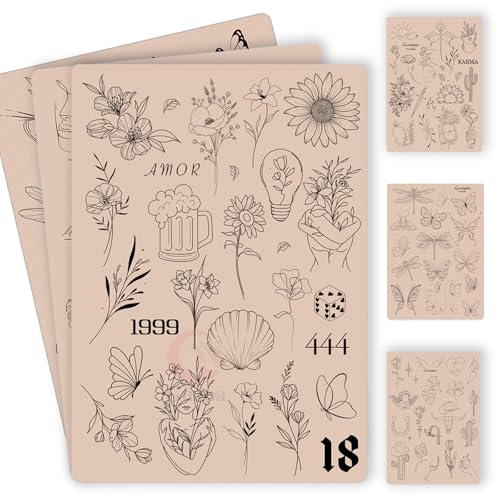
100+ Pre-Printed Designs – Features a wide variety of fine line and tiny tattoo stencils to enhance detailing skills.

Premium Quality 1.5mm Silicone Material – Crafted from premium 1.5mm thick silicone, this tattoo skin offers a true-to-life feel with excellent durability and a smooth surface for effortless needle movement during practice.
2. Micro Realism
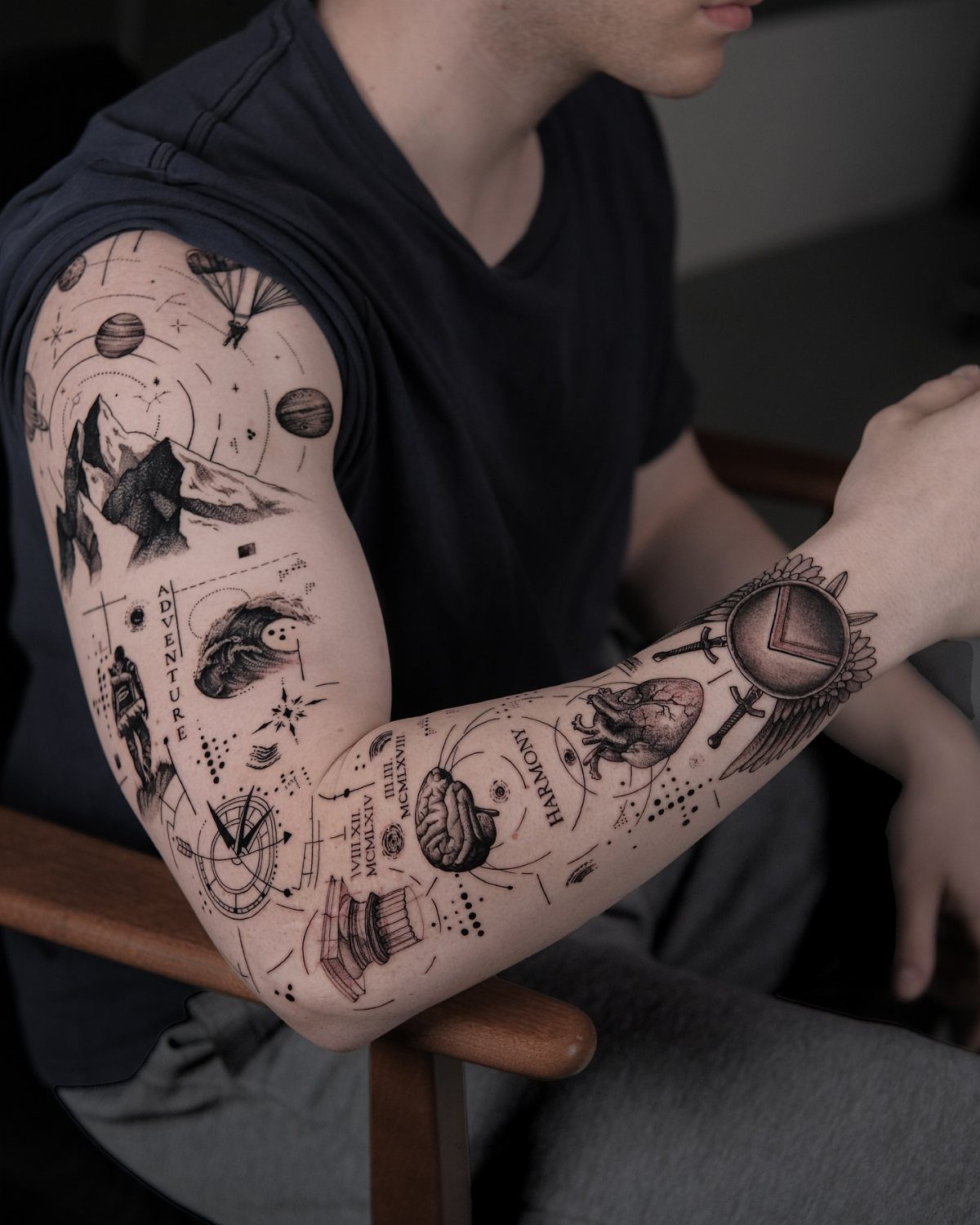
Ricky Williams works miniature portraits and mountain ranges into skin at a scale that would have read as smudge a decade back.
The style grew once the equipment caught up, and the client base shifted with it; this is not the trade that built its reputation on sailors and convicts.
A sleeve of planets, anatomical hearts, and single words like "HARMONY" reads as collected moments rather than one grand statement, which suits someone adding over time.
The detail demands an artist who specializes; general shops will not carry the needles or the hand speed. Budget for longer sessions than a bold traditional piece would take, and expect touch-ups as the fine grey tones settle.

VERSATILE TATTOO INK COLOR SET: Our vinrant tattoo ink color set features four shades of gray tattoo ink—Light, Light Medium, Medium Dark, and Dark. Ideal for blending and mixing, this professional tattoo ink simplifies your color palette, saving time for artists.

Light medium and dark greywash shades cover the full range needed for smooth shading transitions and layered depth in black and grey work

Professional Tattoo Ink - Many of the most popular tattoo artists around the globe turn to World Famous' bold, beautiful tattoo ink, tattoo supplies & tattoo kits to deliver a flawless work of art.
3. Ignorant
The name is the attitude, not a judgment on the wearer.
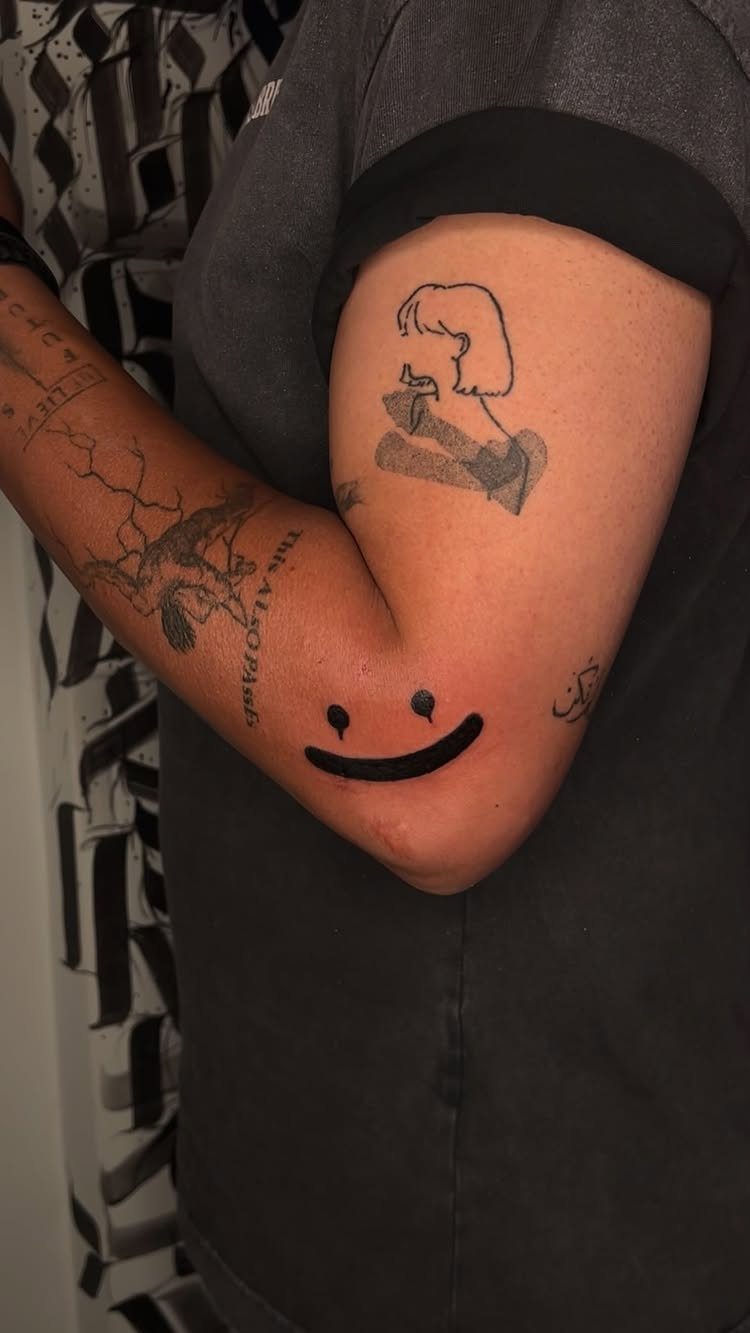
Ego Sum Lux Mundi in Madrid builds smiley faces, lightning figures, and deadpan text like "this ALSO PASSES" from pure black line work with no color fill, and the humor lands because the draftsmanship stays loose on purpose.
The style grew out of DIY tattooing but lives in reputable studios now; there is no need to risk a kitchen job.
The appeal is the rejection of rules about what deserves permanence, which makes it a fit for someone who wants the story to be the bad idea itself.
Line work without shading ages faster and cheaper to fix than a blown-out color piece, which is part of the point.

Package Content: You will receive 46 pieces of face paint stencils in 2 designs. Two sizes available: 12x7.5cm/4.72x2.95 inches and 7.7x7.2cm/3.03x2.83 inches. Perfect for Halloween, birthday parties and creative DIY projects, creating a touch of festive atmosphere. Coming with a iron ring for easy storage and use.

Variety Pattern Selection: This set of face painting stencils for kids contains 183 different theme patterns in 12 sheets A5 size. Everyday children's favorite designs such as dinosaurs, butterflies, mermaids, flowers, cakes, animals, letters, crowns, astronauts and Christmas holiday styles such as Santa Claus and snowflakes allow children to give full play to their imagination and fill in patterns freely

REUSABLD VARIETY OF OPTIONS - This set of temporary tattoo stencil includes 123 different patterns for adult,male. Scorpion tiger dragon cow eagle skeleton Tribal Symbols geometric design etc patterns in 20 pages A4 size, Almost unlimited creative combinations and options to meet your every need.
4. Black and Grey Realism Sleeve Tattoo

Matthew James builds sleeves around portraits and gothic mood, working with the flat planes of the forearm so the design does not warp around the muscle.
The scale lets him run negative space through the composition, which matters more than most clients expect: ink under skin spreads and fades, and the gaps keep the image readable years out.
A dove, clouds, a rose, and 3 crosses at Calvary hold together because the black and grey palette ties them; color would fight for attention at this density.
The trade is time and money against longevity; a full sleeve in this style takes multiple sessions and sits at the high end of most budgets, but the clarity holds.

Warm Tips: The tattoo transfer paper need to work with transfer medias.You will need to purchase the stencil ointment separately. Apply the design made on the master paper. Please pay attention to press the back side of the pattern to the skin for at least 3 seconds

6 Japanese Style Design Sheets – Traditional dragon, koi fish, phoenix, and samurai artwork gives you an authentic full-arm sleeve look in one easy application.

Realistic semi-permanent tattoo sleeves designed to look like real body art without the lifelong commitment.
5. Neo Traditional

Blake Byrne at Cloak and Dagger in east London takes the bold outlines and limited palettes of Sailor Jerry and opens them up; a skull bottled and labeled "love," ringed with orange leaves, keeps the old readability but adds depth the flat originals lacked.
Portraits of women and animals run through the style, and the strong color ages better than fine work because the lines stay wide.
Byrne sometimes runs one accent color through a whole sleeve to make it pop; the rest stays greyscale.
The eye-catching quality is real, which means this is not a tattoo that hides under a work shirt easily. For someone who wants their first visible piece, the boldness is the feature, not the risk.

Inspirational Quotes Words Party Supplies for women - 4.7*2.6 inches 10 sheets 90 Pcs temporary tattoos

【 575+ Fun Assorted Tattoo Stencils 】-The ChurlChurl tattoo stencils collection includes 575 high quality stencils with multiple themes. enjoy cute trendy tattoo stencil designs like butterflies, words, flowers, symbols, totem, Egypt style patterns and more.

You Will Receive: Pack of 10 Sheets large temporary henna tattoo stencils. All the designs are shown in the pictures. Only has tattoo template, no tattoo ink
6. Japanese Dragons Tattoo

Gabriele Cardosi works within the Irezumi tradition without claiming to repeat it: a dragon, clouds, floral filler, and a red Hannya mask sit on a strong black background that the old rules demand, but the arrangement is his own.
The icons carry weight because the tradition carried them for centuries; dragons, koi, and demon masks do not go out of fashion because they were never in it.
The full sleeve reads as one continuous piece rather than collected images, which means committing to the whole arm at the design stage even if the work ships in sessions.
The black background hurts more and takes longer than line work alone, and the cost reflects it. For someone who wants the arm to read as armor, the density is the point.

Massive Quantity: 60 Sheets in total of fake temporary tattoo stickers, including 30 sheets of inspirational and motivational quotes and scripts, cursive words, retro typewriter style sayinging, 30 sheets of simple branch flower tattoos. Enough for friends party gatherings to enjoy together or choose different pattern to match your everyday mood.

Tiny Tattoo Practice Skin: the double-sided, easy-wipe, fine-line tattoo practice skins feature over 80 different stencil designs on the front and back of the skin.

Exclusive Mother and Baby Design: Inspires creativity while practicing intricate tattoo techniques.
7. Geometric Patterns Tattoo
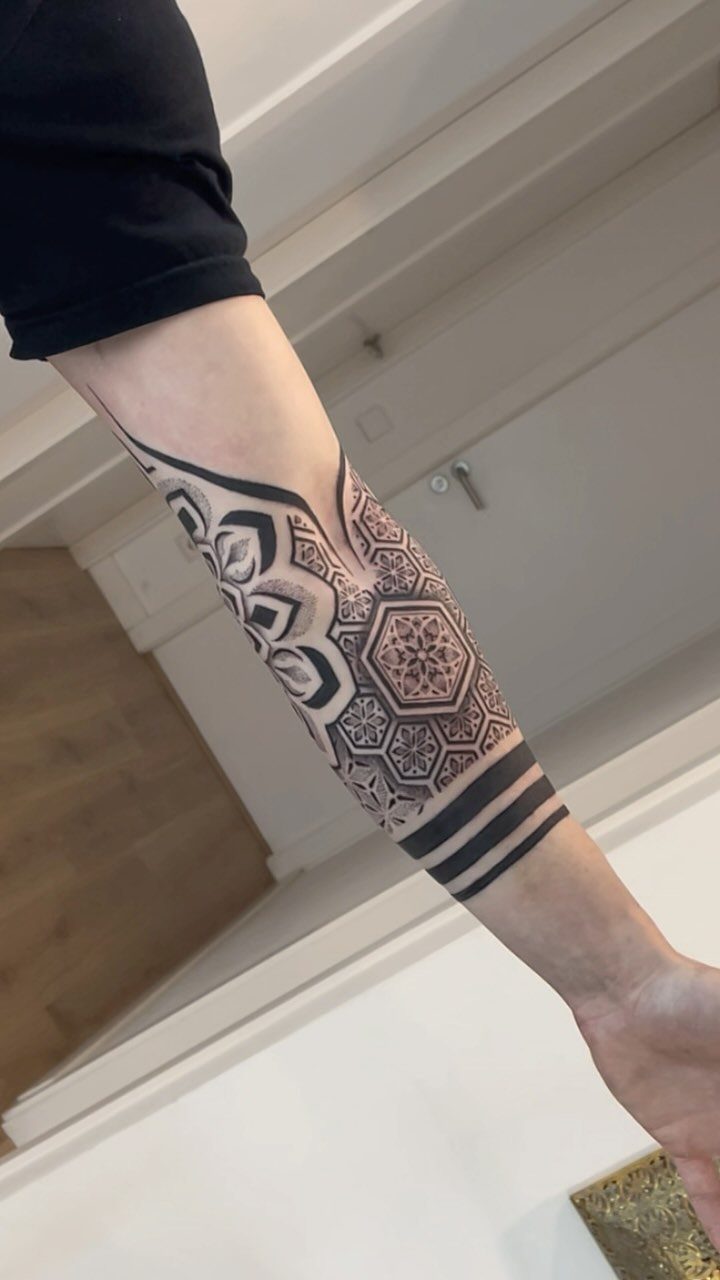
Geometric patterns on an arm read as built rather than drawn; the mandalas and tessellations sit flat because the shapes repeat at a scale the eye catches before the mind names them.
Solid wristbands work as anchors, keeping a busy middle section from looking like it is drifting. This style suits someone who wants the arm to look engineered, not illustrated.
The precision is the risk. Skin shifts and stretches, and a line that misses by an eighth of an inch breaks the whole grid.
Find an artist who shows healed work, not just fresh photos. The inner forearm is safer than the elbow or wrist; those spots distort more and the pattern warps faster.

1.100% new brand and high quality. Color stability, pure color, durable and safe,with a formula containing a high concentration of pigment, long duration, make your tattoos have a great texture.

Hawink 2 x 8 wrap and 2 x 10 wrap coils tattoo machine for liner and shader.runs faster to create fine and precise line work. has higher power to penetrate deep into the skin, creating vibrant and lasting color.

There are 4 Pro tattoo machine gus for liner and shader
8. Animal Tattoos
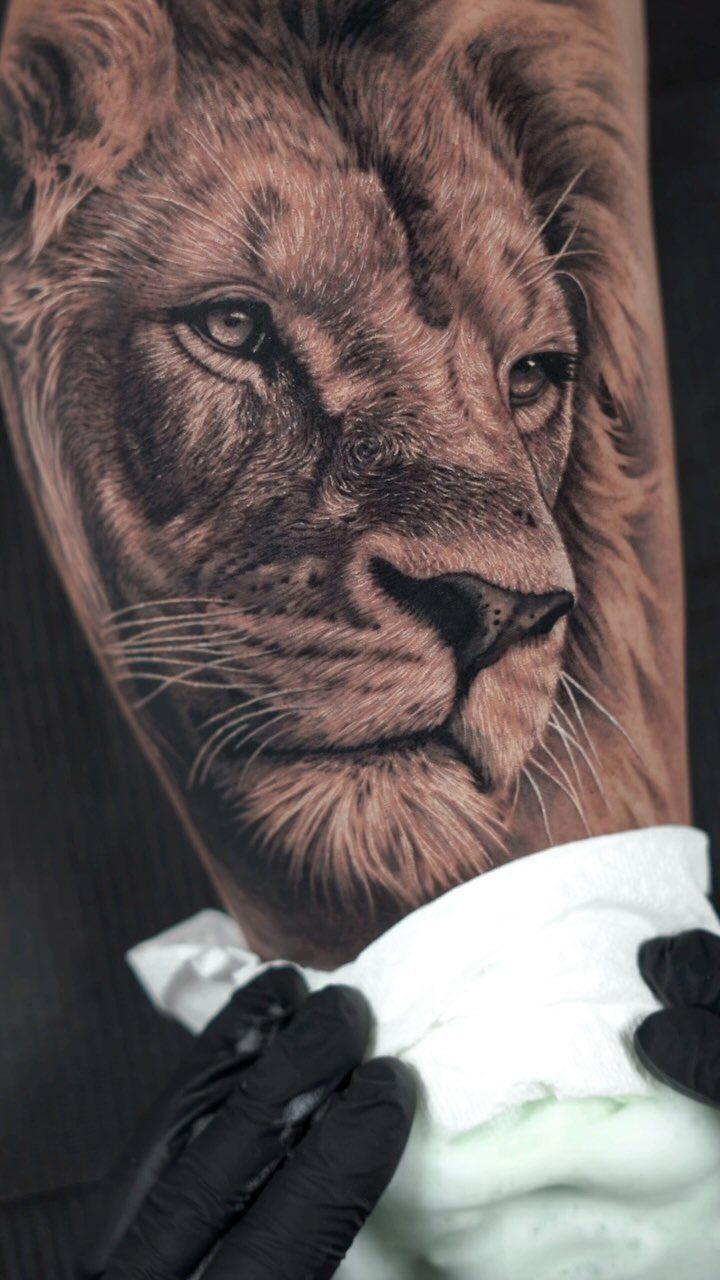
A lion in black and grey realism carries weight because the animal already did; the tattoo borrows that without needing to explain it.
Bears, wolves, and owls work the same way, though leaning on the face rather than the full body keeps the detail tight at arm scale.
The choice is between realism and stylization. Realism demands an artist who specializes in fur texture and eye reflection; geometric versions trade some recognition for cleaner aging.
Either way, placement matters. The outer upper arm holds detail longest.
The inner bicep softens faster and the image loses its punch there. Pick an animal for a trait you actually identify with, not one that photographs well; you will live with the meaning longer than the likes.

183PCS Different Styles Tattoos Stencil: Our temporary tattoo stencils forkids comes with 183 temporary tattoo stencils painting set design such as flowers, cats, hearts, skulls, dinosaurs, fruits, deer, scorpions, Hannah, unicorns, whales, cars, rainbows, telescopes, ships, too fast, astronauts, pirates, letters, stars and more Style in 12 sheets A5 size. Perfect for festivals, parties, or daily fashion.

171 PCS Different Styles Halloween Tattoos Stencil: Our hallloween temporary tattoo stencils sheet comes with 171 different hallloween design such as pumpkin lamps, black cats, skulls, wizards, witch hats, ghoost, witch, Spider Web, Skeleton more halloween Style in 12 sheets A5 size. Perfect for couple halloween party and decoration.

390 PCS Different Styles Tattoos Stencil: Our temporary tattoo stencils sheet comes with 390 different design such as flowers, cats, hearts, skulls, dinosaurs, fruits, deer, scorpions, Hannah, unicorns, whales, cars, rainbows, telescopes, ships, too fast, astronauts, pirates, letters, stars and more Style in 28 sheets A5 size. Perfect for festivals, parties, or daily fashion.
9. Forearm Inspirational Quotes Tattoo

Text on the forearm wraps because the arm is a cylinder; short phrases stack, long ones spiral, and pairing an image with a caption uses the space better than either alone.
The cursive line about change sits beside a dove and crosses, so the words are part of a scene, not a poster.
This placement is visible by design, which means workplace policy checks come before the studio booking. Script fonts age worse than block; thin lines in letters spread and the message turns to mush.
I would pick a typeface with enough weight to read from across a room, and keep the phrase short enough to fit without bending around the inner elbow. The forearm’s versatility is real, but that same visibility is the trade.
PACKAGE CONTENTS: There are 3 packs black temporary tattoo ink, 103 patterns tattoo stencils and one pin included in this comprehensive kit

⯁ 400+ Reusable Henna Stencils: Get 24 sheets of high-quality, self-adhesive hollow templates featuring over 400 unique patterns. These temporary tattoo stencils allow you to create stunning body art including mandalas, butterflies, and dragons. Perfect for practicing techniques without permanence

Great Value Kit: Cridoz tattoo transfer paper kit come with 50 sheets tattoo stencil paper, great for tattooing, trace & transfer images onto the body. Warm Tips: The tattoo transfer paper need to work with transfer medias. You will need to purchase the stencil ointment separately
10. Compass Tattoos
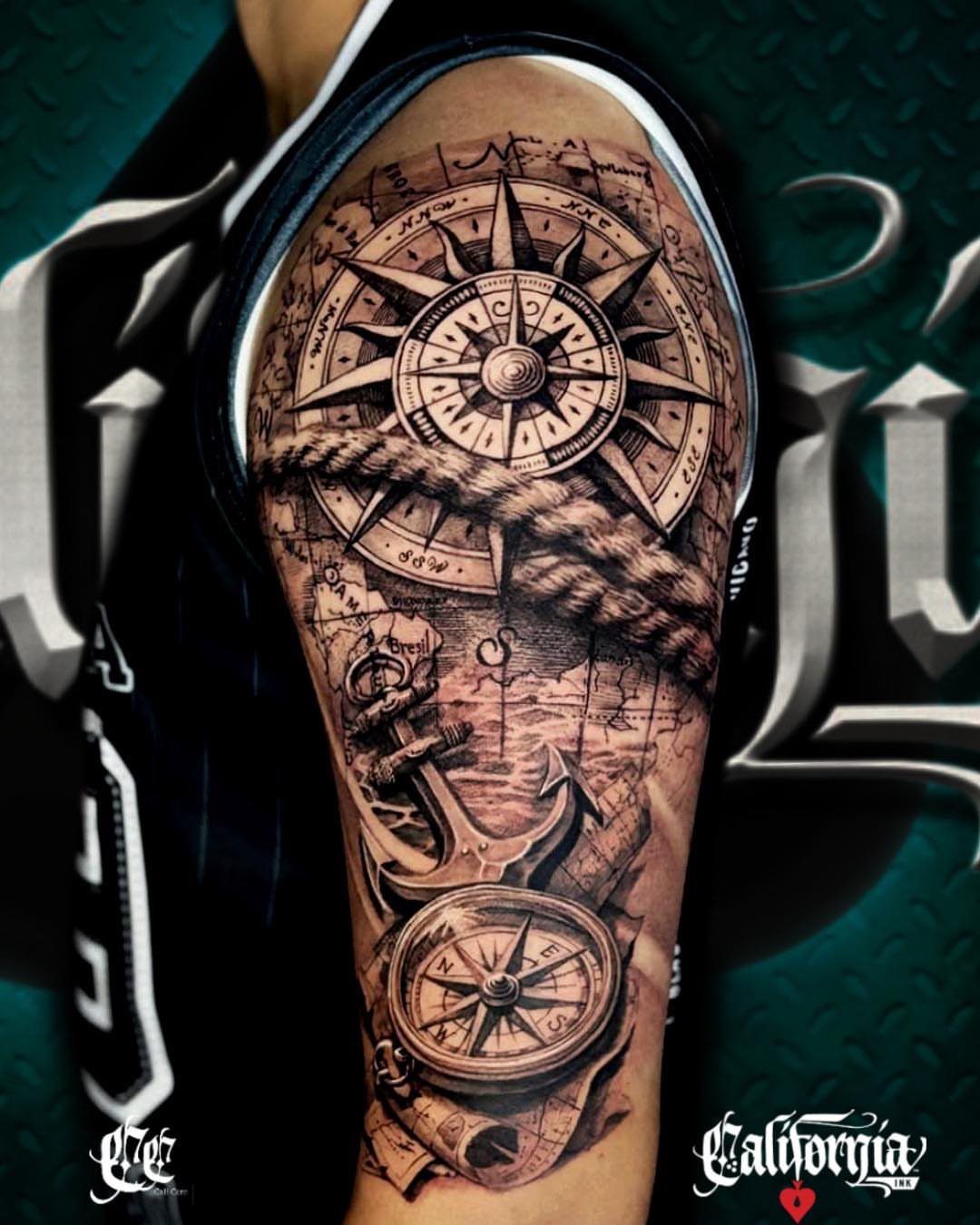
Compass work carries its meaning lightly; keeping it nautical with an anchor and rope is the version that lasts without feeling like a phase.
Cardinal directions or coordinates can go in, but the piece reads fine without them, as the map fragments and antique lettering already suggest travel.
The detail density is the practical point. A compass rose with fine spokes needs room to breathe; crowding it into a space smaller than a baseball cap panel wastes the precision.
The upper arm or outer forearm gives the flat ground this design wants. Budget for longer sessions than a simple anchor would take; the map work and rope texture add hours.
For someone who actually sails or flies, the coordinates of a home port make it personal. For the rest of us, the icon does the work alone.

▶ Henna Tattoo Kit: 16 sheets tattoo stencils. airbrush tattoo stencils suitable for tattoo lovers. Experience the effects of tattooing without the pain of tattooing.

Double Sided Tattoo Practice Skin: easy wipe, 2 sides designed fine line tattoo practice skins feature over 20 different stencil designs.

[Tattoos Stencils Kit]: 24 sheets, each sheet including 4 patterns total 96pcs tattoo stencil. Which featuring Playing card patterns, flowers, lizards, scorpions, rabbits, spiders, butterflies, geckos, small birds, insects, hearts, stars, abstract and tribal motifs and more tattoo designs, enough quantity and different pattern for you create your style.
11. Rose Motifs
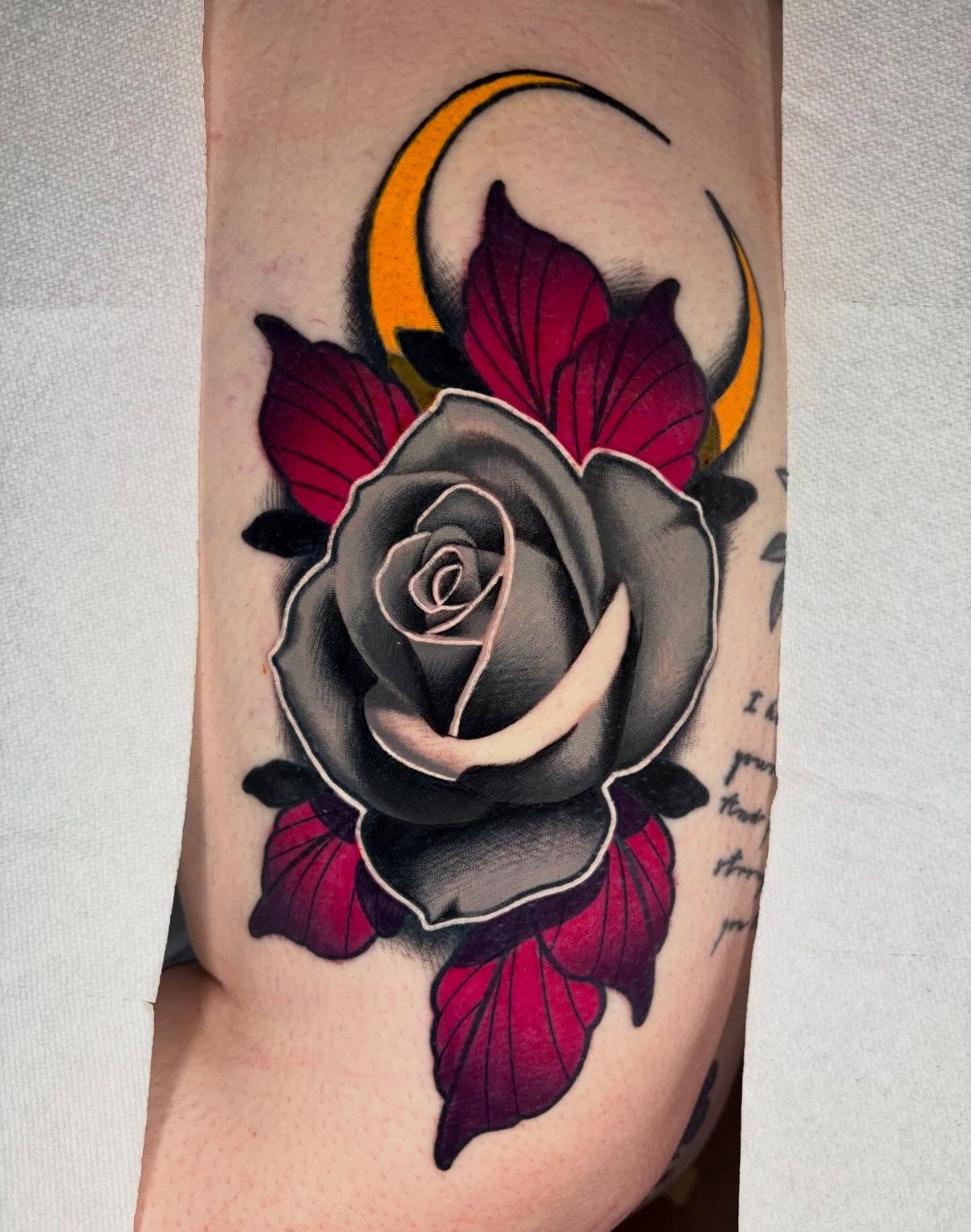
A rose holds meaning because it held it before tattoos existed; love, loss, time passing, the flower does not care which you mean.
White outlines against black and grey petals, with leaves pushed toward magenta and a yellow crescent behind, keeps the rose from pretending to be a botanical study. That graphic treatment is the choice.
Color in a rose ages unevenly; red leaves will need touch-ups before the black line does, and a yellow moon fastest of all. I would ask the artist to show me healed color from older work, not just yesterday’s post.
The rose suits any style from fine line to traditional, which makes it a safe first piece if you pick one version and stick to it. Mixed styles in one flower read as accident, not range.
12. Heartbeat Lines
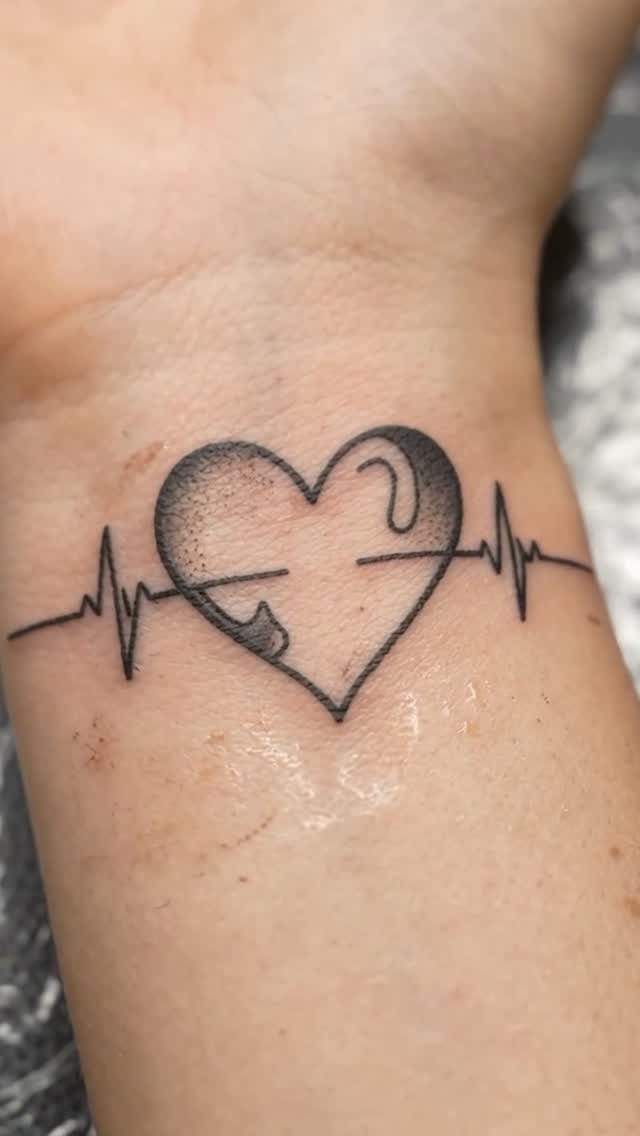
A heartbeat line is a monitor’s spike translated to skin, sometimes threaded through a heart shape, sometimes standing alone. Wrist placement keeps it small and personal, which matches the minimalist intent.
The risk is sentiment tipping into cliché. Names, dates, or "always" added beneath push it toward the expected; the line itself carries enough.
Fine needle work suits this best, and the notes on Shaun Sepr’s approach apply here too: thinner needles, softer ink, the style that draws people who have not committed to a sleeve yet.
The inner wrist hurts more than the outer, and fades faster from washing and rubbing against cuffs and sleeves. I would place it where the line stays straight across the bone, not wrapping, so the rhythm reads true.
13. Vines Wrapping Around the Arm Tattoo

A pothos vine wrapping the forearm moves with the body instead of sitting on it, which is why this design keeps drawing people back.
The green leaves catch light differently from every angle, and the wrap format means no single viewpoint finishes the piece; the arm rotates, the tattoo keeps going.
The style suits someone who wants nature without the full sleeve commitment. A single vine starts at the wrist and can stop at the elbow or keep climbing, which lets the budget stretch across years.
The outer forearm carries the color longest; the inner side fades from friction against the body, and touch-ups on a wrap are harder to hide than on a flat panel.
I would ask the artist to vary the leaf size so the eye travels, not just repeats.
14. Ginkgo and Cloud Patterns
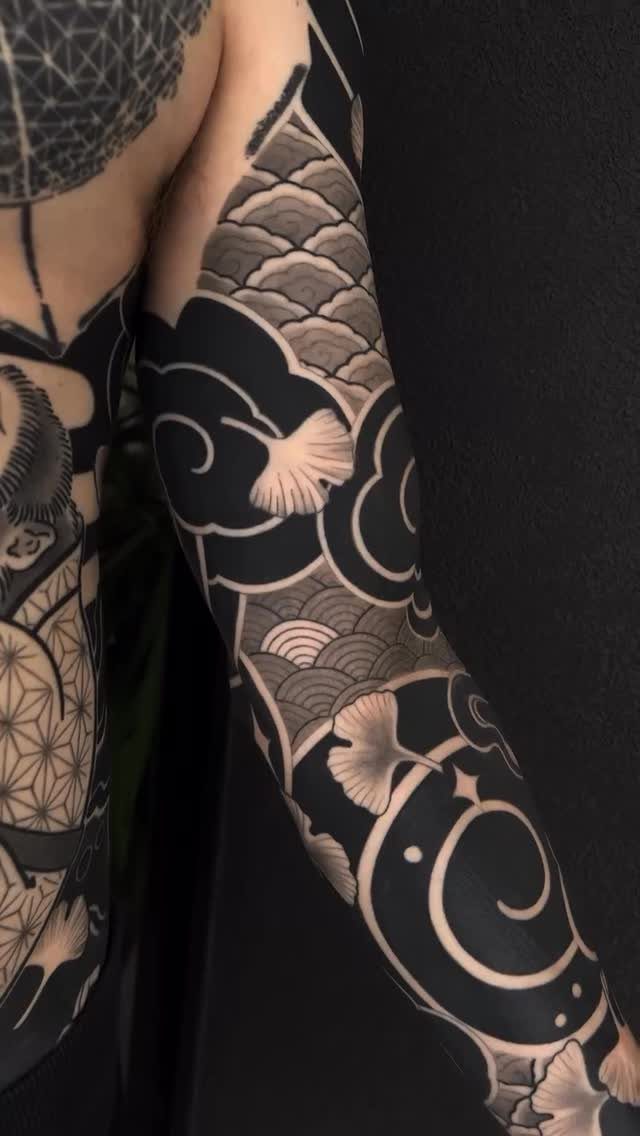
Ginkgo leaves against cloud bars carry the Japanese sleeve tradition without needing the dragon or koi that everyone expects.
The black and grey palette keeps the focus on shape and flow; the ginkgo’s fan outline reads instantly even at distance, and the wind bars push movement through the whole arm.
This is a sleeve that commits to the full circumference. The background density matters as much as the leaves; without enough black, the clouds look like gaps instead of design.
Dense blackwork like this sits at the high end of both pain and price, and the session runs longer than line-only work.
For someone who wants the arm to read as one continuous piece but prefers plants to animals, the ginkgo is the quieter choice that still holds the tradition’s weight.
15. American Traditional Sleeve

A horse, a cowgirl portrait, a bull, and red flowers packed onto one arm keeps the Sailor Jerry rules: bold black outlines, limited color palette, and every icon readable from across a room.
The western motifs update the usual anchors and swallows without breaking the grammar; the style is old, the subject matter is not.
This sleeve is built in pieces over time, which matches how most people pay for it. Each session adds one panel, and the red floral filler ties them together after the main images sit.
The trade is visibility; American traditional does not hide under a sleeve, and the colors, especially the red, stay loud for decades. For someone who wants their first tattoo to read as confidence rather than delicacy, this is the direction.
16. Traditional Mace and Chain

A spiked flail wrapped in chain keeps the American traditional vocabulary: heavy black outline, red accents for blood and danger, and an object that needs no explanation.
The mace is not a gentle symbol; it suits someone who wants the tattoo to carry weight without getting sentimental about it.
The chain work adds hours to the session. Each link has to read as round, which means shading on every segment, and the wrap around the arm makes the geometry harder than a flat placement.
I would check that the artist’s healed chains hold their depth; fresh photos lie, and collapsed shading turns links into smudges.
The inner arm carries dense black poorly, pain-wise, but it keeps the design yours: visible only when you roll up your sleeve.
17. Flowing Lily Flower Tattoo

Lilies with long curving leaves on the upper arm follow the muscle rather than fighting it.
The black ink keeps the detail sharp, and the flower’s natural lines let the tattoo move when the arm moves, which matters more on the upper arm than the flatter forearm.
The upper arm hides under a shirt easier than the forearm, which matters if your workplace still decides what ink shows.
The lily carries meaning without locking it down; renewal, grief, devotion, the flower has served all of them, so the wearer picks the reading.
Curving leaves need an artist who understands how lines flow with the body, not across it. A leaf that points the wrong way looks broken; one that follows the shoulder curve looks grown.
Choosing a Design
Ask to see healed photos, not just fresh ones. A skilled artist keeps those because the real test is how the ink sits after the swelling goes down and the skin settles.
Fresh photos lie; healed skin shows whether the lines stayed where they were put and whether the grey tones settled evenly or collapsed into mud. I would not book until I saw it.
The design you want has to fit the shape it sits on, not fight it.
An artist who knows the arm’s muscles and how skin stretches there can move a motif so it reads right from every angle the body actually holds, not just the one in the stencil.
That conversation is part of what you pay for.
Avoid trends because the trend will date and the tattoo will not.
The point is not to be original for its own sake; it is to like what you like enough that you still like it when the fashion has moved on. No one else has to approve the choice.
Placement Tips
Think of your arm as prime real estate. If this is your first tattoo and you are planning more, a small piece dead center in a large area blocks the bigger work you might want later.
A small piece dead center on the bicep turns into an obstacle later when you want a full sleeve.
Shift it off-center, move it up toward the shoulder, or set it on the forearm where you have space to add around it.
Pain is part of the calculation, not a test to fail.
Artists have stories of people who jumped straight to a full sleeve and found out the hard way that the arm has spots where the needle sits on bone and nerve.
Starting smaller in a less intense spot is not weakness; it is information about how your body handles the process.
Visibility is a choice with consequences.
The forearm shows in every short-sleeve shirt; the inner bicep hides until you flex or roll up. Pick based on your actual workplace and your actual social life, not on an imagined future self who might not care.
There are wrists, elbows, biceps, shoulder caps – all perfect places for a tattoo. They also offer the opportunity to play with scale – both big, eye-catching and small and subtle tattoos look great on arms.
Frequently Asked Questions
What arm should I tattoo?
The outer forearm is the safest starting point for most people; it stays flat, hurts less than the inner side, and fades slower since it sees less friction and sun.
If you are planning more work later, avoid dead center on the bicep, where a small piece blocks a future sleeve.
What are the different types of tattoo patterns?
Fine line, micro realism, ignorant style, black and grey realism, neo traditional, Japanese Irezumi, geometric, American traditional, and nature motifs like vines and ginkgo leaves each read differently on an arm depending on how much movement the area gets.
Each carries its own rules about aging, pain level, and how much the artist needs to specialize; geometric work, for example, demands precision that breaks if the line wanders, while American traditional stays readable for decades because the outlines stay bold.